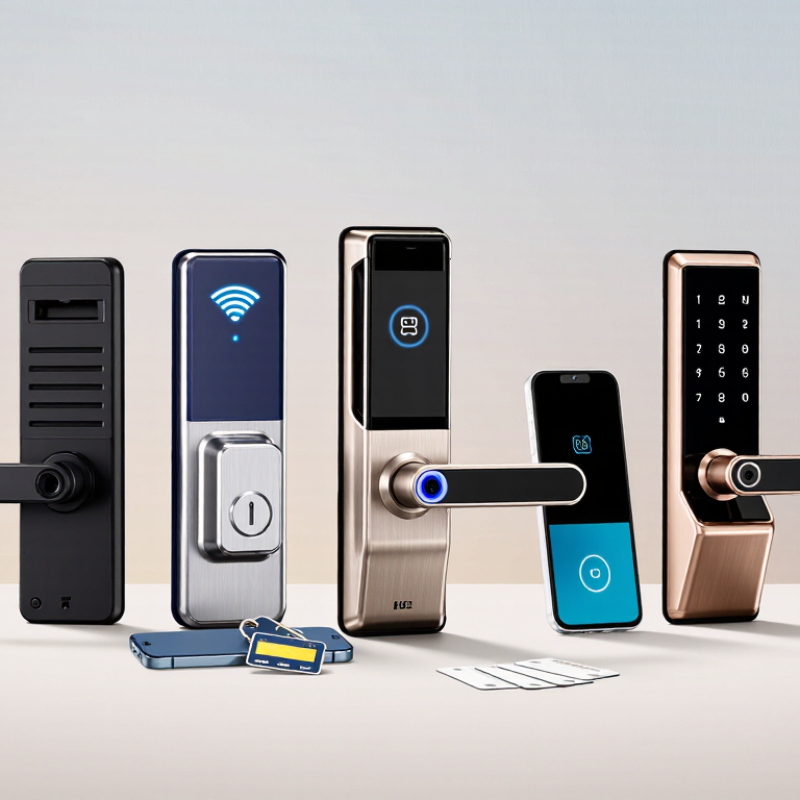
| RFID Contactless | Contactless key card, wristband, or fob using low-frequency or high-frequency radio communication. | Usually a few centimetres for access-control cards. The exact distance depends on antenna design, reader power, card type, and installation. | Generally stronger and more resistant to physical wear than magnetic-stripe cards. Security varies significantly by credential technology and encryption; older systems may be vulnerable to cloning. | High | Usually available. Many systems can validate cards locally and synchronize events later. | Battery-powered locks commonly require periodic battery replacement. Contactless cards do not contain batteries. | Good when existing door hardware can accept a compatible contactless reader and controller. | Large hotels, resorts, serviced apartments, and properties seeking durable contactless cards. | ★★★★☆
Strong general-purpose choice when credential security and system compatibility are verified. |
| NFC | NFC-enabled smartphone, contactless card, wearable, or secure digital credential. | Normally a very short range, generally a few centimetres, requiring the device to be held close to the reader. | Can support secure credentials, cryptographic authentication, and mobile-device security features. Protection depends on the complete credential, reader, mobile application, and backend design. | Very high for guests who prefer mobile credentials. Physical cards can often be retained as an alternative. | Possible for many deployments, although mobile credentials may require prior provisioning and periodic synchronization. | Door lock batteries still require maintenance. Guest smartphones must be charged, and mobile credential support requires software administration. | Moderate to good, depending on whether existing readers and access controllers support NFC credentials. | Mobile-first hotels, premium properties, and properties offering digital check-in or phone-based room access. | ★★★★☆
Excellent for mobile access, provided phone compatibility, privacy, and fallback access are planned. |
| Magnetic-Stripe | Swipe card containing encoded magnetic data. | Physical contact is required; the card must pass through the reader slot. | Lower security than modern contactless technologies because the stripe can wear out and its data may be copied with suitable equipment. It is also more vulnerable to demagnetization and physical damage. | Familiar and simple, but swiping is slower and less convenient than tapping or using a mobile credential. | Commonly available because many systems validate the card locally. | Cards are inexpensive, but readers contain moving or exposed components that can require more cleaning and servicing. | Often high for older properties already equipped with magnetic-stripe hardware. | Budget properties, legacy installations, and locations where low initial replacement cost is more important than advanced security. | ★★☆☆☆
Low-cost legacy option, but generally not the preferred choice for new global deployments. |
| Bluetooth Low Energy (BLE) | Smartphone or approved Bluetooth-enabled credential device. | Usually operates within several metres, although secure access normally requires the guest to be near the door. Actual performance depends on the phone, radio environment, and lock design. | Can use encrypted communication, rotating credentials, and server-side access policies. Security depends on secure application design, device protection, credential lifecycle management, and fallback procedures. | Very high for guests using mobile check-in. Some systems support hands-free or proximity-based unlocking. | Often possible after a credential is downloaded to the phone, but provisioning, revocation, and some policy checks may require connectivity. | Lock batteries require scheduled replacement. Software, mobile operating-system compatibility, and Bluetooth support require ongoing administration. | Moderate. Existing electronic locks may require a compatible communication module, controller, or complete reader replacement. | Digital hotels, extended-stay properties, and operators seeking app-based access and reduced physical key-card use. | ★★★★☆
Highly convenient and scalable, but requires dependable mobile support and a strong offline fallback plan. |
| Biometric | Fingerprint, facial, palm, or other biometric characteristic stored or processed by the access system. | Fingerprint readers require direct contact or close placement. Facial systems generally work from a short distance within the camera and sensor field. | Can provide strong identity binding, but biometric data is sensitive and cannot be replaced like a lost card. Spoof detection, encrypted templates, liveness checks, access governance, and privacy controls are essential. | Can be convenient for enrolled users, but enrollment, recognition failures, hygiene concerns, and accessibility requirements must be managed. | Usually possible when biometric templates and authorization rules are stored locally, subject to system design and policy. | Requires sensor cleaning, software maintenance, environmental testing, and reliable power. Poor lighting, moisture, gloves, or physical changes may affect recognition. | Usually lower than card-based systems because specialized readers, controllers, enrollment processes, and privacy measures may be required. | Restricted staff areas, high-security zones, private clubs, and selected premium applications rather than universal guest-room access. | ★★★☆☆
Potentially strong for controlled areas, but privacy, accessibility, cost, and operational complexity limit broad hotel-room use. |