2026 Best LCD Module Suppliers for Global Buyers
Choosing among the 2026 best LCD module suppliers requires more than comparing unit prices. Buyers must weigh display performance, production consistency, customization, lead times, and long-term support. A bright sample on a showroom desk is useful, but it cannot reveal how a screen performs after months of heat, vibration, or daily use.
Market figures offer context, not a purchasing shortcut. Grand View Research’s LCD Panel Market Size, Share & Trends Analysis Report estimated the global LCD panel market at about US$148.7 billion in 2023. That figure describes panels, not every finished lcd module, so market boundaries matter. Omdia’s display-demand research also tracks shifts in screen applications and supply, helping buyers understand why capacity and component availability can change. The reports do not tell you which supplier will meet your specific requirements. A spreadsheet can mislead.
For global sourcing teams, practical checks often make the difference: request temperature-range data, confirm interface and brightness specifications, and review sample inspection records. Ask how the supplier handles changes to backlight parts or controller availability. Then check whether engineering staff can explain trade-offs clearly. A low quote may omit tooling, validation, or freight costs. No supplier is perfect, and even a strong audit cannot remove every risk. The goal is a supplier whose evidence, communication, and production controls fit the product’s real operating conditions.
Define LCD Module Types and Common 0.96–15.6-Inch Formats for Global Buyers
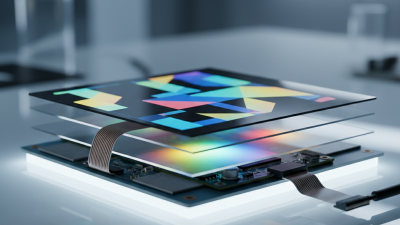
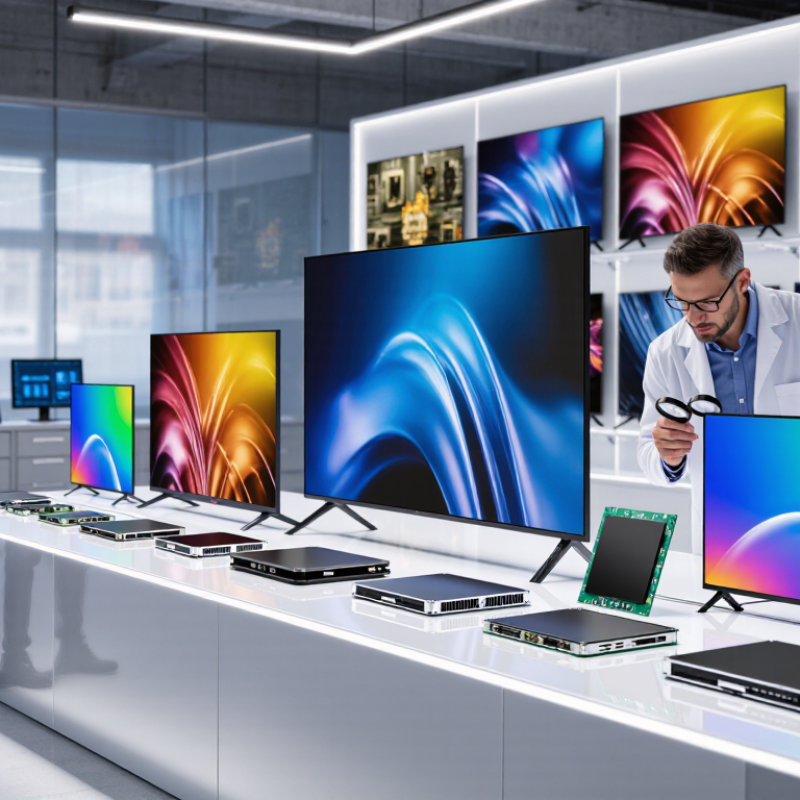
LCD modules are complete display assemblies, usually combining an LCD panel, driver circuitry, and a connection interface.
Common types include monochrome character modules, graphic modules, and color TFT modules. TFT screens may use TN, IPS, or VA technology; each differs in viewing angle, contrast, and response behavior.
Small sizes, such as 0.96 and 1.3 inches, suit compact instruments.
Formats from 2.4 to 7 inches appear in handheld devices and control panels. Larger 10.1- and 15.6-inch formats serve terminals and embedded computers.
Small, but not simple.
The diagonal alone does not define a module. Buyers should check active-area dimensions, resolution, interface, brightness, and operating temperature.
A 3.5-inch screen with a resistive touch layer may have different overall dimensions from a bare panel. Sunlight can also change the choice: reflective or transflective designs may improve outdoor readability, while backlight strength affects power use.
A tidy size chart can still mislead.
Grand View Research’s LCD panel market report estimated the global market at
USD 148.4 billion in 2023 and projected a
4.2% compound annual growth rate from 2024 to 2030.
This market-level estimate is not a forecast for any single module size. It does show why buyers should compare specifications, supply continuity, and sample performance together.
In practice, verify the drawing and test the module in its actual enclosure.
Compare Supplier Specs: 300–1,000 cd/m² Brightness, Interfaces and Viewing Angles
For global buyers, a 300–1,000 cd/m² brightness range is only useful when matched to the installation. A shaded control room may need far less output than a kiosk beside a sunlit window. VESA’s DisplayHDR Compliance Test Specification lists 400, 500, 600, and 1,000 cd/m² peak-brightness classes. Treat these as reference points, not guarantees of sustained module brightness. Ask suppliers for measured luminance, test conditions, and expected output after thermal stabilization. Small details matter.
Interfaces can decide whether a bright panel is practical. Compare LVDS, MIPI DSI, and eDP against the host board’s lane count, voltage, timing, and connector pinout. A supplier’s “compatible” label may hide extra adapter work. Request the exact interface revision and initialization requirements before approving samples. The trade-off is real.
Viewing-angle figures also need context. IEC 61747-30-1 describes measurement methods for transmissive LCD modules, making test conditions important when comparing datasheets. Ask whether angles are specified at a stated contrast threshold, and request luminance or contrast measurements from multiple directions. A quoted 178-degree angle can look impressive, yet washed-out colors may appear well before the limit. Check a sample from the sides, not just straight on. Supplier comparisons are imperfect; standardizing the test setup helps expose the gaps.
2026 Best LCD Module Suppliers for Global Buyers
Compare representative LCD module specifications: 300–1,000 cd/m² brightness, interfaces, and viewing angles
These are representative specification profiles, not supplier-specific test results or rankings. Brightness values are typical catalog levels; interface availability and viewing-angle performance vary by panel size and model. Confirm the exact datasheet and measurement conditions with each supplier.
Screen Suppliers by Quality Systems: ISO 9001, IATF 16949 and ISO 13485
For global buyers, a supplier’s quality system can reveal how consistently it controls LCD module production.
ISO 9001 covers general quality management, including documented processes, corrective actions, and customer feedback. Ask whether the certificate covers the actual factory and product activities you plan to purchase. A certificate alone does not prove that a display will meet your brightness, temperature, or lifetime requirements. Check the evidence. Sample inspection records, calibration logs, and change-control procedures show how requirements are handled on the production floor.
IATF 16949 is relevant when automotive supply-chain requirements apply; it adds sector-specific controls and a focus on defect prevention. ISO 13485 is intended for medical-device quality management, where traceability and controlled records are especially important. Neither standard automatically guarantees a suitable LCD module. Verify certificate validity, scope, site, and any relevant exclusions with the issuing body. Then compare those records with your own test plan, including checks for dead pixels, connector fit, and performance after temperature cycling.
One awkward reality: audits are snapshots. A supplier may have strong procedures yet struggle during a sudden design change, so ask for a recent example and how the issue was resolved.
Evaluate Production Readiness Through MOQ, Lead Time, Yield and Lifecycle Support
For global buyers, a competitive quote is only one part of evaluating an LCD module supplier. Check the minimum order quantity against realistic demand, not an optimistic sales forecast. A low MOQ can help validate a design, while a high MOQ may tie up cash and leave excess stock. Ask whether the quoted lead time includes tooling, sample approval, component sourcing, and shipment preparation. Samples are not production.
Tips: Request recent yield data for the same module configuration, plus the period and sample size behind the figure. Clarify how defects are defined and handled. A percentage without context is hard to compare.
Production readiness also depends on consistency. Ask how the supplier controls brightness, color uniformity, and connector placement across batches. If possible, inspect pilot-run units under the lighting and temperature conditions your product will face. Small details matter. They can still be missed. Discuss lifecycle support before release: component change notifications, replacement options, and last-time-buy planning should be clear in writing. Confirm how long technical records and test specifications remain available. A supplier may offer a short lead time today, yet struggle when a display component becomes unavailable. Leave room for uncertainty, and verify commitments at each design stage.
Verify 2026 Supplier Claims Against IEC 61747 Testing and Total Cost of Ownership
For a 2026 supplier shortlist, treat performance claims as items to verify, not promises.
Ask for test reports tied to the relevant IEC 61747 parts, sample configuration, and test conditions. A report for one display size or backlight setup may not cover your exact module. Check brightness, viewing angle, operating temperature, and durability data against your specification. Missing details are a reason to ask questions, not automatic proof of poor quality.
Tips: Request dated reports and identify the tested revision. Compare them with a production sample. Look closely at connector position, glass dimensions, and brightness uniformity. Small differences matter.
Then calculate total cost of ownership, not just unit price.
Include tooling, integration time, inspection, freight, expected yield, warranty handling, and replacement lead time. Ask how the supplier controls changes between approved samples and mass production. A lower quote can become expensive if a module needs extra brackets or repeated calibration. I have seen tidy spreadsheets overlook engineering hours; that estimate deserves a second look. Compare quotes using the same volume, Incoterms, test scope, and forecast period. Keep assumptions visible, especially when lifetime or failure-rate figures are estimates.