2026 Top Mini Display Technologies to Watch Out For?
As technology evolves, mini display innovations are crucial. The rise of mini displays has transformed how we interact with visual content. These compact, efficient screens offer remarkable clarity and vibrant colors in limited spaces.
The year 2026 promises groundbreaking advancements in mini display technology. We're seeing improvements in resolution and energy efficiency. Mini displays will be integral in devices ranging from smartphones to large-format screens. Yet, it's important to recognize the challenges ahead. Integration in existing products can be complex. Additionally, the market demands for cost-effective solutions can limit innovation.
In exploring the mini display landscape, we must reflect on what defines success. It’s about enhancing user experience and accessibility. Will these technologies meet our evolving needs? Only time will tell as we watch these trends unfold.
Emerging Trends in Mini Display Technologies for 2026
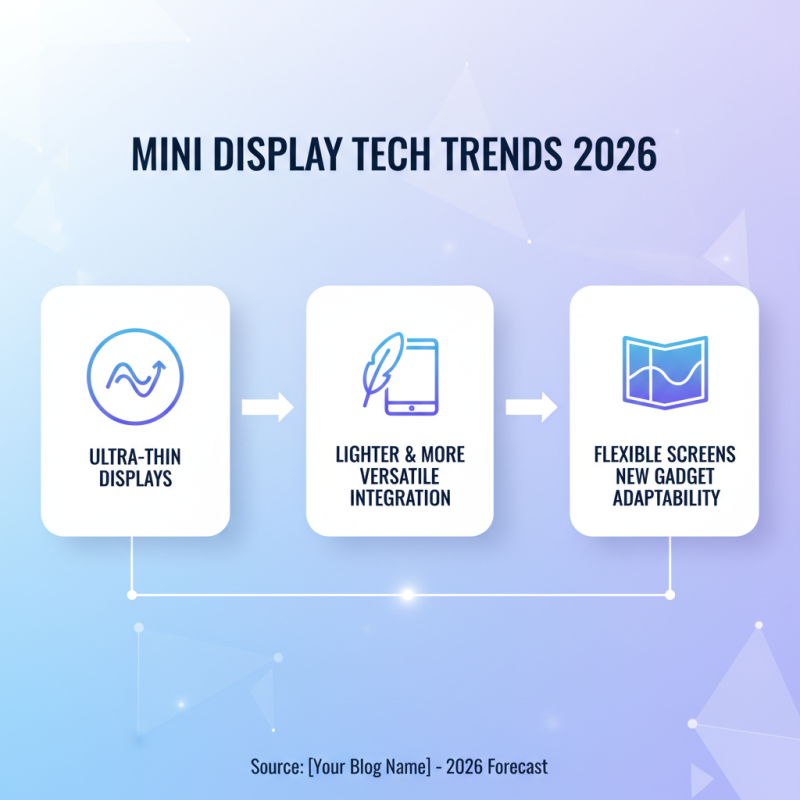
Emerging trends in mini display technologies for 2026 are quite fascinating. One trend is the shift towards ultra-thin displays. These displays are becoming lighter and more versatile. They are easier to integrate into various devices. Thinner designs open new possibilities for flexible screens. Users can expect more adaptability in their gadgets.
Another exciting trend involves higher resolutions. Displays are pushing beyond traditional limits. Expect to see advancements in pixel density and color accuracy. This technology will enhance visual experiences significantly. However, challenges remain. Some consumers might find high-resolution displays too demanding for their devices.
Innovative materials are set to reshape the market. New substrates are being developed for better performance. They promise improved durability and energy efficiency. Yet, the manufacturing process can be complex. This could lead to higher costs, and not all manufacturers will adapt quickly. Overall, mini display technology will undergo significant changes, but these changes come with hurdles that need careful reflection.
Advancements in OLED and MicroLED Display Technologies
The landscape of display technologies is evolving rapidly. OLED and MicroLED are leading this transformation. According to a recent report from IDTechEx, the global OLED market is expected to surpass $50 billion by 2026. This growth can be attributed to their exceptional color accuracy and energy efficiency. OLED displays provide deeper blacks and vibrant colors, making them ideal for high-end applications.
MicroLED technology is also gaining momentum. As detailed in a recent study by MarketsandMarkets, the MicroLED market is projected to reach $4.77 billion by 2026. MicroLED offers better brightness and longer lifespan compared to traditional LEDs. This technology utilizes microscopic LEDs, resulting in impressive pixel density and contrast ratios. Yet, challenges remain. Production costs and scalability issues could hinder widespread adoption.
Innovation is essential, but so is critical evaluation. While both technologies show promise, the environmental impact of manufacturing must be addressed. Sustainability in display production processes is increasingly necessary. As the industry charges ahead, the balance between technological advancement and ecological responsibility will be crucial. The future looks bright, but reflection on these key aspects is needed.
The Role of Quantum Dot Technology in Mini Displays
Quantum dot technology is revolutionizing mini display screens. It enhances color accuracy and brightness remarkably. These dots, tiny semiconductor particles, emit precise colors when light strikes them. This results in more vibrant visuals. Gamers and movie enthusiasts will greatly benefit from this advancement.
Tip: Look for displays with quantum dots for a brighter viewing experience. Check for color gamut specifications. The wider the gamut, the better the color reproduction.
However, adapting this technology comes with challenges. It can be costly to implement. Many manufacturers need time to innovate. Some displays may suffer from uniformity issues. It's crucial to research before purchasing any mini display.
Tip: Before investing, read reviews on color performance. Seek user feedback on brightness levels. This can save you from potential disappointments.
2026 Top Mini Display Technologies to Watch Out For - The Role of Quantum Dot Technology in Mini Displays
| Technology |
Description |
Advantages |
Potential Applications |
Market Trends |
| Quantum Dot Displays |
Utilizes nanoscale semiconductor particles to produce vibrant colors. |
Higher color purity, better energy efficiency, and improved brightness. |
Televisions, Monitors, and Mobile Displays. |
Growing demand in premium display markets with a focus on color accuracy. |
| MicroLED Technology |
Self-emissive display technology that incorporates microscopic LEDs. |
Excellent contrast ratios, ultrathin form factor, and long lifespan. |
Wearables, Large-scale displays, and Future TVs. |
Rapid advancements with significant interest from leading technology firms. |
| OLED Displays |
Organic compounds that emit light when electricity is applied. |
Superior contrast, vibrant colors, and flexibility for curved displays. |
Smartphones, Tablets, and High-end TVs. |
Stable growth with an increase in portable devices and flexible screens. |
| Mini-LED Technology |
Enhanced LED backlight technology using smaller LEDs. |
Improved local dimming, better contrast, and energy efficiency. |
Televisions, Monitors, and Gaming Devices. |
Increasing integration into consumer electronics due to better price-performance. |
Comparison of Mini Display Technologies in Terms of Performance
As we look towards 2026, several mini display technologies are emerging, each with unique strengths and weaknesses. The competition among OLED, MicroLED, and Mini LED is heating up. A recent report indicates that MicroLED displays exhibit a peak brightness of over 10,000 nits. This offers exceptional clarity in bright environments. However, manufacturing challenges remain.
OLED technology excels in color accuracy and viewing angles. Yet, it can suffer from burn-in issues. Reports suggest that OLED applications could drop in market share by 15% due to these concerns. Mini LED is gaining traction for its high dynamic range. It bridges the gap between OLED and traditional LCDs. Industry studies highlight that Mini LED panels can enhance local dimming zones. This results in better contrast ratios.
Tip: When considering new display technology, focus on your primary use case. Different needs can lead to starkly different opinions on the best technology.
Consider power consumption as well. Mini LED displays typically consume less power, which is crucial for portable devices. However, the trade-off may be in color performance compared to OLED or MicroLED. A careful balance is essential, depending on user preferences and product applications.
Potential Applications of Mini Displays in Various Industries
Mini display technologies are reshaping various industries. These compact screens enable immersive experiences in fields like gaming, healthcare, and automotive. In gaming, mini displays enhance the visual experience. Gamers get more detailed graphics, improving their engagement. Healthcare professionals can use mini displays for monitoring patients. Having critical data at a glance can save lives.
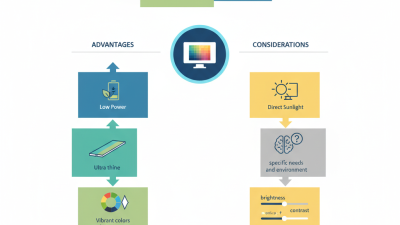
In the automotive sector, mini displays serve multiple purposes. They are used in dashboards and for navigation. These displays can provide real-time updates, improving safety. However, there are challenges in ensuring visibility under sunlight. The design must be flawless to enhance user experience. Otherwise, a poor display can be distracting while driving.
Retail is another field experiencing a mini display revolution. These screens can support interactive kiosks, engaging customers effectively. They present information in a concise manner. Yet, the challenge remains in content management. Keeping displays updated requires constant attention and resources. If neglected, the impact can dwindle, losing customer interest.