Choosing the best Explosion-Proof Robot from China requires more than comparing prices, payloads, or camera resolution. The right system must match the site, hazards, inspection duties, and operating environment. A robot designed for a dusty grain facility may not suit a refinery, chemical plant, or underground tunnel. Small details matter. Think sealed joints, protected cable glands, thermal monitoring, battery isolation, and stable movement across wet steel floors.
David A. Mindell, an MIT professor and robotics expert, explains a useful principle: “Robots are part of larger systems, not isolated machines.” That idea fits explosion-protected robotics perfectly. The robot, control station, charging equipment, operators, maintenance plan, and certification documents must work together. One weak connection can undermine an otherwise impressive machine. Buyers should examine IECEx or ATEX evidence where applicable, regional approval requirements, ingress protection ratings, operating temperature, communication reliability, and real field-testing records. Marketing language is not enough.
There is no universal winner. That is the uncomfortable part. A high-end model may be excessive for routine inspection, while a cheaper platform may fail under heat, vibration, or corrosive dust. Chinese manufacturers offer strong customization and competitive engineering, but quality varies between suppliers. Factory audits, sample testing, service response, and spare-parts availability deserve serious attention. Some specifications may remain unclear until testing begins. This guide compares the practical factors behind a dependable choice, while acknowledging that even careful selection involves compromises. Safety comes before convenience.
What Is the Best Explosion Proof Robot from China?
An explosion-proof robot is defined by controlled ignition risk, not by a rugged-looking shell. It must be designed for a specific hazardous environment, such as gas, vapor, or combustible dust. The correct protection method may include a flameproof enclosure, intrinsically safe circuits, or pressurized internal compartments. Each choice has strict limits.
A dependable robot should carry clear certification for its intended area classification. Documents must identify gas groups, temperature classes, dust ratings, and operating limits. Sealed joints matter. So do cable glands, battery compartments, motors, cameras, and charging interfaces. One weak connector can undermine the entire design. Look for tested ingress protection, static-control measures, thermal monitoring, and fault-safe shutdown. Small details matter most.
From practical inspections, heat management is often underestimated. A motor may remain safe in a laboratory but overheat beside a hot process line. Battery behavior also changes with age, load, and ambient temperature. I would not trust broad claims without test reports, maintenance procedures, and traceable components. Ask how the robot performs after repeated impacts, cleaning cycles, and long communication loss. Not every advertised solution fits every site. A careful buyer should compare the certification scope with the real workplace, including floor dust, ventilation, slopes, and required inspection intervals. Perfect certainty is difficult. That is why field validation remains necessary before deployment.
In hazardous environments, an explosion-proof robot must be selected according to the applicable hazardous-area classification, gas or dust group, equipment protection level, ingress protection, and certified temperature class. The chart shows the maximum surface temperature associated with the IEC 60079 temperature classes. A robot’s certified surface temperature must remain below the ignition temperature of the surrounding hazardous substance.
The best explosion-proof robot from China depends on the industrial task, hazard zone, and payload. A six-axis articulated robot suits paint booths, chemical transfer areas, and repetitive loading. Its sealed joints can reduce ignition risks when certified for the required gas or dust classification. For narrow warehouses, an explosion-proof autonomous mobile robot can transport drums, samples, or tools between marked stations. This reduces human entry into hazardous areas, although route control still needs careful testing.
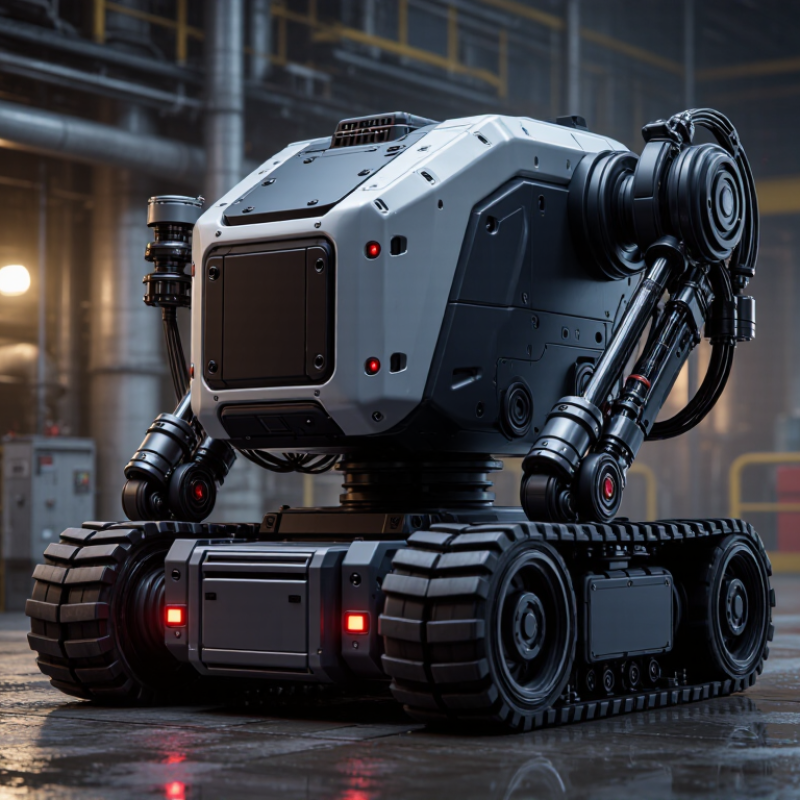
Inspection work demands another design. A tracked robot can move across uneven floors, inspect tanks, and carry thermal or gas sensors. It is useful in refineries, battery plants, and underground utility spaces. Lightweight collaborative robots may support sampling or valve operation, but their safety claims require close review. A normal collaborative robot is not automatically explosion-proof. Certification under suitable IECEx, ATEX, or local standards matters more than appearance.
Tips: Match the robot to the zone classification, temperature class, dust group, payload, and cleaning method. Request certificates, test reports, maintenance records, and ingress-protection data. The International Federation of Robotics reported 541,302 industrial robots installed worldwide in 2023, showing strong automation demand. Yet robot density does not prove hazardous-area readiness. The same report recorded about 4.28 million industrial robots operating globally. In practice, poor sensor placement or weak emergency procedures can undermine an expensive system. I would test navigation, charging, sealing, and recovery after power loss before deployment. No robot removes every workplace risk.
What Is the Best Explosion Proof Robot from China?
How Are Chinese Explosion-Proof Robots Designed and Certified for Safety?
Chinese explosion-proof robots are designed around the hazardous area, not only the task. Engineers first identify possible gases, vapors, dust, temperature ranges, and ignition risks. The robot may use a sealed metal enclosure, limited surface temperature, protected cable glands, and specially isolated electrical circuits. Battery compartments require careful control because charging and heat can create additional risks.
In real industrial inspections, small details matter. A loose connector, damaged seal, or blocked cooling path can weaken protection. Sensors, motors, cameras, and wireless modules must work without producing dangerous sparks. Engineers also test braking, emergency shutdown, static discharge, and operation on wet or uneven floors. The design should match the required zone, gas group, temperature class, and dust classification.
Certification normally involves documented risk assessment, prototype testing, production controls, and inspection by qualified laboratories. Depending on the destination market, manufacturers may follow Chinese requirements or international systems such as IECEx and ATEX. Certification covers a defined configuration, so changing the battery, camera, or communication unit may require a new review. A certificate is not a magic shield. Field maintenance, operator training, and inspection records remain essential. Some designs still need improvement, especially in weight, battery endurance, and remote-control reliability. That weakness deserves honest discussion.
The best explosion-proof robot from China should be judged by field performance, not appearance. IFR’s World Robotics 2024 report recorded 276,288 industrial robot installations in China during 2023. That scale shows manufacturing strength, but it does not prove hazardous-area suitability.
Start with certification and protection. The robot should match the required IEC 60079 equipment group, temperature class, and zone classification. Its enclosure rating also matters. IP66 protection can resist dust and powerful water jets, but it does not replace explosion-protection certification. Thermal control is critical near heated tanks or solvent lines. A small temperature rise can become a serious operating weakness.
Payload and reach must remain stable under protective housing. Heavy covers can reduce acceleration, battery life, and positioning accuracy. Check stopping distance, braking behavior, and recovery after communication loss. Wireless performance deserves practical testing around steel walls and process equipment. It often looks better in a laboratory.
The battery system needs equal attention. Charging should occur outside the hazardous area unless the complete system is certified for that location. Independent test records, traceable maintenance, and documented factory acceptance testing strengthen reliability. Reports from the International Electrotechnical Commission emphasize conformity assessment and ongoing inspection, not certification alone. That distinction is easy to overlook.
A useful field trial should measure uptime, thermal behavior, alarm response, and cleaning time. One imperfect point remains: no robot is “best” for every zone. The correct choice depends on gas group, dust conditions, task force, and maintenance discipline.
What Is the Best Explosion Proof Robot from China?
Choosing the best explosion-proof robot from China requires more than comparing prices and payloads. Buyers should define the hazardous area, gas or dust type, operating temperature, and required inspection distance. A robot designed for chemical storage may not suit an underground tunnel. The details matter.
Ask manufacturers for complete technical files, not promotional claims. Check certification scope, enclosure protection, surface temperature limits, battery safety, grounding, and radio communication. Documents should identify the tested robot configuration, not only a similar prototype. Request factory quality records, component traceability, and evidence of production consistency. A remote video is useful, but an independent factory audit is stronger. Small gaps often appear there.
Evaluate movement stability on wet floors, stairs, ramps, and narrow corridors. Review camera clarity in smoke, low light, and dust. Confirm emergency shutdown, data security, spare parts availability, training, and repair response times. A pilot test with realistic loads can reveal overheating or weak signal coverage. Do not accept every promised operating time. Battery life changes sharply in cold weather or during continuous climbing. Some manufacturers may need clearer documentation or faster feedback, and that should be recorded rather than ignored. A careful buyer compares test results, service capability, and long-term maintenance costs before selecting a model.
| Evaluation Dimension | Recommended Requirement | Compact Inspection Robot | Heavy-Duty Tracked Robot | Autonomous Patrol Robot | Buyer Verification Method |
|---|---|---|---|---|---|
| Primary Application | Match the robot to the inspection task, terrain and required payload. | Indoor inspection, valve reading, thermal imaging and routine patrols. | Rough ground, long corridors, emergency reconnaissance and heavier sensors. | Scheduled patrols, perimeter monitoring and repeated data collection. | Request a task-based demonstration using the buyer’s actual route and sensors. |
| Hazardous Area Classification | The certified equipment category must cover the site’s gas, vapor, dust and temperature risks. | Often suitable for controlled hazardous zones when the complete system is certified. | Suitable for demanding areas only when drive systems, batteries and payloads share the required protection level. | Suitable for fixed patrol routes if navigation, charging and communications equipment are included in the assessment. | Check the certificate scope, equipment group, zone, gas or dust classification and temperature class. |
| Explosion Protection Documentation | Documentation must identify the exact robot configuration, not only a similar product family. | Certificate and technical file should cover chassis, motors, batteries and installed instruments. | Requires special attention to high-current batteries, motor enclosures and thermal management. | Charging station, docking contacts and automatic accessories require separate review. | Request current certificates, drawings, protection concept, inspection records and change-control history. |
| Applicable Standards | Use standards accepted by the installation country and the site’s safety authority. | Common documentation may reference Chinese explosion-protection standards aligned with IEC principles. | May require additional machinery, electrical safety and electromagnetic compatibility evidence. | Autonomous functions add requirements for communication, fail-safe operation and remote control. | Confirm acceptance of relevant GB/T 3836, IECEx, ATEX or local requirements before purchase. |
| Mobility and Terrain | Evaluate slopes, thresholds, grating, wet floors, steps and turning space. | Typically optimized for smooth floors and narrow indoor routes. | Tracked drive provides better traction on uneven or contaminated surfaces. | Wheeled navigation is efficient on prepared floors but less suitable for obstacles. | Perform a route trial; record maximum slope, obstacle height, turning radius and recovery behavior. |
| Typical Operating Time | Battery life should cover the complete mission with a safety reserve. | Approximately 2–6 hours, depending on speed, payload, lighting and communication load. | Approximately 1.5–5 hours because tracked drive and heavier payloads consume more power. | Approximately 4–12 hours for low-speed patrols, subject to docking and environmental conditions. | Validate runtime using the actual payload, route, temperature and wireless conditions. |
| Payload and Sensors | Select only sensors required for the inspection plan and ensure their certification status. | Usually supports visible cameras, infrared cameras, microphones and gas sensors. | Better suited to multi-sensor payloads, manipulators or higher-capacity inspection equipment. | Designed for fixed sensor packages such as optical, thermal, acoustic and environmental sensors. | Check payload mass, power consumption, heat generation, mounting interface and certification. |
| Communication Range | The link must remain reliable through steel structures, walls and process equipment. | Commonly relies on industrial Wi-Fi or private wireless networks for remote operation. | May require mesh networking, radio relay units or tethered communications in complex facilities. | Usually depends on fixed access points, mapped coverage and a reliable backhaul connection. | Conduct a radio survey and test video, control, emergency-stop and data recovery functions. |
| Navigation and Control | Control behavior must remain predictable when positioning signals or communications fail. | Remote manual control with assisted viewing and optional route recording. | Remote control with obstacle handling and operator-assisted navigation. | Map-based autonomous navigation, scheduled missions and return-to-dock functions. | Test emergency stop, loss-of-link response, obstacle detection, manual override and safe shutdown. |
| Environmental Protection | Ingress protection, temperature, humidity, corrosion and cleaning conditions must match the site. | Often selected for indoor areas with controlled exposure to water and dust. | Generally preferred for outdoor, wet, dusty or mechanically demanding environments. | Requires protection for long-term outdoor exposure, charging equipment and weather changes. | Verify IP rating, operating temperature, corrosion resistance and cleaning restrictions through test records. |
| Data and Inspection Functions | The system should produce usable evidence, not only live video. | Video capture, thermal images, voice communication and basic equipment records. | Multi-sensor recording, remote diagnosis and optional inspection attachments. | Automatic schedules, trend comparison, alerts and integration with maintenance software. | Request sample reports, export formats, timestamps, audit trails and data ownership terms. |
| Maintenance and Battery Service | Maintenance procedures must be safe, documented and available locally or remotely. | Simpler chassis and sensor replacement; suitable for lower-complexity operations. | Requires stronger attention to tracks, seals, motors and battery thermal management. | Docking mechanisms, charging contacts, navigation sensors and software require regular service. | Check battery replacement procedure, spare-parts availability, service response time and training. |
| Best-Fit Use Case | Choose the lowest-complexity configuration that satisfies the safety and inspection requirements. | Best for compact indoor areas, frequent manual inspection and limited payloads. | Best for uneven terrain, emergency response and sensor-heavy missions. | Best for repetitive routes, continuous monitoring and centralized supervision. | Use total-risk and total-cost analysis rather than purchase price alone. |
| Overall Selection Priority | Safety compliance should be a pass/fail condition before performance and price are compared. | Suitable when portability, maneuverability and straightforward operation are the priorities. | Suitable when traction, durability and payload capacity outweigh compactness. | Suitable when automation, repeatability and data integration provide measurable value. | Shortlist suppliers only after certificate review, site testing, cybersecurity review and lifecycle-cost assessment. |