2025 How to Choose the Best LED Display for Your Business Needs
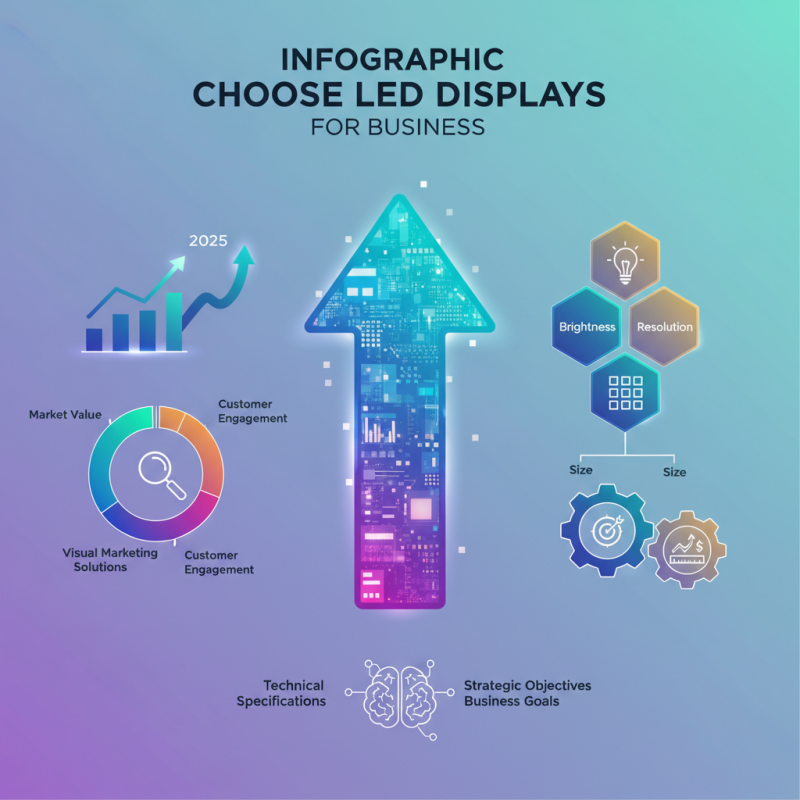
In recent years, the LED display industry has witnessed remarkable growth, projected to reach a market value of $26.97 billion by 2025, according to a report from Fortune Business Insights. This development can be attributed to the increasing demand for innovative visual marketing solutions among businesses looking to enhance customer engagement and brand visibility. As technology advances, the range of options available for LED displays continues to expand, making the selection process more complex yet crucial for businesses aiming to invest in effective advertising tools.
"Choosing the right LED display is not just a matter of aesthetics, but about understanding how well it can serve the specific needs of your audience," emphasizes Jack Turner, a leading expert in the display technology sector. His insights underline the importance of evaluating various factors such as resolution, brightness, and size relative to the intended use. With an array of choices available, decision-makers must carefully consider these aspects to ensure they select an LED display that aligns with their strategic objectives and maximizes return on investment. As we delve deeper into how to choose the best LED display for your business needs, it is essential to focus on both technical specifications and the overarching business goals driving this investment.
Factors Influencing the Size of LED Displays for Different Business Types
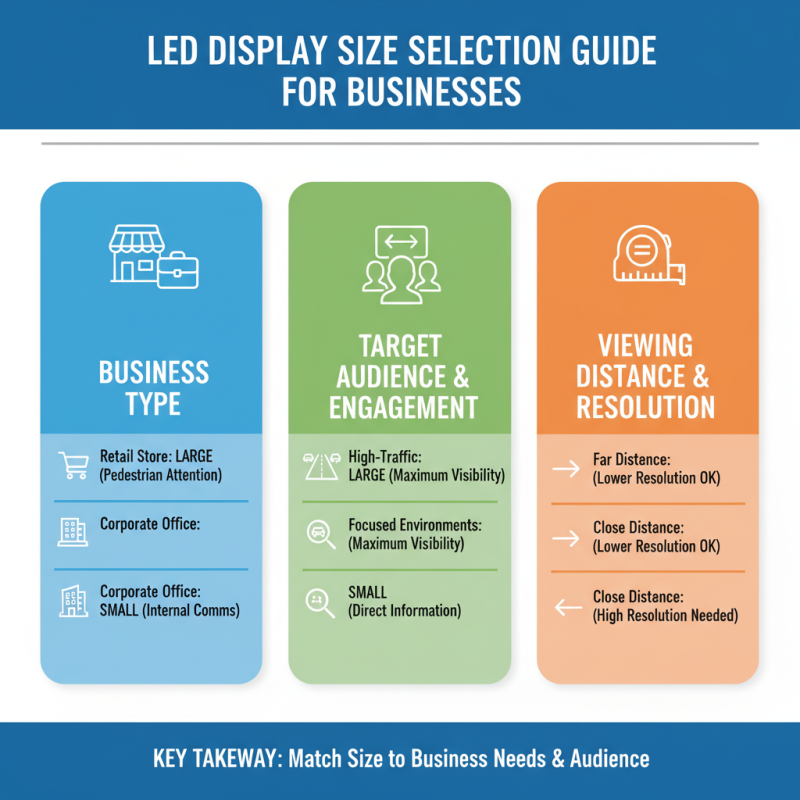
When selecting the right size of LED displays for your business, several factors come into play that can significantly influence your decision. The nature of your business is paramount. For instance, a retail store might benefit from larger displays to capture the attention of pedestrians, whereas a corporate office may only require smaller, discreet screens for internal communications. Understanding your target audience and their engagement level with the display is key. High foot traffic areas typically demand larger sizes, while more focused environments can operate effectively with smaller units.
Another critical consideration is the viewing distance. If your business environment involves customers viewing the display from afar, a larger screen ensures visibility and clarity. Conversely, if the audience is closer, such as in a conference room or small venue, smaller displays can suffice without sacrificing legibility. Additionally, the available space in your business setting must be assessed. It’s essential to choose a display size that complements the area while maintaining an aesthetically pleasing arrangement. Balancing these factors will help you select the best LED display that caters specifically to your business needs and enhances customer engagement.
Understanding Pixel Pitch: The Key to Image Quality in LED Screens
When choosing the best LED display for your business, understanding pixel pitch is critical to achieving high image quality. Pixel pitch refers to the distance between the centers of two adjacent pixels, typically measured in millimeters. The smaller the pixel pitch, the higher the resolution and clarity of the images displayed. According to a report by the International Display Consortium (IDC), displays with a pixel pitch of 1.2 mm to 3.0 mm are highly recommended for indoor applications where close viewing distances are common, such as retail environments or conferences. These displays provide vivid colors and sharp images, enhancing the viewers' experience.
Furthermore, various studies indicate that consumers are more likely to engage with visually appealing content. Research by MarketsandMarkets forecasts that the global LED display market will reach $28 billion by 2025, with pixel pitch playing a significant role in this growth. Specifically, displays with a pixel pitch of 2.5 mm or smaller account for a larger share of the market, emphasizing their importance in capturing attention and driving sales. As businesses increasingly rely on high-quality visual displays for marketing and informational purposes, selecting an LED display with the right pixel pitch becomes essential for maximizing impact and achieving specific business objectives.
2025 How to Choose the Best LED Display for Your Business Needs
| Pixel Pitch (mm) |
Resolution (pixels) |
Ideal Viewing Distance (m) |
Brightness (nits) |
Use Case |
| 1.2 |
1920 x 1080 |
1.2 - 10 |
1000 |
Indoor Events |
| 2.5 |
1280 x 720 |
2.5 - 15 |
800 |
Conference Rooms |
| 3.9 |
1920 x 1080 |
3 - 20 |
500 |
Outdoor Advertising |
| 4.8 |
1280 x 720 |
4 - 25 |
300 |
Large Venues |
| 10.0 |
640 x 480 |
10 - 40 |
200 |
Billboards |
Evaluating Brightness Levels: Choosing LEDs for Indoor vs. Outdoor Use
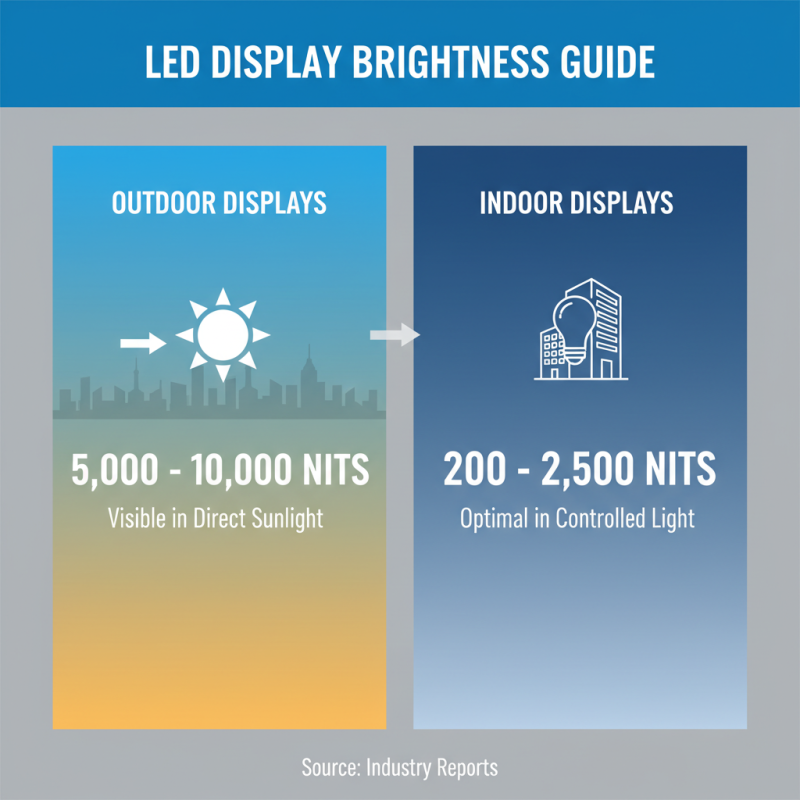
When selecting an LED display for business needs, understanding brightness levels becomes crucial, especially when distinguishing between indoor and outdoor use. According to industry reports, outdoor LED displays typically require higher brightness levels ranging from 5,000 to 10,000 nits to remain visible in direct sunlight. This is significantly higher than the typical indoor displays that operate optimally at around 200 to 2,500 nits. The disparity in brightness requirements is primarily due to ambient light conditions; outdoor environments often have unpredictably bright conditions, while indoor settings can be controlled for optimal viewing.
Furthermore, the choice of brightness not only affects visibility but also directly influences color accuracy and energy consumption. In a study conducted by the International Display Research, it was found that displays with higher brightness levels tend to consume more power, but newer technologies have introduced energy-efficient options that do not compromise on performance. For instance, advanced LED technology can deliver high brightness levels while keeping energy consumption at a minimum, making them a sustainable choice for businesses. Therefore, when evaluating LED displays, it is vital to consider both the brightness levels for the intended environment and the evolving technology that balances performance with energy efficiency.
Cost Analysis: Budgeting for Initial Purchase and Long-term Maintenance
When selecting the best LED display for your business needs, a critical factor to consider is the cost analysis encompassing both initial purchase and long-term maintenance. The upfront investment in quality LED displays can vary significantly based on size, resolution, and technology. It’s essential to establish a clear budget that reflects not only the cost of the display itself but also the installation expenses. A well-planned budget should include additional components such as mounting hardware and professional installation services, if required.
Equally important is anticipating long-term maintenance costs. While LEDs are known for their durability and low energy consumption, periodic maintenance is still necessary to ensure optimal performance. Businesses should factor in expenses related to servicing, repairs, and potential upgrades. Moreover, considering the warranty options offered can help mitigate unexpected costs and ensure satisfaction over time. Engaging with professionals to understand both the immediate and future financial commitments can ultimately lead to a more informed decision that aligns with your business objectives.
Cost Analysis of LED Displays for Business Needs
Exploring the Latest Technology Trends in LED Displays for 2025
As we approach 2025, the LED display industry is witnessing remarkable advancements that significantly enhance their capabilities and applications in various business settings. One of the most notable trends is the increased focus on energy efficiency and sustainability. Manufacturers are developing LED displays that consume less power while delivering superior brightness and clarity. This shift not only reduces operational costs for businesses but also aligns with a growing emphasis on environmentally friendly practices.
Additionally, the integration of smart technology into LED displays is transforming their functionality. Features such as IoT connectivity and AI-driven content management systems enable businesses to customize and optimize their messaging in real time. This allows for dynamic advertising strategies that can respond to consumer behavior and preferences on-the-fly, enhancing engagement and improving return on investment. As these technologies evolve, the ability to seamlessly incorporate interactive elements will also provide new avenues for creativity and consumer interaction.
As businesses prepare to choose the right LED display for their needs, understanding these emerging trends will be crucial. It’s essential to evaluate not only the technical specifications but also how these innovations can enhance brand visibility and customer experience in an increasingly competitive marketplace.