Why Choose an LCD Display Module for Your Next Project
In today's rapidly evolving technology landscape, the selection of the right display solution is crucial for the success of any project. The lcd display module has emerged as a popular choice among engineers and designers due to its versatility, ease of integration, and cost-effectiveness. When embarking on a new project, understanding the myriad benefits of utilizing an lcd display module can significantly influence design decisions and enhance user experience.
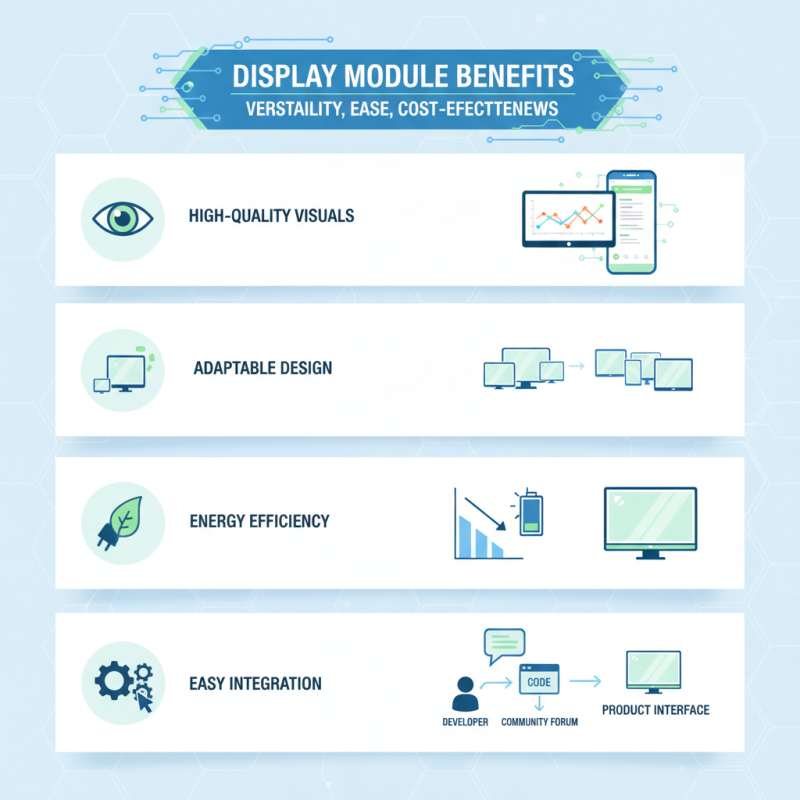
One of the primary advantages of lcd display modules is their ability to deliver high-quality images and sharp text, making them ideal for various applications, from consumer electronics to industrial instruments. These modules come in a range of sizes and resolutions, allowing for flexibility in design and function tailored to specific project needs. Furthermore, the low power consumption of lcd display modules contributes to energy efficiency, an increasingly important factor in sustainable design.
Additionally, the widespread availability of lcd display modules, paired with extensive documentation and community support, makes them an attractive option for developers at all skill levels. Whether you are working on a simple DIY project or a complex commercial application, the integration of an lcd display module can facilitate a more intuitive user interface, ensuring that the final product stands out in the competitive market. Embracing this technology can lead to innovative solutions and improved overall project outcomes.
Benefits of LCD Display Modules in Modern Projects
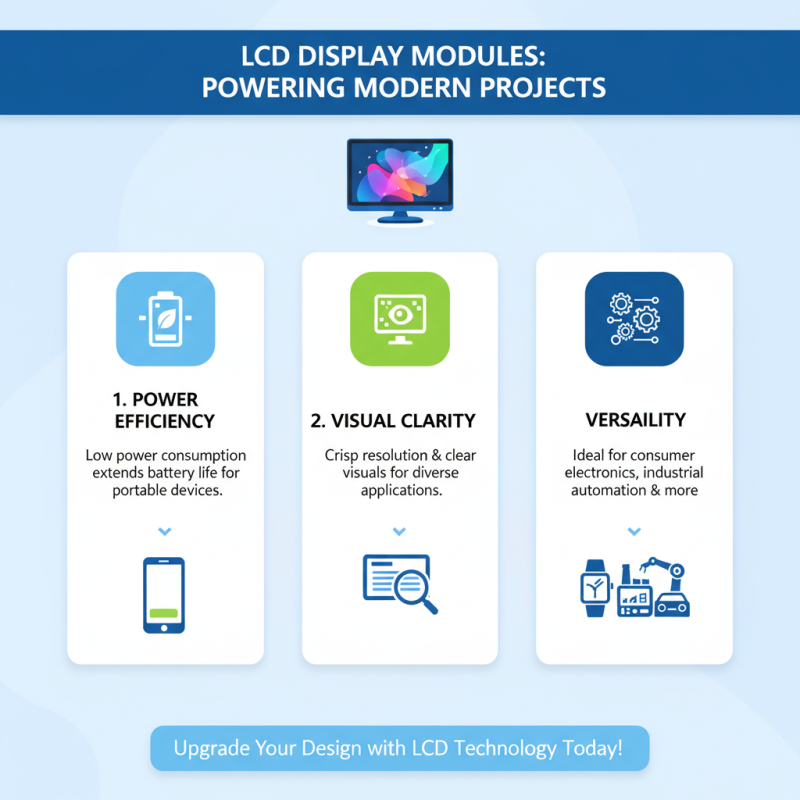
LCD display modules have become increasingly popular in modern projects due to their versatility and efficiency. One of the primary benefits of using LCD technology is its ability to provide vibrant visuals while consuming minimal power. This is particularly advantageous for battery-operated devices, as it extends their operational lifetime without compromising on display quality. Additionally, the crisp resolution and clarity of LCD displays make them suitable for a wide range of applications, from consumer electronics to industrial automation.
Another significant advantage of LCD display modules is their ease of integration into various projects. These modules usually come with standardized interfaces, allowing for straightforward connections to microcontrollers and other hardware components. This compatibility accelerates the development process, enabling engineers and designers to focus more on functionality and user experience rather than troubleshooting complex display issues. Moreover, the availability of different sizes and configurations means that there is likely an LCD solution that fits the unique requirements of any project, whether it's a compact mobile device or a larger information display system.
Key Features of LCD Display Technology
LCD display technology offers several key features that make it an ideal choice for various projects. One significant advantage is its excellent visual quality, characterized by sharp images and vibrant colors. This is achieved through the use of liquid crystals that modulate light, which allows for a wide range of colors and high resolution. The ability to display detailed graphics makes LCD modules particularly suited for applications such as medical devices, handheld gadgets, and interactive kiosks.
Another important feature of LCD display technology is its energy efficiency. Compared to other display types, LCDs consume less power, making them a cost-effective option for battery-operated devices. This characteristic is essential for applications where longevity and sustainability are key considerations. Furthermore, LCD panels come in a variety of sizes and configurations, offering flexibility in design, whether for compact devices or larger installations. Their slim profile allows for easy integration into any project, enhancing the overall aesthetic without compromising functionality.
Why Choose an LCD Display Module for Your Next Project - Key Features of LCD Display Technology
| Feature |
Description |
Benefits |
| Resolution |
The number of pixels in each dimension that the display can show. |
Higher resolution results in better image clarity and detail. |
| Viewing Angle |
The maximum angle at which the display can be viewed with acceptable visual performance. |
Wide viewing angles allow multiple viewers to see the display clearly. |
| Backlight Type |
The technology used to illuminate the display. |
LED backlights provide higher brightness and energy efficiency compared to older technologies. |
| Response Time |
The time it takes for a pixel to change from one color to another. |
Faster response times reduce motion blur in videos and animations. |
| Power Consumption |
The amount of electrical power the display consumes during operation. |
Lower power consumption can extend battery life in portable devices. |
| Durability |
The ability of the display to withstand physical stress and environmental conditions. |
Rugged displays are essential for industrial and outdoor applications. |
Comparison of LCD Displays with Other Display Technologies
When considering display technologies for your next project, it's essential to understand how LCD displays compare to other options like OLED and LED. According to a report by MarketsandMarkets, the global LCD display market is expected to reach $135 billion by 2025, driven largely by their cost-effectiveness and reliable performance. LCDs are particularly advantageous in applications where budget constraints are a factor, as they typically offer lower power consumption and are more affordable than OLED displays, which can be 30% to 50% more expensive per unit.
In terms of visibility, LCDs excel in well-lit environments. They offer good brightness levels and color accuracy, making them suitable for a wide range of applications, from industrial controls to consumer electronics. However, while LCDs perform well under various lighting conditions, they tend to struggle with color reproduction and viewing angles compared to OLED screens. A report from Display Supply Chain Consultants indicates that OLEDs can achieve deeper blacks and superior color contrast, making them ideal for high-end applications that prioritize visual fidelity.
Tips: When selecting a display type, consider your project’s specific requirements. If high brightness and cost-effectiveness are essential, an LCD display module may be the ideal choice. Always balance performance needs with budget constraints, as this can significantly affect your project's overall success. Additionally, pay attention to the display size and resolution, as these factors can greatly influence user experience.
Comparison of Display Technologies
Applications of LCD Display Modules in Various Industries
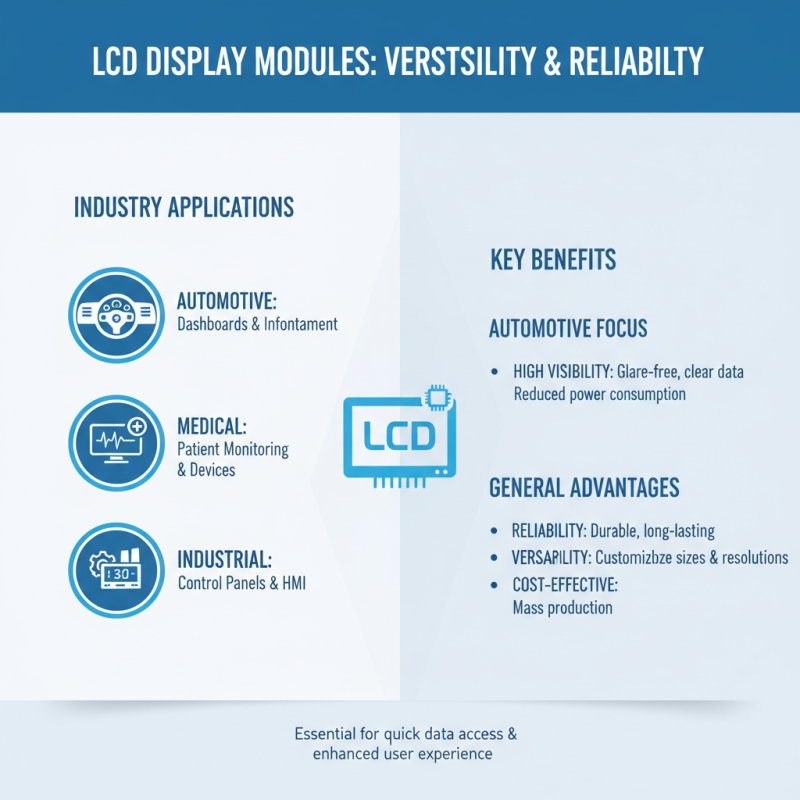
LCD display modules have become integral to a wide array of industries due to their versatility and reliability. In the automotive sector, for instance, these modules are utilized in dashboards and infotainment systems, providing drivers and passengers with crucial information at a glance. The high visibility and energy efficiency of LCDs make them ideal for use in vehicles, where quick access to data is essential for safety and user experience.
In the medical industry, LCD display modules play a pivotal role in diagnostic equipment, patient monitoring systems, and imaging devices. They enable healthcare professionals to view vital signs and diagnostic imagery with clarity and precision. This reliability is particularly important, as medical decisions often hinge on the accurate display of information. Furthermore, in consumer electronics, LCD displays enhance user interaction in devices such as smartphones, tablets, and smartwatches, where touch-responsive interfaces and clear visuals are paramount for usability. These applications demonstrate how LCD display modules continue to shape and innovate various industries, offering tailored solutions that meet specific operational needs.
Considerations When Selecting an LCD Display Module for Your Project
When selecting an LCD display module for your next project, there are several key considerations to keep in mind. First, it's crucial to determine the size and resolution you need for your application. The display size should complement the overall design of your project while ensuring that the resolution will provide clear visibility. Larger displays with higher resolutions can enhance user experience, especially in applications that require detailed visual information.
Another important factor is the interface type. Different LCD modules may support various communication protocols such as SPI, I2C, or parallel interfaces. Choosing the right interface not only simplifies integration with your existing hardware but also impacts the speed of data transmission. Be sure to evaluate the compatibility with your microcontroller or development board to avoid any integration headaches.
Tips: Always consider the operating environment as well. If your project will be installed outdoors or in bright conditions, opt for displays with higher brightness and contrast levels. Additionally, check for features such as backlighting options and power consumption ratings, as these can significantly influence the performance and longevity of your display module.