Why Choose LCD Module for Your Display Needs?
In today's tech-driven world, choosing the right display solution is crucial. An LCD module stands out as a versatile option for various applications. Whether in handheld devices, industrial controls, or medical equipment, these displays are widely used. LCD modules offer vibrant colors and sharp images, enhancing user experience significantly.
Many people overlook the advantages that LCD modules provide. They consume less power compared to other display types. This makes them suitable for battery-operated devices. Additionally, LCD modules are lightweight and thin, which is ideal for compact designs. But they can sometimes struggle in direct sunlight, affecting visibility. This is one area that requires careful consideration.
Investing in an LCD module can be a wise choice. However, potential buyers should reflect on their specific needs. Think about the environment where the display will be used. Evaluate factors like brightness and contrast. Sometimes, the best option means facing limitations. Ultimately, weighing these aspects will guide you in selecting the right LCD module for your display needs.

Understanding the Basics of LCD Technology in Displays
LCD technology has revolutionized the way we view images. Understanding its basics is crucial for anyone considering display options. Liquid Crystal Displays (LCDs) use a liquid crystal solution sandwiched between two layers of glass. Applying electric currents alters the crystals’ alignment, controlling light passage. This results in vibrant images with sharp clarity.
One notable aspect of LCDs is their energy efficiency. They use less power compared to older technologies. However, not all LCDs are created equal. Some may struggle with color representation in bright environments. That's a major flaw to consider. Additionally, viewing angles can be limited, which may affect the experience in certain settings.
Despite these drawbacks, LCDs play a significant role in various applications. From televisions to smartphones, their presence is omnipresent. They are favored for their lightweight design and slim profiles. But, it's essential to evaluate your specific requirements. What works perfectly for one scenario might fall short in another. This reflection can guide you in choosing the right display solution.
Why Choose LCD Module for Your Display Needs? - Understanding the Basics of LCD Technology in Displays
| Feature |
Description |
Benefits |
| Color Depth |
Supports a wide range of colors for vibrant displays. |
Enhances visual experience and representation of images. |
| Viewing Angle |
Typically 160 degrees horizontal and vertical viewing angle. |
Multiple users can view the display from various angles without distortion. |
| Response Time |
Fast response times, often less than 16ms. |
Reduces motion blur and ghosting in fast-moving images. |
| Power Consumption |
Low power usage compared to other display technologies. |
Saves energy and extends the life of the device. |
| Durability |
Built to withstand physical stress and environmental factors. |
Less prone to damage, ideal for industrial and outdoor applications. |
Advantages of Using LCD Modules for Various Applications
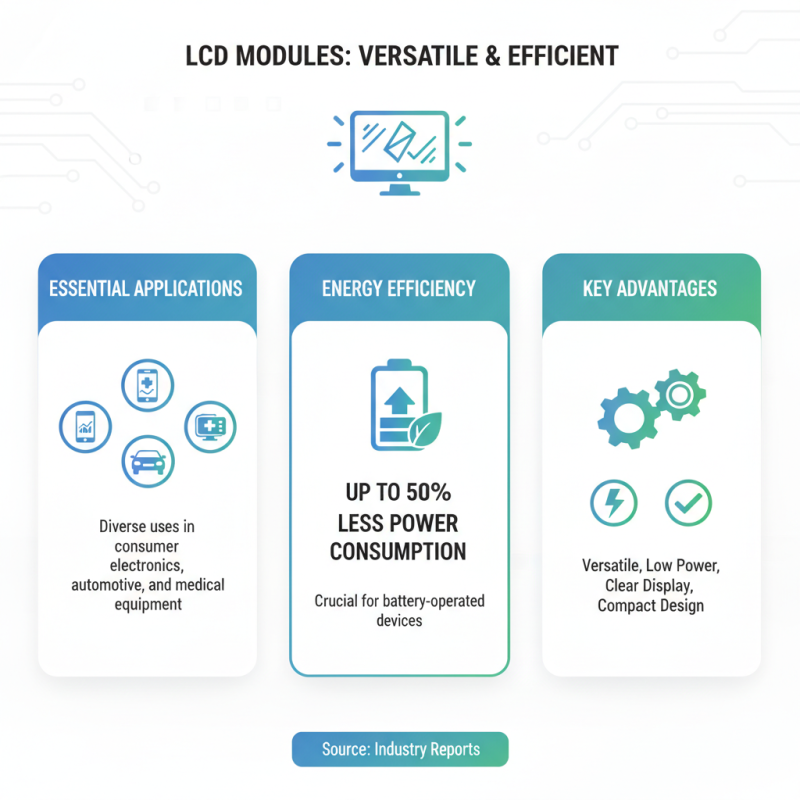
LCD modules have become essential for various applications due to their unique advantages. They are versatile and energy-efficient, making them ideal for diverse uses. According to industry reports, LCDs consume up to 50% less power than other display technologies. This aspect is particularly important for battery-operated devices.
In addition to energy efficiency, LCD modules offer excellent visibility. They deliver clear images and vibrant colors under different lighting conditions. Research shows that over 70% of users value display clarity in choosing devices. This is crucial for healthcare, automotive, and industrial applications where precise visibility can impact safety and functionality.
However, there are challenges. For instance, the viewing angles of some LCDs may not meet all desired specifications. This can lead to image distortion when viewed from the side. Users should weigh these factors against the benefits. Balancing these aspects can sometimes be tricky, but the overall advantages often outweigh the drawbacks.
Comparing LCD Modules to Other Display Technologies
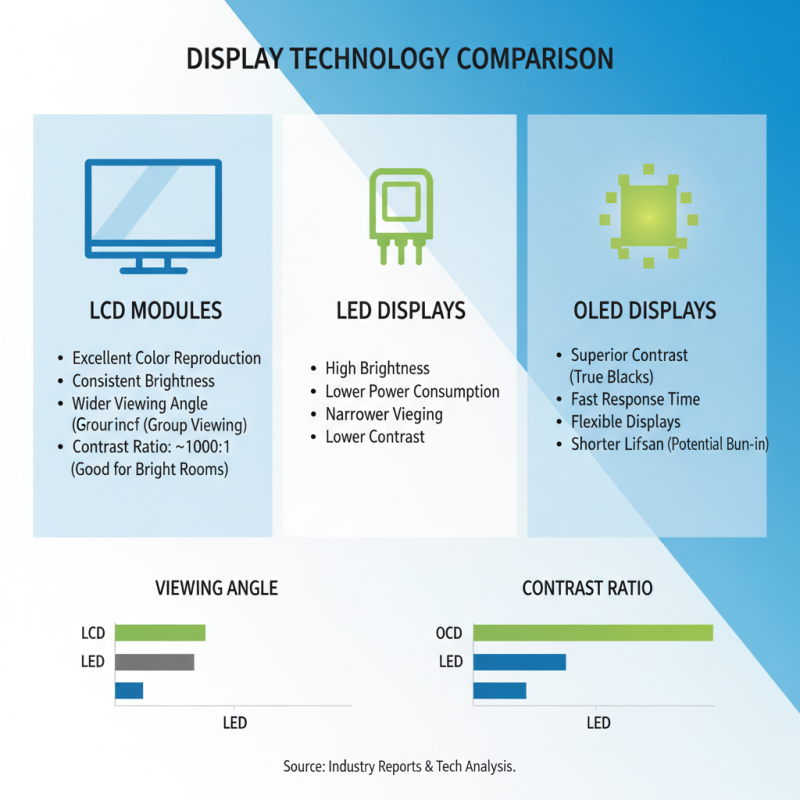
When comparing LCD modules to other display technologies, several factors stand out. LCDs are known for their excellent color reproduction and consistent brightness. Many industry reports highlight that LCDs offer a broader viewing angle than LED displays, making them preferable for group viewing scenarios. The average contrast ratio for LCDs is around 1000:1, which is competitive against OLEDs, especially in well-lit environments.
However, LCD modules can sometimes fall short in dynamic scenes. The response time for LCDs is typically slower than that of OLED displays, which can lead to motion blur. Reports suggest that this might be a critical factor for gaming or fast-paced video applications. In contrast, OLEDs provide better performance in darker environments but struggle with brightness levels in direct sunlight.
Tip: Always assess your display needs according to the environment. If you're using the display outdoors, consider brightness and visibility.
In addition, while LCDs can be less expensive upfront, maintenance costs can grow over time. Consider the long-term usage before making a choice. Another aspect worth noting is the durability; LCDs are generally more resilient to screen burn-in compared to OLEDs, which can be advantageous for static content displays.
Tip: Research different technologies before investing, particularly if you plan to use them in various conditions.
Factors to Consider When Choosing an LCD Module
When selecting an LCD module, several factors come into play. The display size is crucial. It dictates how much information can be viewed. A small screen might suffice for basic tasks, but larger displays enhance user experience.
Resolution is another important aspect. Higher resolution provides clearer images and text. It significantly impacts the readability of content. Brightness and contrast ratio also matter. An LCD module with good brightness ensures visibility in various lighting conditions. Low contrast can lead to eye strain, which users often overlook.
Consider the interface as well. Different modules offer various options. Make sure it’s compatible with existing systems. Power consumption is another critical point to ponder. Some LCDs consume more energy, affecting the overall efficiency. Decisions made here can either enhance or hinder performance. A thoughtful approach is necessary in choosing the right module.
Recent Innovations and Trends in LCD Displays
Recent advancements in LCD technology have transformed the way we approach display solutions. Enhanced refresh rates and faster response times are now standard features. This improves the clarity of images, especially in dynamic content. You'll find smoother motion and reduced blur. These innovations cater to both gamers and professionals who require precision in their visual experiences.
The integration of more vibrant colors is another key trend. Improved backlighting techniques allow displays to showcase deeper blacks and brighter whites. Color accuracy is not just a perk; it’s essential for designers and videographers. Yet, even with these advancements, some users report inconsistencies across different lighting conditions. Variations in performance can lead to frustration. Crafting a perfect display is still a work in progress.
Moreover, energy efficiency continues to be a significant focus. Modern LCDs consume less power while delivering stunning visuals. This is great for sustainability. However, some end-users might overlook the importance of proper calibration. A well-calibrated screen can make a difference in performance. Choosing an LCD module demands careful consideration of these innovations and their potential limitations.
Recent Innovations and Trends in LCD Displays
This chart illustrates the growth in key innovations within the LCD module market over the past few years, highlighting developments in resolution, power efficiency, and refresh rates.