How to Choose Anti Clogging DTF Ink for Your Printer?

Choosing the right Anti Clogging Dtf Ink can determine whether your printer runs smoothly or stops during an urgent production order. A reliable formulation should support stable ink flow, clean nozzle performance, and consistent color across different print runs. It should also match your printer model, printhead technology, film, and curing conditions.

DTF printing consultant David Burton says, “The best anti-clogging ink is not simply the thinnest ink; it is the one that remains stable from the bottle to the printhead.” This practical point matters. Ink may look perfect during the first test, yet develop sediment after several days. A transparent bottle can reveal uneven particles, separation, or unusual thickness. Those details deserve attention.

Check the manufacturer’s technical data before purchasing. Look for information about viscosity, pigment dispersion, shelf life, recommended storage temperature, and compatibility with your printhead. A dependable supplier should provide batch information and clear handling instructions. Real experience also matters. Test a small quantity before changing the entire ink system.

Watch the nozzle check closely. Broken lines, missing dots, or frequent cleaning cycles may indicate poor compatibility, dried ink, or incorrect maintenance. The ink may not be the only problem. Humidity, idle time, dampers, capping stations, and cleaning fluid can influence performance too.

There is no universal formula.

The most expensive option may still fail in your workshop. Choosing Anti Clogging Dtf Ink requires evidence, controlled testing, and a willingness to reconsider assumptions. A careful selection process protects print quality, reduces waste, and helps your printer perform consistently over time.
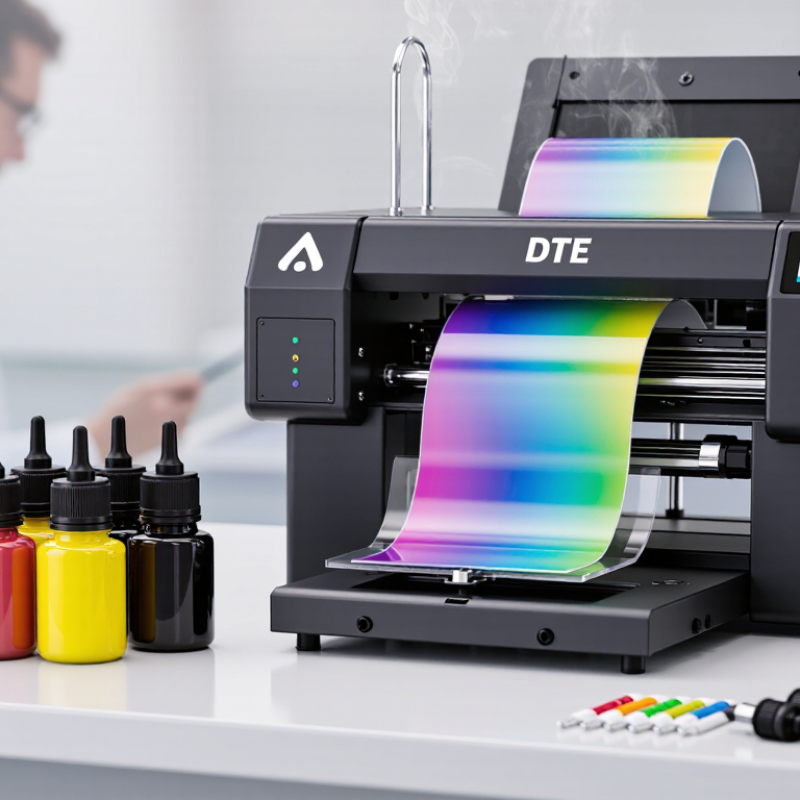
How to Choose Anti Clogging DTF Ink for Your Printer?

Understanding Anti-Clogging DTF Ink and Its Role in Printing

Anti-clogging DTF ink is formulated to keep printheads flowing smoothly during direct-to-film printing. Its balanced viscosity helps ink pass through tiny nozzles without forming thick residue. This matters because dried pigment can create missing lines, uneven colors, and costly cleaning cycles. In daily production, a printer may sit idle overnight. That short pause can reveal weak ink stability.

When choosing ink, check its compatibility with your printer’s printhead, ink delivery system, and curing process. Particle dispersion is important because poorly dispersed pigment may settle inside cartridges or dampers. A reliable ink should also provide consistent color density across different film batches. Test a small quantity before changing the full ink set. Print fine text, solid blocks, and skin-tone gradients. Watch the nozzle check after several hours.

Do not trust “zero clogging” claims too quickly. No ink can replace proper storage, humidity control, and routine maintenance. I have seen stable ink perform badly when a cartridge was exposed to heat and dust. That experience changed my selection process. I now record room temperature, idle time, nozzle checks, and cleaning frequency. The best choice is not simply the cheapest or brightest ink. It is the ink that remains consistent under your actual workflow, while producing flexible transfers with clear details and dependable wash resistance.

Checking Printer Compatibility Before Selecting DTF Ink

How to Choose Anti Clogging DTF Ink for Your Printer?

Checking printer compatibility must come before choosing anti-clogging DTF ink. A low-clog formula can still fail when its viscosity, surface tension, or particle size conflicts with the printhead. The machine’s technical sheet should confirm suitable ink chemistry, droplet volume, nozzle diameter, and recommended firing waveform. Do not rely only on “universal” labels. They often hide important differences.

Smithers’ digital textile printing outlook reports continued double-digit growth in some textile-printing segments through 2028. This growth increases demand for stable, replaceable ink systems, but compatibility remains a practical weakness. Test the ink on your actual printer. Check nozzle patterns after idle periods, white-ink circulation, color density, and curing performance. A clean test strip is useful. It is not proof of long-term stability.

Anti-clogging performance also depends on storage and maintenance. Inkjet Insight’s industry guidance emphasizes controlled temperature, regular agitation, and consistent humidity for reliable inkjet operation. Keep the ink near the supplier’s stated temperature range, commonly around 20–25°C, and avoid direct sunlight. Measure viscosity before production when possible. A printer may appear compatible for one week, then develop missing nozzles after repeated pauses. That possibility deserves more attention. In my experience, the safest selection combines laboratory specifications, a small production trial, and written confirmation from the ink supplier.

Comparing Ink Formulas, Pigments, and Anti-Clogging Performance

Choosing anti-clogging DTF ink requires more than checking color density. The formula matters. Water-based pigment ink usually combines finely milled pigments, dispersants, humectants, and resin. Humectants slow nozzle drying, while dispersants help prevent pigment clusters. A useful target is stable viscosity, often around 8–12 mPa·s for many DTF printheads. Always verify the printer manufacturer’s specification.

Pigment size matters greatly. Larger or poorly dispersed particles can settle inside white ink channels. White ink deserves extra attention. Its titanium dioxide load can increase sedimentation risk. Look for documented particle-size distribution, storage stability, and nozzle-recovery tests. Ask suppliers for decap-time results, purge frequency, and idle-cycle data. Laboratory claims are helpful, but real production conditions can be harsher. Temperature changes expose weaknesses quickly.

The 2023 Grand View Research report estimated the global digital textile printing market at approximately USD 2.67 billion, with a projected 12.1% CAGR from 2024 to 2030. This growth increases demand for reliable ink systems, especially in unattended production. Smithers’ digital textile printing research also identifies ink performance and printer reliability as important adoption factors. Still, market growth does not prove one formula is safer. My practical test is simple: print a nozzle check after 24, 48, and 72 hours of rest. Record missing nozzles, purge volume, sediment, and color shift. A small mistake remains possible. Ink can perform well in testing, then clog after repeated heat cycles.

How to Choose Anti-Clogging DTF Ink

The comparison uses a relative 1–10 formulation score, where higher values indicate characteristics generally associated with more reliable nozzle performance. Fine pigment dispersion, controlled viscosity, balanced surface tension, and sufficient humectant content can help reduce sedimentation, crusting, and nozzle clogging.

These are formulation-level reference scores rather than laboratory test results. Actual performance depends on printer temperature, nozzle design, storage conditions, and maintenance.

Evaluating Print Quality, Drying Behavior, and Maintenance Requirements

Anti-clogging DTF ink should be judged at the nozzle, not only on a bright transfer. Smithers’ 2024 digital textile printing market report forecasts double-digit growth, increasing pressure on shops to improve consistency. Use a fine-line chart, small text, and solid white blocks during testing. Inspect missing nozzles under magnification. Check color density after three consecutive prints. A smooth surface can still hide weak white coverage.

Drying behavior matters just as much. Record room humidity, platen temperature, and curing time for every trial. Ink that dries too quickly may form deposits near the nozzle plate. Ink that dries too slowly can smear during powder application. Run a rub test after curing, then repeat it after 24 hours. ISO 12647 principles support controlled, repeatable print conditions, but DTF workflows still need practical adjustment. That rule is useful, but imperfect. I would not trust one successful sample.

Tips: Store cartridges upright and sealed. Shake white ink gently before use. Print a small nozzle-check pattern daily. Measure drying, not merely appearance. Follow the printer’s maintenance schedule, then record actual cleaning frequency. If clogs return after cleaning, review humidity and idle time before increasing solvent or purge cycles. A 2024 market review by Grand View Research also identifies fast digital textile printing growth, making preventive maintenance financially important. More output usually exposes weak routines faster.

How to Choose Anti Clogging DTF Ink for Your Printer? — Evaluating Print Quality, Drying Behavior, and Maintenance Requirements

Ink Profile Typical Viscosity at 25°C Print Quality Nozzle Stability During Idle Time Drying Behavior on Film White Ink Sedimentation Risk Recommended Maintenance Interval Best-Suited Usage Overall Anti-Clogging Assessment
Standard Pigment DTF Ink 3.0–5.0 mPa·s Sharp edges, saturated colors, and consistent detail when the printer is used regularly. Moderate; short idle periods are generally manageable, but nozzle checks are advisable after extended pauses. Usually dries within 2–5 minutes before powder application under normal room conditions. Moderate to high for white ink because pigment particles can settle during storage or inactivity. Daily nozzle check; white-ink circulation or gentle agitation before use. Regular production with daily or near-daily printing. ★★★☆☆ Moderate
Low-Viscosity Anti-Clogging Pigment Ink 2.0–3.5 mPa·s Fine text and gradients are typically reproduced well when the printer profile is correctly adjusted. Good; reduced viscosity can support more stable droplet formation during short idle periods. Typically dries within 2–4 minutes; excessive ink laydown may still require additional drying time. Moderate; white ink still requires circulation because low viscosity does not eliminate pigment settling. Daily nozzle check; periodic damp-cap and wiper cleaning. Small shops and users who need reliable startup after intermittent operation. ★★★★☆ Good
High-Glycerol Moisture-Retaining DTF Ink 3.0–5.5 mPa·s Good color density and smooth fills, with a lower likelihood of dry nozzle deposits. Very good during short-to-medium idle periods because humectants slow evaporation at the nozzle plate. May dry more slowly, commonly requiring 4–8 minutes before powder application. Moderate; storage stability depends on the formulation and regular white-ink mixing. Daily nozzle check; clean the cap station and wiper at least weekly. Intermittent printing in dry climates or air-conditioned workspaces. ★★★★☆ Good
Fast-Drying DTF Ink 2.5–4.5 mPa·s High apparent sharpness and strong color definition when curing and powdering are well controlled. Lower; rapid solvent or water loss can increase the chance of nozzle-edge drying during inactivity. Fast drying, commonly about 1–3 minutes, but may form surface skin if left exposed too long. Moderate to high for white ink without regular agitation or circulation. Perform a nozzle check before each production session; avoid leaving the printhead exposed. High-throughput production with controlled humidity and minimal downtime. ★★★☆☆ Moderate
Low-Sedimentation White DTF Ink 4.0–7.0 mPa·s Strong white opacity and good underbase coverage when the printhead is correctly calibrated. Good with an active circulation system; less reliable if the ink remains stationary for long periods. Usually 3–6 minutes, depending on white-layer thickness and ambient humidity. Lower than conventional white ink, but settling cannot be completely eliminated. Use circulation during operation; agitate gently and inspect the white channel daily. Garments requiring high white opacity and consistent underbase coverage. ★★★★☆ Good
High-Opacity White and Color Set 4.0–6.5 mPa·s Excellent coverage, vivid color reproduction, and strong performance on dark textiles. Moderate; the heavier pigment load requires careful idle management. Commonly 3–7 minutes; thick white layers need adequate heat and airflow during curing. High unless the printer provides reliable circulation and the operator follows a regular mixing routine. Daily circulation and nozzle check; weekly cleaning of the cap, wiper, and ink lines. Production where opacity is prioritized over minimum maintenance. ★★★☆☆ Moderate
Long-Idle Moisture-Balanced DTF Ink 2.5–4.5 mPa·s Consistent everyday quality, although final results still depend on film, powder, curing, and color settings. Very good for short breaks and occasional printing when the printhead is properly capped. Generally 3–6 minutes; drying time increases with high humidity or heavy ink coverage. Moderate; the white channel still benefits from automatic circulation or regular manual mixing. Nozzle check before printing; perform a maintenance clean if the printer will be unused for several days. Low-volume users and businesses with irregular print schedules. ★★★★☆ Good

Evaluation note: The ranges shown are typical operating guidelines rather than universal specifications. Actual results vary with printhead design, ink temperature, ambient humidity, film coating, white-ink circulation, printer settings, and curing conditions. Always verify compatibility and perform a nozzle, adhesion, wash-resistance, and drying test before full-scale production.

Testing Ink Reliability Through Storage and Long-Term Printing Conditions

Choosing anti-clogging DTF ink requires more than checking color density. Storage stability often reveals weaknesses before production does. Smithers’ 2024 digital textile printing forecast identifies reliability and production consistency as major growth requirements for textile inkjet operations. That makes long-term testing essential, not optional.

Store sealed ink at 5°C, 23°C, and 40°C for 7, 14, and 30 days. Use 23°C and 50% relative humidity as the reference condition, consistent with ISO 291. Record viscosity, sediment, odor, and visible separation after each interval.

A practical screening target is less than 5% viscosity change and no sediment that remains after gentle mixing. These limits are useful, but not universal.

Then print the aged ink through the same printer and head. Count missing nozzles, nozzle recovery time, white-ink settling, and color deviation after 500, 1,000, and 5,000 passes. Keep nozzle loss below 2% during routine testing. That is a working benchmark, not a legal standard. ASTM D4332 also supports controlled temperature and humidity conditioning for comparative material tests. Small changes matter.

In my view, a 30-day test is still too short for some workshops. Real production includes overnight pauses, warm rooms, and partially used cartridges. Test those conditions too. A darker print may look impressive, yet unstable particles can quietly increase cleaning cycles. Not always obvious. Reliability should be measured after storage, interruption, and sustained printing—not only on the first bright transfer.

Scroll to Top