How to Choose the Best Electric Rickshaw?

Choosing the best Electric Rickshaw is not simply a matter of comparing prices. It is a practical decision about daily travel, operating costs, passenger comfort, and long-term reliability. Nitin Gadkari, a prominent voice in India’s electric-mobility sector, has said, “The future of mobility is electric.” His statement is broad, but it reflects a clear industry direction.

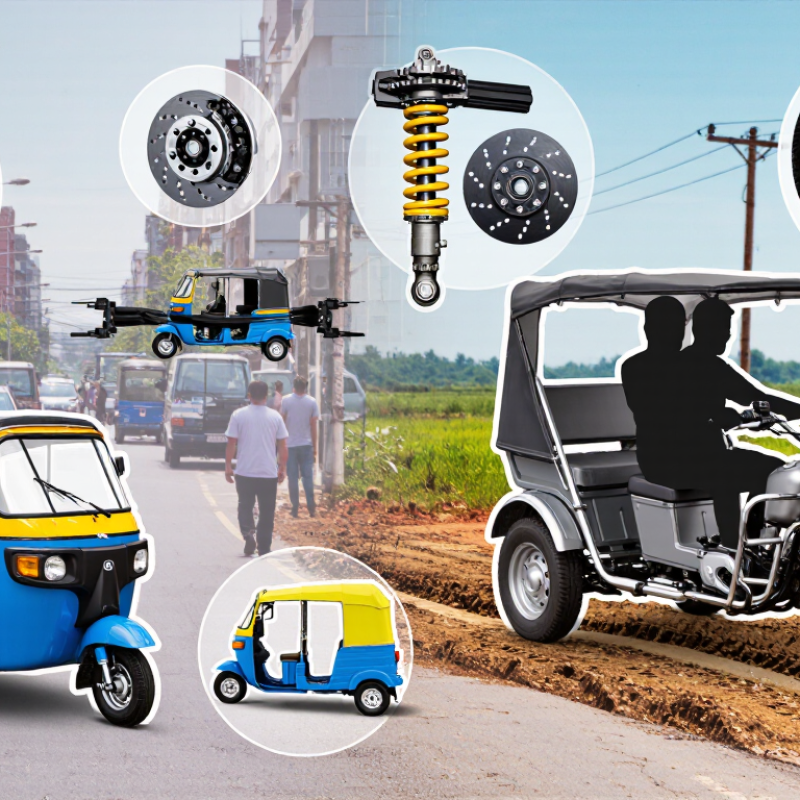
A suitable Electric Rickshaw should match its working environment. A vehicle serving crowded city streets may need a compact body, strong braking, and a tight turning radius. One operating on rough village roads may require higher ground clearance and a stronger suspension system. Battery capacity matters, but charging time matters too. A larger battery is not always the best choice. It can increase weight, cost, and replacement expense.

Buyers should examine the motor rating, battery chemistry, warranty terms, and spare-parts availability. They should also test the vehicle with a realistic load. A smooth test drive with an empty cabin can be misleading. Ask how the rickshaw performs after several hours of operation. Check the controller, wiring, lights, tires, and frame joints. Small faults become expensive when ignored.

There is no perfect model.

A careful choice also includes honest self-reflection. Some buyers focus heavily on purchase price and underestimate maintenance support. Others trust attractive range claims without considering hills, traffic, weather, or passenger weight. This guide compares the details that influence real-world performance, helping readers choose an Electric Rickshaw that is practical, safe, and financially sensible.
How to Choose the Best Electric Rickshaw?

Define Your Electric Rickshaw’s Intended Use and Passenger Needs

How to Choose the Best Electric Rickshaw?

Define Your Electric Rickshaw’s Intended Use and Passenger Needs

Start with the trip, not the motor. Is the rickshaw for school runs, hotel transfers, neighborhood taxis, or market deliveries? Each use changes the required seating layout, battery range, suspension, and entry height. The International Energy Agency’s Global EV Outlook 2024 reports that electric two- and three-wheelers represented about half of sales in China during 2023. That scale matters, but averages hide real passenger differences.

Ask how many people ride together, how often, and for how long. Record the heaviest normal load, not a convenient average. Then test the vehicle on the real route. Steep streets, broken pavement, rain, and frequent stops can reduce usable range. Battery capacity is not passenger capacity. Reserve space for bags and winter clothing. The World Health Organization’s Global Status Report on Road Safety 2023 estimates 1.19 million annual road deaths worldwide, so safe boarding deserves measurable attention. Check the step height, handrails, lighting, mirrors, braking, and seating stability.

A pilot day is more revealing than a brochure. Carry the intended passengers and luggage through repeated stops. Measure energy use, charging time, boarding delays, and driver fatigue. One imperfect test is useful. If passengers struggle to enter, the design is wrong, even when the motor performs well. Question optimistic range claims. Cold weather, hills, and heavy loads can expose planning errors. Choose the configuration that matches daily people, not ideal people.

Compare Motor Power, Battery Range, Charging Time, and Load Capacity

Choosing the best electric rickshaw starts with matching motor power to your daily route. A 1,000-watt motor may handle flat streets, moderate cargo, and steady urban traffic. For hills or frequent heavy loads, a higher-rated motor offers stronger starts and better control. Do not judge power by the number alone. Controller quality, gearing, wheel size, and rider weight also affect real performance. During a practical test, watch how quickly the vehicle moves from a full stop. A smooth launch matters more than impressive showroom figures. Test it uphill.

Battery range needs a safety margin. Manufacturers often measure range on level roads, with a light rider and calm conditions. Your route may include hills, stops, wind, and extra cargo. Choose a battery that covers your usual distance with roughly 20 percent reserve. Battery capacity, measured in watt-hours, is more useful than voltage alone.

For example, a 60-volt battery with 40 amp-hours stores about 2,400 watt-hours before losses. Charging time affects work planning. A larger battery may need eight hours or more with a standard charger. Check charging temperature, ventilation, and socket safety in the manual.

Load capacity must include the rider, passenger, tools, and goods. I once underestimated wet cargo; the added weight reduced acceleration noticeably. That mistake still matters. Leave room below the rated limit, because overloaded frames, brakes, and tires wear faster.

Evaluate Frame Design, Seating Comfort, Braking, and Safety Features

How to Choose the Best Electric Rickshaw?

Frame design affects stability, durability, and daily maintenance. A low center of gravity helps reduce body roll during turns. Inspect welded joints, cross-members, and battery mounting points closely. A strong frame should remain rigid under its rated payload, not only when empty. The IEA’s Global EV Outlook 2024 reports that India sold more than 580,000 electric three-wheelers in 2023. That growth makes practical inspection increasingly important. A shiny finish can still hide weak welds or early corrosion.

Seating comfort involves more than soft cushions. Check legroom, back support, grab rails, and suspension movement on uneven roads. Sit in every passenger position. Crowded footwells become tiring quickly. Braking deserves a loaded test, not a showroom demonstration. Test progressive pedal response, parking-brake holding, tire grip, and braking balance on dry and slightly uneven surfaces. WHO’s Global Status Report on Road Safety 2023 recorded about 1.19 million road deaths in 2021; vulnerable road users represented 53% of fatalities. That figure reinforces the value of bright lighting, reflective surfaces, effective mirrors, and reliable turn signals.

Look for protected wiring, a sealed battery compartment, reverse alerts, and secure door or side restraints. Safety belts may be useful where the design provides proper anchorage. Ask for service records and verified test documentation. I would not trust a single brochure claim. A model can feel comfortable yet brake poorly when fully occupied. That uncomfortable discovery is worth making before purchase.

How to Choose the Best Electric Rickshaw? - Evaluate Frame Design, Seating Comfort, Braking, and Safety Features
Evaluation Area What to Check Practical Target or Preferred Condition Why It Matters Priority Suggested Score
Frame Design Inspect the chassis material, welds, joints, corrosion protection, and visible deformation. A rigid frame with even welds, protected steel surfaces, and no cracks, loose joints, or severe rust. A strong frame improves stability, durability, and resistance to vibration when carrying passengers or cargo. High 0–5 points
Load Capacity Compare the rated payload with the expected number of passengers and typical cargo weight. The rated payload should exceed the normal operating load, while remaining within the vehicle’s legal limit. Overloading can increase stopping distance, accelerate component wear, and reduce handling stability. High 0–5 points
Wheelbase and Stability Assess the wheelbase, track width, center of gravity, tire condition, and resistance to body roll. The vehicle should remain stable during straight-line travel and controlled turns on the intended roads. Good stability helps reduce the risk of tipping and makes the rickshaw easier to control in traffic. High 0–5 points
Seating Comfort Check seat width, cushion support, backrest angle, legroom, step height, and passenger grab handles. Seats should support an upright posture, provide adequate legroom, and allow passengers to enter and exit without obstruction. Comfort is especially important for frequent passenger trips and longer operating hours. Medium 0–5 points
Passenger Protection Examine the roof, side curtains or doors, handrails, floor surface, and exposed moving parts. Passenger areas should have secure handholds, a non-slip floor, weather protection, and no sharp or exposed components. These features help reduce falls, impact injuries, and discomfort during boarding or travel. High 0–5 points
Braking System Test the service brake, parking brake, pedal response, cable or hydraulic condition, and brake balance. Braking should be smooth, progressive, and capable of stopping the fully loaded vehicle without pulling to one side. Reliable braking is essential because passenger loads and road conditions can change quickly. High 0–5 points
Tires and Suspension Inspect tread depth, tire age, inflation, wheel alignment, shock absorbers, and suspension mounting points. Use correctly rated tires with even wear and suspension components that are free from leakage, looseness, or unusual noise. Healthy tires and suspension improve grip, ride comfort, steering control, and braking performance. High 0–5 points
Lighting and Visibility Test headlights, rear lights, brake lights, turn indicators, reflectors, mirrors, and the horn. All required lights and signaling devices should work clearly in daylight and low-light conditions. Visibility equipment helps other road users recognize the vehicle and understand the driver’s intentions. High 0–5 points
Battery System Check battery type, installation, charging time, charge indicator, ventilation, terminals, and protective enclosure. The battery should be securely mounted, protected from accidental contact, and compatible with the supplied charger. A properly maintained battery system supports dependable operation and lowers electrical and fire risks. High 0–5 points
Electrical Safety Inspect wiring insulation, connectors, fuses, switches, controller enclosure, and signs of water ingress. Wiring should be organized, insulated, secured against vibration, and protected from moisture and abrasion. Good electrical protection reduces the likelihood of short circuits, power loss, and component damage. High 0–5 points
Driver Controls Evaluate steering effort, throttle response, instrument readability, control placement, and driving position. Controls should be easy to reach and operate smoothly without forcing the driver to look away from the road. Clear controls reduce driver fatigue and support better reaction times in busy areas. Medium 0–5 points
Safety Equipment Confirm the availability of a suitable fire extinguisher, first-aid kit, warning triangle, and emergency isolation switch where applicable. Emergency equipment should be accessible, clearly marked, and maintained according to local requirements. Basic safety equipment can help manage minor incidents before professional assistance arrives. High 0–5 points
Weather Protection Check the roof, windshield, wipers if fitted, drainage, side covers, and ventilation. Passenger and driver areas should provide practical protection from rain and sun without blocking visibility. Weather protection improves comfort and helps maintain safe visibility in changing conditions. Medium 0–5 points
Maintenance Access Review access to brakes, tires, battery, fuses, charging components, and routine inspection points. Frequently serviced parts should be reachable without removing unnecessary body panels or special assemblies. Easy maintenance can reduce downtime and help operators identify safety problems earlier. Medium 0–5 points
Legal and Operating Fit Verify local rules for registration, passenger capacity, lighting, speed limits, road access, and driver requirements. The vehicle’s specifications and intended use should comply with the regulations in its operating area. Legal compliance prevents avoidable operating restrictions, fines, and unsafe use conditions. High 0–5 points
Scoring guide: 0 = unacceptable, 1 = poor, 2 = below average, 3 = acceptable, 4 = good, and 5 = excellent. Always confirm the applicable requirements with the local transport authority before purchase.

Check Build Quality, Weather Protection, Maintenance, and Spare Parts

Choosing an electric rickshaw requires more than checking its advertised range. The IEA’s Global EV Outlook 2024 identifies electric three-wheelers as a major growth segment in emerging markets. In India, electric models represented more than half of new three-wheeler sales in 2023. That growth makes quality inspection essential. Examine the chassis welds, floor joints, suspension mounts, and door hinges. Uneven welds or thin panels may indicate faster wear under daily commercial loads. Ask for the battery’s usable capacity, warranty terms, and certified safety testing.

Weather protection deserves a practical test. Sit inside during heavy rain simulation, and inspect roof seams, window channels, wiring covers, and drainage points. Water near the controller or battery compartment can create expensive faults. The World Bank’s Electric Mobility report emphasizes that climate, road conditions, and charging access strongly influence electric vehicle reliability. A sealed cabin helps, but ventilation still matters in hot weather. Small details matter.

Maintenance records should be easy to understand. The International Energy Agency reports that battery performance depends heavily on temperature, charging habits, and vehicle use. Confirm service intervals, brake availability, tire sizes, diagnostic support, and local technician training. Spare parts should have clear part numbers and realistic delivery times. Ask whether a damaged lamp or switch can be replaced separately, rather than requiring a complete assembly. I prefer simple, repairable systems. They are not always the newest. That is my imperfect judgment. A long warranty sounds reassuring, but slow parts supply can still stop work for days.

Review Total Cost, Warranty Coverage, Legal Requirements, and Dealer Support

Choosing the best electric rickshaw requires more than comparing showroom prices. Review the total cost over several years. Include the battery, charging equipment, insurance, registration, servicing, tires, and likely repairs. I once focused too much on the purchase price. That was a mistake. A cheaper vehicle may become expensive after one battery replacement. Ask for an itemized quotation, not a verbal estimate. Small omissions matter.

Warranty coverage needs careful reading. Check the coverage period for the vehicle, motor, controller, charger, and battery separately. Confirm whether labor, transport, and replacement parts are included. Some warranties exclude heavy daily use or poor maintenance. Request these conditions in writing. Keep invoices and service records. They may protect a valid claim. Dealers should explain technical terms clearly and provide realistic repair times. Promises without documents are weak evidence.

Legal requirements differ by country, state, and city. Before paying, check registration rules, approved lighting, mirrors, brakes, speed limits, and driving permissions with the relevant transport authority. Ask whether the vehicle needs inspection or special insurance. Do not rely only on a dealer’s opinion. Dealer support also matters after delivery. Test their response by asking about parts availability, technician training, and roadside assistance. Visit the workshop if possible. A clean facility is encouraging, but it proves little alone. I would also speak with local owners, because my own evaluation can miss inconvenient daily problems.

Scroll to Top