2026 How to Choose the Best LED Display Module for Your Project?
In the rapidly evolving landscape of digital signage, selecting the right LED display module is crucial. Industry expert Dr. Emily Lawson states, "The right LED display module can transform how businesses engage their audience." This highlights the impact of these displays on communication effectiveness.
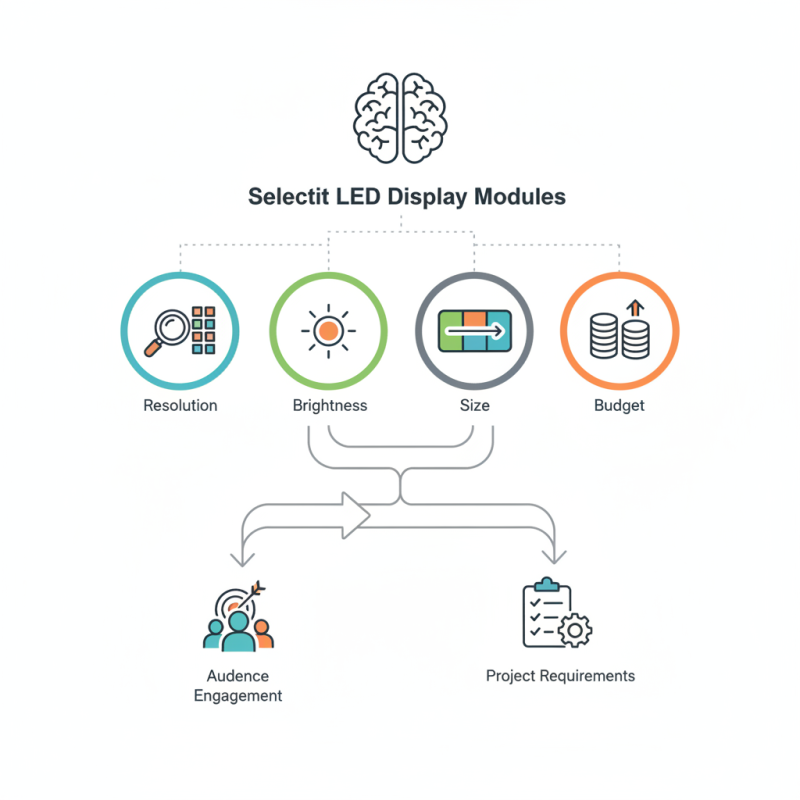
With a variety of options available, decision-making can be overwhelming. Factors such as resolution, brightness, and size must be considered. For instance, a high-resolution LED display module is essential for clear imagery in large venues. On the other hand, budget constraints often challenge optimal selections.
Understanding your specific requirements can help streamline this process. Remember, not every LED display module fits every project. It’s important to reflect on your goals. Prioritizing clear communication can lead to better audience engagement overall. Embrace both the challenges and opportunities that come with choosing the right module for your project.
Understanding the Basics of LED Display Modules
LED display modules have transformed the way we present information. Understanding the basics is crucial for choosing the right module for any project. These screens come in various types, including indoor and outdoor displays. Their brightness, pixel pitch, and resolution significantly impact visibility and clarity.
Brightness determines how well a display can be seen in different lighting conditions. Outdoor modules require higher brightness compared to indoor ones. Pixel pitch, the distance between LED pixels, affects image resolution. A smaller pixel pitch results in a sharper image but may also increase cost.
Consideration of the module’s configuration is essential. Some setups allow for flexibility in design, while others are more rigid. Often, practical needs and budget constraints lead to compromises. You might start with a vision that doesn’t fully align with the realities of available modules. Reflecting on this can guide future choices more effectively.
Key Factors to Consider When Selecting an LED Display Module
When selecting an LED display module for your project, several key factors come into play. The pixel pitch is crucial, as it determines the clarity and detail of the visual. A smaller pitch gives a sharper image, ideal for close viewing. The module's brightness is another important consideration. It helps ensure visibility under various lighting conditions. Too low brightness might make your display hard to read outdoors.
Additionally, consider the module's resolution. Higher resolution offers better image quality. It is essential for projects with intricate graphics or text. The LED technology used also affects the overall performance. Different technologies have varying lifespans and color accuracy, impacting your project’s longevity and appeal.
Reflecting on your project's environment is vital. Will it be indoors or outdoors? This affects your choice significantly. Remember to review the power consumption and connectivity options, as they can affect installation and operational costs. Balancing all these factors can be daunting. Yet, this process is essential for achieving the desired results. Making the right choice might take time and careful planning.
2026 How to Choose the Best LED Display Module for Your Project? - Key Factors to Consider When Selecting an LED Display Module
| Feature |
Specifications |
Recommendations |
| Pixel Pitch |
2.5mm - 10mm |
Choose 2.5-5mm for indoor, 6-10mm for outdoor applications. |
| Brightness |
800-5000 nits |
Aim for 1500 nits for indoor, and at least 2500 nits for outdoor. |
| Color Depth |
8-bit to 16-bit |
16-bit preferred for high quality visuals. |
| Viewing Angle |
>140 degrees |
A wider viewing angle enhances visibility for larger audiences. |
| Refresh Rate |
60Hz - 3840Hz |
Higher rates (above 120Hz) for video applications. |
| Operating Temperature |
-20°C to 50°C |
Ensure suitable module for local climate conditions. |
| Power Consumption |
<200W/sqm |
Opt for energy-efficient models where possible. |
Evaluating Brightness and Resolution for Your LED Display Needs
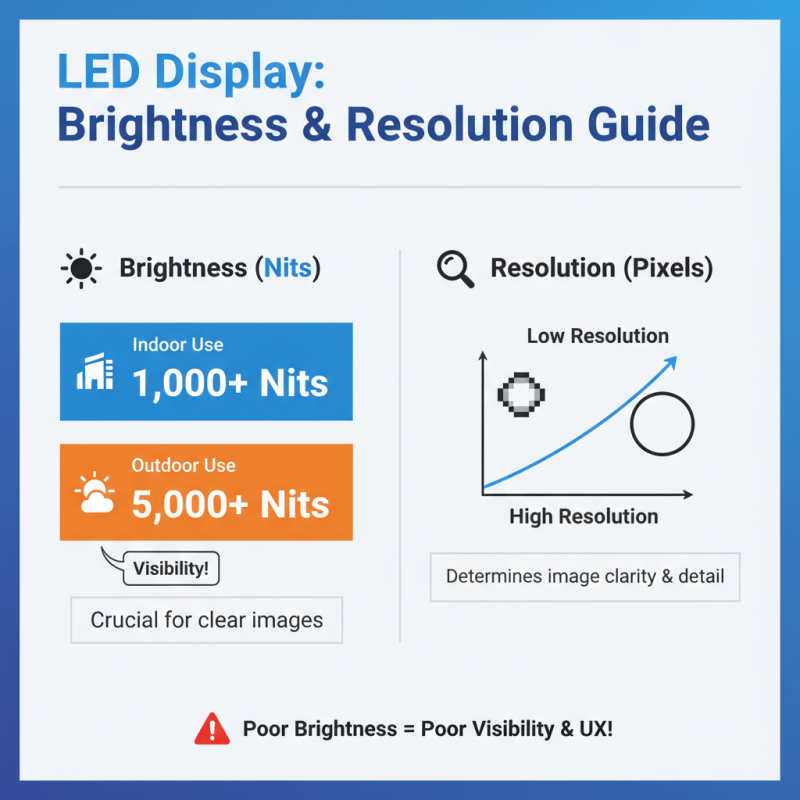
When selecting an LED display module, evaluating brightness and resolution is crucial. Brightness, measured in nits, significantly affects the visibility of your display. Industry studies indicate that a brightness level of 1,000 nits is typically adequate for indoor use, while outdoor displays require at least 5,000 nits. This disparity highlights the importance of understanding your environment. Choosing a display that isn't bright enough can lead to poor visibility, ultimately affecting user experience.
Resolution complements brightness. It is essential for delivering clear images and text. Resolution is measured in pixels per square meter. A commonly accepted minimum for HD displays is 5,000 pixels per square meter, while 15,000 pixels per square meter is advisable for close-viewing applications. If your display's resolution is too low, it may result in a pixelated image, undermining the effectiveness of your content. Reflecting on your audience’s viewing distance can guide your choice. Too high a resolution may lead to unnecessary costs, while too low can compromise quality.
Many designers sometimes overlook these details. A common mistake is prioritizing one aspect, like brightness, without considering resolution. The balance between the two is key. As your project evolves, revisiting these choices is important. Gathering data on your specific use case helps refine your approach. Each project brings unique challenges. Adjusting based on feedback can lead to a more effective display solution.
Comparing Different Types of LED Display Technologies
When it comes to LED display technologies, understanding the options is crucial. Different types cater to specific needs. For example, OLED displays offer vibrant colors and deep blacks, making them ideal for high-end applications. However, they can be expensive and may suffer from burn-in issues over time.
On the other hand, LCD displays are widely available and generally more affordable. They provide good brightness levels but may struggle in direct sunlight. When choosing, consider your project's environment. A wells-lit room versus outdoor settings will significantly influence your choice.
Tips: Always assess the pixel pitch. Smaller pitches mean higher pixel density, leading to clearer images. Think about your audience. For close viewing, a finer pitch is necessary. Don't overlook the importance of power consumption. More energy-efficient displays save money in the long run but may require a higher initial investment.
Selecting the right LED display involves careful consideration of various factors. It’s essential to weigh the pros and cons of each technology while visualizing your project's requirements. In the end, the perfect fit can make all the difference in achieving your goals.
Determining the Best Size and Shape for Your Project Requirements
Choosing the right size and shape for your LED display module is crucial. It can affect the visibility and overall impact of your project. A smaller, compact module works well for tight spaces. Conversely, larger displays are more suitable for public viewing areas. Consider your project's specific requirements before making a decision.
Think about the viewing distance. If people will be far away, a larger module is necessary for clarity. The shape also plays a role. Standard rectangle designs fit most needs, but custom shapes can enhance creativity. Evaluate the installation environment. Will it be indoors or outdoors? Different situations call for different considerations.
Testing various sizes with prototypes can help. Sometimes, what seems ideal on paper doesn’t work in practice. Don't rush the decision. Take time to analyze your project's demands. Flexibility in design will lead to better outcomes. Don't hesitate to seek advice from experts in display technology. Their insights can guide you toward the best choices.
2026 LED Display Module Size and Shape Preferences
This bar chart represents the preference distribution for different sizes of LED display modules as considered for various projects in 2026. The data indicates that medium-sized modules (21-40 inches) are the most popular choice among users, with a significant preference also for small and large sizes.