Top Tips for Choosing the Best LED Display for Your Needs?
Choosing the right LED display can significantly impact your project’s success. It involves balancing multiple factors. The clarity, brightness, and size of the display need to meet your specific requirements. Often, users overlook important details.
When selecting an LED display, consider where it will be used. Indoor displays contrast sharply with outdoor units. The viewing angle also plays a critical role in how effective the display will be. Look for displays with high resolution for better image quality.
Some buyers tend to prioritize cost over quality. This decision can backfire. A low-quality LED display may not perform well, resulting in frustration. Reflecting on these aspects will help you find the best display for your needs. Careful consideration can lead to a choice that enhances your project's visibility.
Key Factors to Consider When Selecting an LED Display Size
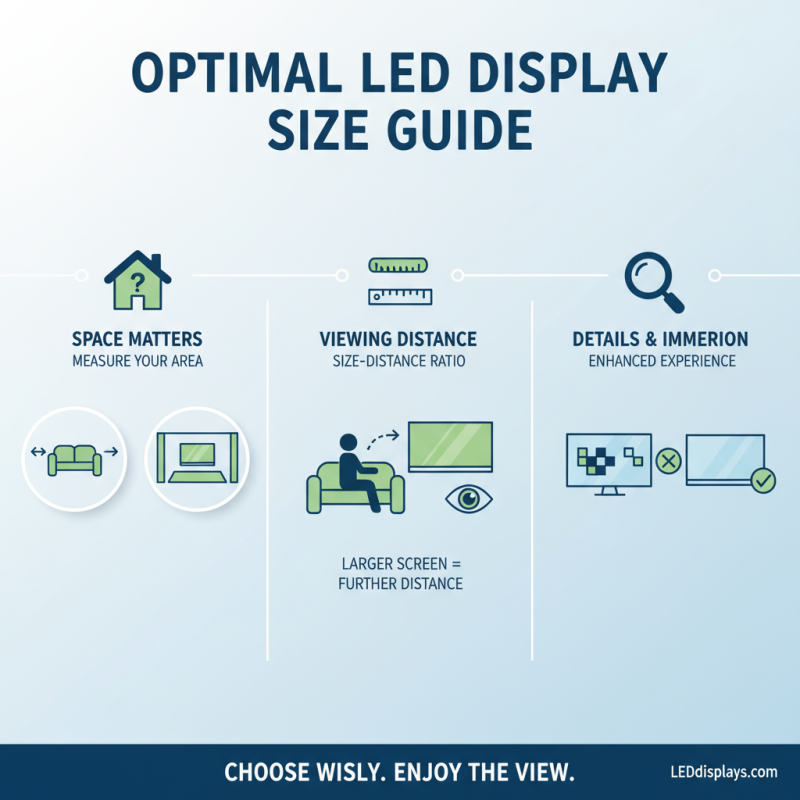
Choosing the right LED display size can significantly impact your viewing experience. Think about where you'll place the display. A larger display may overwhelm smaller spaces. Conversely, a tiny screen in a vast room can make it tough to see details. Measure your area carefully before finalizing your choice. Consider the viewing distance too. The recommended distance for LED display viewing often depends on the size.
Another factor to reflect on is the purpose of the display. Will it be for presentations or entertainment? Displays for events may need a larger size to ensure everyone sees the content. However, if it’s for personal use at home, a moderate size works better.
Don’t forget the content you plan to showcase. High-resolution images work best on larger screens. Low-resolution content can be pixelated on oversized displays. Think about how the content interacts with the display size. It's a balance that's essential for effective communication. Making the right choice is important, yet it can be challenging.
Understanding Resolution and Image Quality for Optimal Performance
When selecting an LED display, understanding resolution is crucial. Resolution refers to the number of pixels on the screen. Higher resolution means better image quality and clarity. For instance, a display with 1920x1080 pixels will provide a sharper image than one with 1280x720. This detail is essential for applications like presentations or video content.
Image quality is influenced by both resolution and pixel density. Pixel density describes how closely the pixels are packed together. A display with high pixel density will appear clearer, especially from a close distance. It’s worth considering the viewing distance when evaluating these factors. If the audience is close, higher pixel density may be necessary.
However, the best choice is not always straightforward. Too high a resolution can strain the budget without significant benefits in everyday use. Balancing cost and performance requires careful thought. Reflecting on specific use cases can help guide the decision, ensuring the chosen display meets the needs without overspending.
Evaluating Brightness Levels for Various Lighting Conditions
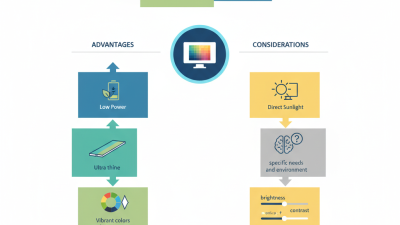
When selecting an LED display, brightness plays a crucial role. Different environments demand varying brightness levels. For outdoor use, higher brightness is vital. Displays in direct sunlight should be at least 4000 nits. This ensures visibility, even in harsh conditions. Indoors, lower brightness may suffice, usually around 250-500 nits. However, consider your specific lighting conditions.
Evaluating the location is essential. Bright spaces may wash out a dim display. Conversely, darker environments might require less brightness. An imbalance can lead to eye strain. Adjust accordingly based on whether the display is in a shop, a conference room, or even at home.
Tip: Always test the display in actual light conditions. What looks good in a store might not perform the same way elsewhere. Another tip: take note of reflections. They can distort a viewer's experience. Ensure the display angles enhance visibility without glare. Achieving the right balance is often a trial and error process.
Evaluating Brightness Levels for Various LED Display Lighting Conditions
Assessing Display Technology: OLED vs. QLED vs. Traditional LED
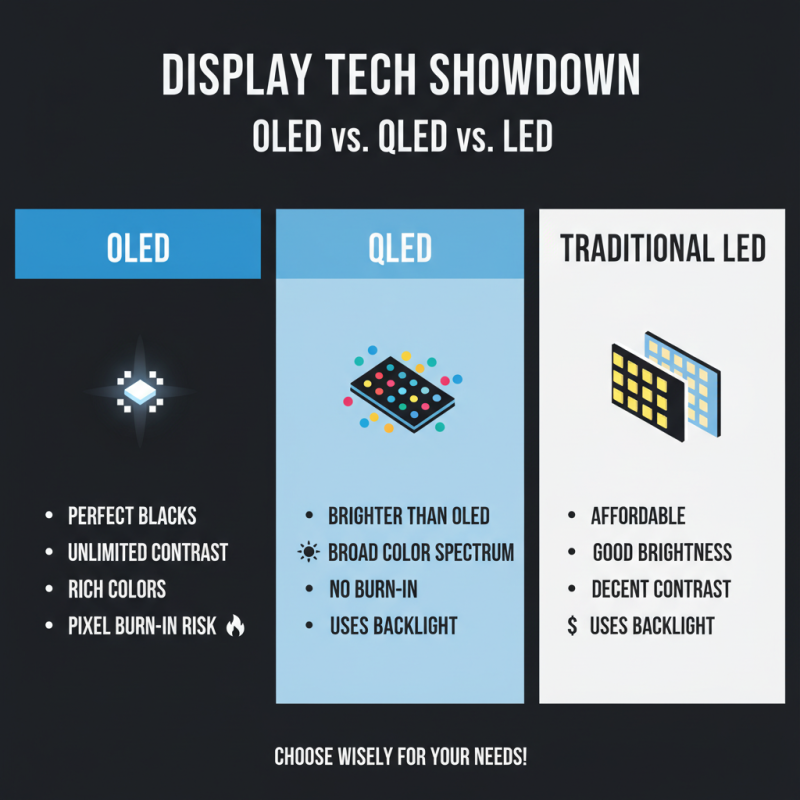
When choosing an LED display, understanding the differences between OLED, QLED, and traditional LED is essential. OLED screens are known for their vibrant colors and deep blacks. Each pixel emits its light, leading to incredible contrast. However, they can suffer from burn-in. If you're using the display for static images, this is an important consideration.
QLED, on the other hand, excels in brightness and color accuracy. This display uses quantum dots to achieve stunning visuals. It's often better for well-lit rooms. However, even with high brightness, blacks may not appear as deep as on an OLED screen. You'll need to evaluate your viewing environment before making a decision.
Traditional LED displays are commonly found and generally more affordable. They work well for general use, but they may lack the advanced features of OLED or QLED. If you're on a budget yet need decent performance, this could be a reasonable choice.
Tips: Consider what you use your display for. If gaming is a priority, OLED may be the better choice. For bright environments, lean towards QLED. Also, look at the size and resolution. Don't overlook your space; it plays a vital role.
Analyzing Cost vs. Longevity: Balancing Budget and Durability
Choosing an LED display often involves weighing cost against longevity. It's crucial to find a balance that fits your needs. Cheaper options may save you money upfront but could lead to higher expenses in the long run. Shorter lifespans mean replacements and maintenance costs accumulate quickly.
Longevity is not just about getting more years; it’s about quality. Higher-quality displays can withstand wear and tear better than their lower-cost counterparts. However, investing heavily doesn't guarantee flawless performance. Sometimes, you might find that a moderately priced option meets your needs just as well.
Consider your usage patterns. Are you displaying static images, or do you need dynamic content? The purpose of your display significantly impacts your choice.
Think about your budget too. A higher initial investment could deliver notable savings. Reflect on your priorities. Longevity matters, but it should align with your viewing needs and budget constraints.