How to Choose the Right LED Screen for Your Needs: A Complete Guide
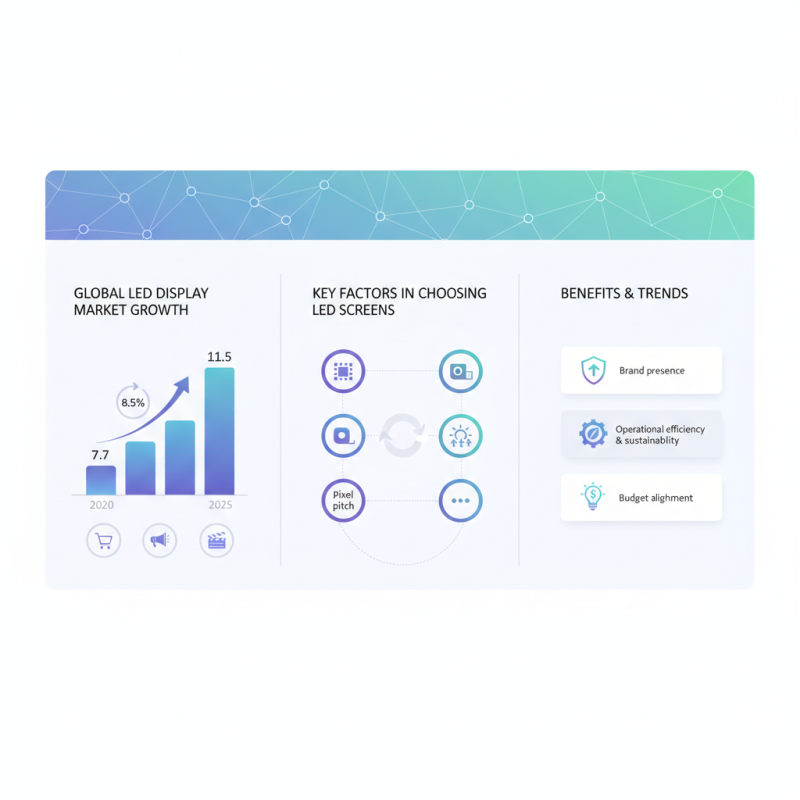
In today's visually-driven world, the demand for high-quality displays has surged, particularly in the realm of LED screens. According to a report by MarketsandMarkets, the global LED display market is projected to grow from $7.7 billion in 2020 to $11.5 billion by 2025, with a compound annual growth rate (CAGR) of 8.5%. This growth is fueled by the increasing adoption of LED technology across various sectors, including retail, advertising, and entertainment, where vibrant visuals and improved energy efficiency are paramount.
Choosing the right LED screen can be a daunting task, given the myriad of options available on the market today. From resolution and size to brightness and pixel pitch, each factor plays a critical role in ensuring that the display meets specific needs. As organizations seek to enhance customer experience and engagement, understanding these elements is essential for making informed decisions. Furthermore, a well-selected LED screen not only amplifies brand presence but also contributes to operational efficiency and sustainability, aligning with current market trends toward eco-friendly practices.
This complete guide aims to demystify the selection process for LED screens, offering insights and practical tips to navigate this rapidly evolving landscape. By drawing on industry data and expert recommendations, we will empower readers to choose the perfect display that aligns with their requirements and budget, ultimately achieving their visual communication goals.
Understanding Different Types of LED Screens Available on the Market
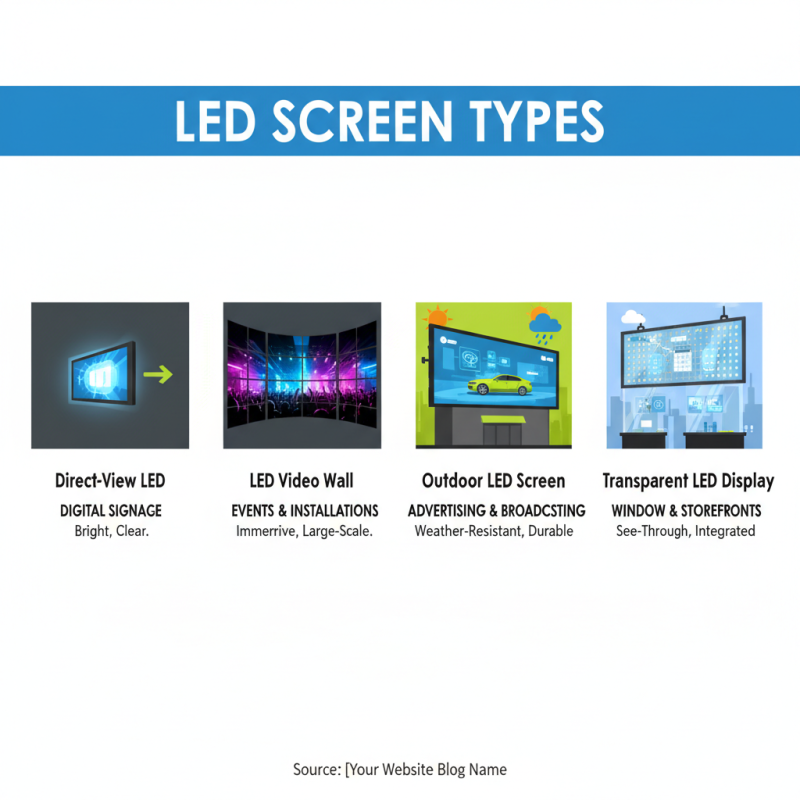
When selecting the right LED screen, it's essential to understand the various types available on the market, each designed for specific use cases. The main categories include direct view LED, LED video walls, outdoor LED screens, and transparent LED displays. Direct view LED screens are often used for digital signage due to their brightness and visibility, while LED video walls offer large, immersive viewing experiences, making them perfect for events and installations. Outdoor LED screens, designed to withstand harsh weather conditions, are ideal for advertising and live event broadcasting. Transparent LED displays provide a unique look, integrating visuals into windows and storefronts without obstructing visibility.
Tips: When choosing an LED screen, consider factors such as resolution, size, and environment. Higher resolution screens are essential for close-up viewing, while larger displays can enhance visibility for larger audiences. Additionally, understanding your environment—whether it's indoor or outdoor—will help in selecting screens designed to perform optimally under those conditions.
Another vital aspect is connectivity and compatibility with existing systems. Make sure the screen you choose can easily integrate with your current setup, whether it involves content management software or other technical systems. This will enhance your overall user experience and streamline your operations. Always check for the latest technological advancements in LED screens to ensure you are making an informed decision that meets your specific needs.
Key Factors to Consider When Choosing an LED Screen
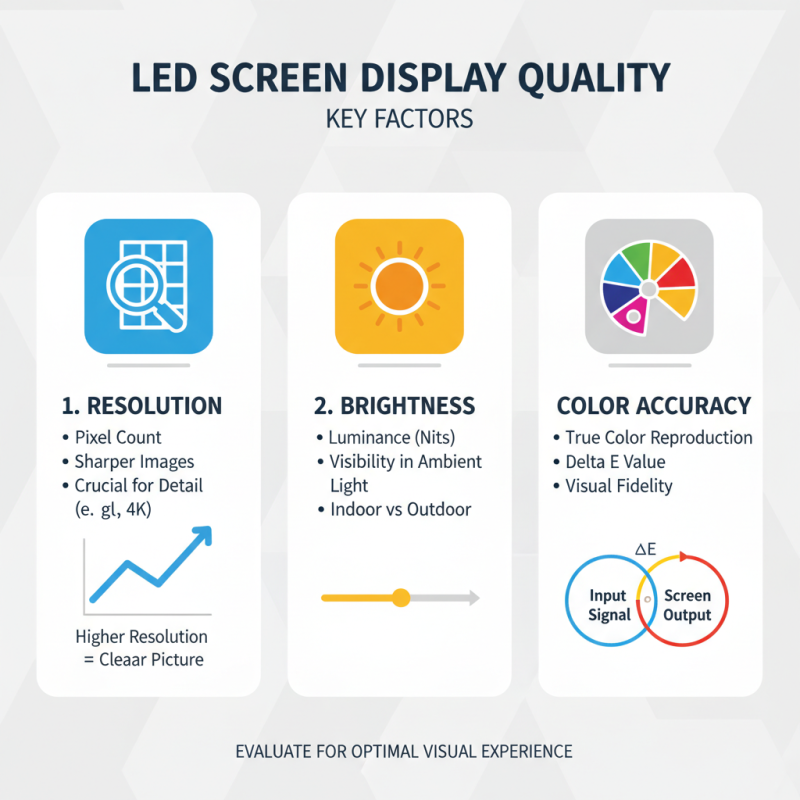
When selecting the right LED screen for your needs, several key factors should be considered to ensure optimal performance and satisfaction. One primary consideration is the screen resolution. Higher resolutions, such as 4K, offer sharper images and finer details, which are crucial for applications like digital signage and events where visual clarity is paramount. According to a report by the International Data Corporation (IDC), the demand for high-resolution displays has increased significantly, with a projected growth rate of 15% annually over the next five years.
Another critical factor is brightness and contrast ratio. The right brightness level, measured in nits, depends on the environment where the LED screen will be used. For instance, outdoor screens typically require higher brightness—around 5,000 to 10,000 nits—to combat sunlight, while indoor screens can perform adequately with 300 to 1,000 nits. The contrast ratio also plays a significant role in how vivid images appear, with higher ratios providing deeper blacks and more dynamic colors. A study by the Consumer Technology Association (CTA) highlighted that displays with superior contrast ratios can enhance viewer engagement by up to 30%, making it a vital component of any LED screen choice.
Lastly, the screen's lifespan and maintenance requirements cannot be overlooked. Most LED screens have a lifespan ranging from 50,000 to 100,000 hours, but factors such as the quality of components and usage can affect longevity. Understanding these aspects can help businesses minimize downtime and optimize their investment. As noted by the Display Supply Chain Consultants (DSCC), choosing screens with robust technology not only reduces maintenance frequency but also ensures a better return on investment over time.
Determining the Ideal Screen Size for Your Space and Needs
When choosing the right LED screen, determining the ideal size for your space and needs is crucial. The size of the screen can significantly affect the viewing experience, whether it's for personal use, business, or entertainment. To start, consider the distance between the screen and the viewer. A general guideline is to multiply the desired screen size by a factor of 1.5 to 2.0 to find the optimal viewing distance. For example, if you choose a 65-inch screen, the ideal viewing distance should be between approximately 8 to 10.5 feet. This ensures viewers can comfortably absorb the visuals without straining their eyes.
Additionally, you should take into account the layout of your space. In smaller rooms, larger screens can overwhelm the space and make viewing uncomfortable, while in larger areas, a too-small screen may lead to a lack of engagement. Consider the wall space available as well, ensuring that the screen not only fits comfortably but also complements the overall design of the room. If the screen is meant for presentations or displays in a professional setting, ensure it can be easily seen by everyone in the room. Overall, balancing size, distance, and space will help you choose an LED screen that meets your needs effectively.
Recommended LED Screen Sizes Based on Viewing Distance
Evaluating Display Quality: Resolution, Brightness, and Color Accuracy
When selecting an LED screen, evaluating display quality is paramount. Three critical factors come into play: resolution, brightness, and color accuracy. Resolution refers to the number of pixels that make up the display. A higher resolution results in sharper and clearer images, making it essential for applications where detail is crucial, such as in presentations or multimedia displays. For instance, a 4K resolution will provide a markedly improved visual experience compared to lower resolutions, especially on larger screens.
Brightness is another vital aspect, influencing the visibility of the display in various environments. A higher brightness level is crucial for outdoor screens or well-lit indoor settings, ensuring that the content is easily viewable from different angles and distances. Typically measured in nits, aiming for displays with at least 500 nits is advisable for environments with significant ambient light.
Finally, color accuracy plays a critical role in how the content is perceived. A display that can reproduce a broader color gamut will present more vibrant and true-to-life images, which is particularly important for applications involving design, video production, or any visual media where fidelity is key. To assess color accuracy, look for screens that provide color calibration options and consider those that support industry-standard color spaces. By carefully evaluating these aspects, you can ensure that the LED screen you choose meets your specific requirements and enhances your viewing experience.
Assessing Budget and Long-term Investment for Your LED Screen
When assessing your budget for an LED screen, it’s essential to consider both upfront costs and long-term expenses. The initial price of an LED screen can vary greatly depending on its size, resolution, and features. While it might be tempting to opt for a lower-cost model, this decision should be weighed against potential hidden costs such as maintenance, replacement parts, and energy consumption. High-quality LED screens often come with better warranties and longer lifespans, which can lead to significant savings over time.
In addition to the initial purchase price, think about how the LED screen fits into your long-term investment strategy. An LED screen that exceeds your immediate needs but offers superior performance and durability can pay off in the long run. Consider factors like technological advancements—certain features may become obsolete sooner than others, impacting your screen's relevance and efficiency. By aligning your budget with your future goals, you can ensure that your investment in an LED screen meets your needs not just today, but also as technology evolves.