10 Essential Tips for Choosing Outdoor LED Display for Your Business
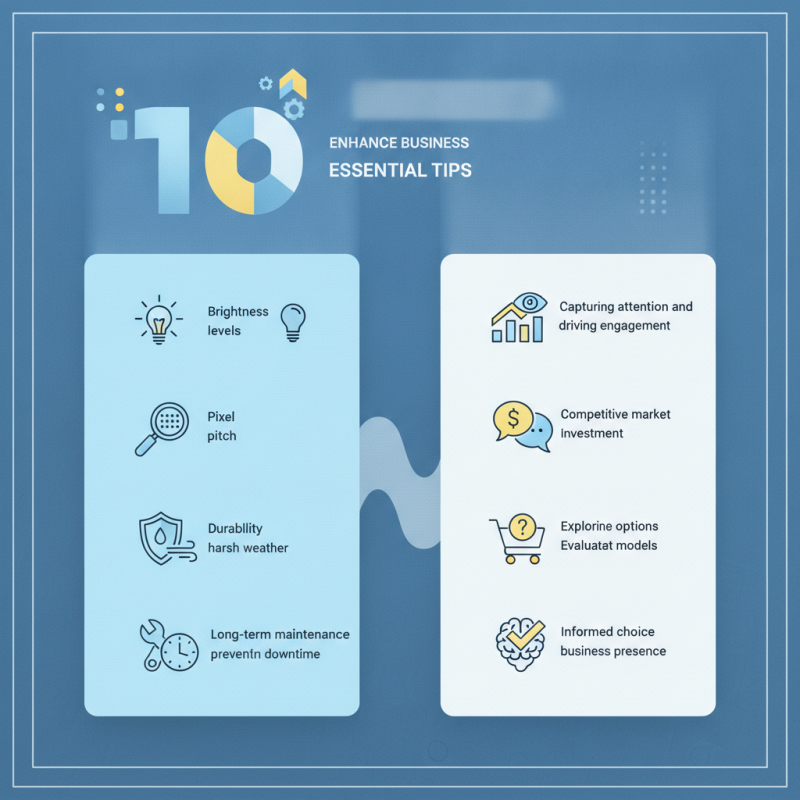
Choosing the right outdoor LED display can significantly enhance your business visibility. Industry expert, John Smith, states, "An effective outdoor LED display captures attention and drives engagement." In a competitive market, the decision to invest in an outdoor LED display is crucial.
When selecting an outdoor LED display, several factors demand consideration. Not all displays measure up to expectations. Businesses often overlook important details, such as brightness levels and pixel pitch. These elements directly impact visibility, especially in daylight. A display might look stunning in a showroom but underperform in real-world conditions.
Durability is another vital aspect. Outdoor LED displays face harsh weather, so they must withstand elements like rain and wind. When choosing, think about long-term maintenance as well. Unexpected failures can lead to costly downtime. Proper research can prevent unpleasant surprises. In exploring your options, take time to evaluate various models. An informed choice will yield a display that truly enhances your business presence.
Understanding the Importance of Outdoor LED Displays for Businesses
Outdoor LED displays play a crucial role in modern business marketing. They offer vivid images and impact, grabbing the attention of passersby. The ability to convey your message instantly can set your brand apart. When choosing an outdoor LED display, consider its visibility and contrast. Ensure that the display is bright enough to stand out during the day.
Another important tip is to evaluate pixel pitch. A smaller pitch means higher resolution, which is vital for displaying detailed images clearly. Location matters too. Placing your display where foot traffic is highest enhances engagement. Consider the local environment; extreme weather can affect the display’s longevity.
Don't overlook the control system. A user-friendly interface allows for quick updates and timely messages. Finally, think about maintenance plans. Regular upkeep ensures your display remains functional and vibrant. Balancing quality and budget is essential. Always analyze and reconsider your choices for the best outcomes.
Key Factors to Consider When Choosing Outdoor LED Displays
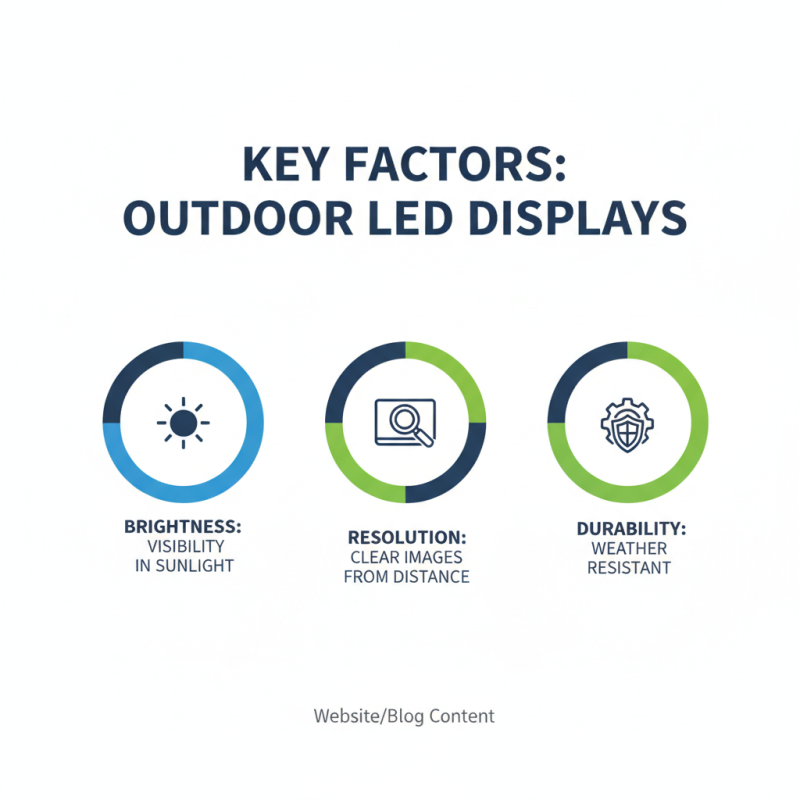
When selecting an outdoor LED display for your business, consider several key factors. The brightness of the display is crucial. An outdoor setting exposes the display to sunlight, so ensure it has a high brightness rating. This ensures visibility even during bright, sunny days. Resolution matters too. A higher resolution display provides clearer images, making it easier for customers to read messages from a distance.
Durability should be a priority. Outdoor LED displays must withstand various weather conditions. Rain, snow, and extreme temperatures can affect performance. Look for displays with robust casings and proper IP ratings. It’s also wise to consider power consumption. Choose energy-efficient models to reduce costs over time. They may be more expensive upfront, but savings in energy bills make them worthwhile.
Installation logistics can be complex. Evaluate the space where the display will be placed. Make sure you have the necessary permits and access to power sources. Review feedback from previous installations for insights, but remember every project is unique. The wrong choice can lead to regret later. Take time to weigh options carefully. Your decision will impact your business visibility for years.
Determining the Optimal Size and Resolution for Your Display Needs
When choosing an outdoor LED display, size and resolution are crucial. These factors influence visibility and overall impact. A larger display can attract more attention, especially in busy areas. However, size shouldn't overshadow resolution. Higher resolution allows for clearer images and better text readability.
Consider your audience and environment. Will your display be viewed from a distance? If yes, a larger screen with lower resolution may suffice. But if people will be close, invest in high resolution. This ensures your message stands out without strain. Testing different configurations in real-world settings can reveal what resonates best.
Also, think about the content you'll showcase. Will it involve detailed graphics or simple messages? A dynamic, fast-paced video benefits from higher resolution. Conversely, static ads may not need as much clarity. Reflect on the type of content you plan to display. Make adjustments based on initial performance and feedback from viewers. This ongoing process can lead to better engagement over time.
Optimal Outdoor LED Display Sizes and Resolutions
Assessing Different Types of Outdoor LED Display Technologies
When choosing an outdoor LED display, understanding the various technologies is crucial. There are several types to consider. Each has unique strengths and weaknesses. For example, SMD (Surface-Mounted Diode) displays offer vibrant colors. They are popular for their excellent viewing angles. However, they may struggle in direct sunlight.
Another option is DIP (Dual In-line Package) displays. These are known for their high brightness and durability. They are often used in environments with challenging weather conditions. However, they might not provide the same color quality as SMD displays. The choice largely depends on your specific needs and location.
Consider your audience and the viewing distance. A display meant for close viewing should focus on resolution. Meanwhile, a larger display for distant views prioritizes brightness over detail. There is no one-size-fits-all solution. Each technology has merits and drawbacks to reflect upon. Proper research is essential before making a decision.
Evaluating Environmental Durability and Maintenance Requirements
When selecting an outdoor LED display, environmental durability is crucial. The display will face various weather conditions such as rain, snow, sunlight, and wind. A robust display should have an appropriate IP rating. This rating indicates protection against dust and moisture. Look for displays with at least an IP65 rating for optimal durability.
Maintenance is another critical aspect to consider. Outdoor LED displays require regular inspections to ensure proper function. Dust and debris can accumulate, affecting visibility and performance. It’s essential to develop a maintenance schedule aligned with your local climate.
Consider the accessibility of the display for cleaning and repairs. Some installations are challenging to reach, complicating maintenance efforts.
Reflect on the balance between initial costs and long-term durability. A cheaper display might save money upfront but could lead to higher repair costs. It's essential to weigh the pros and cons of options. In the end, investing in a high-quality display may provide better value and reliability over time.