What is a High Brightness Display and How Does it Work?
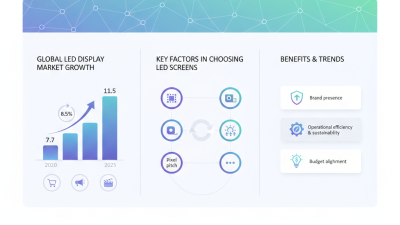
High brightness displays (HBDs) have transformed various industries, from advertising to transportation. Their ability to deliver vibrant images in bright environments makes them essential. According to a report by Market Research Future, the global high brightness display market is expected to reach $7.84 billion by 2026, reflecting a significant growth trend.
Dr. Emily Chen, an expert in display technology, emphasizes, "High brightness displays can change how we communicate visuals outdoors." In various settings, HBDs must stand out against sunlight. This challenge drives innovation in display technologies, yet questions remain about longevity and energy efficiency.
Implementing HBDs is not without pitfalls. Many businesses face issues with maintenance and performance under various conditions. The balance of brightness and power consumption is delicate. Future advancements will need to address these concerns while meeting the growing demand for clearer, brighter displays in our increasingly visual world.
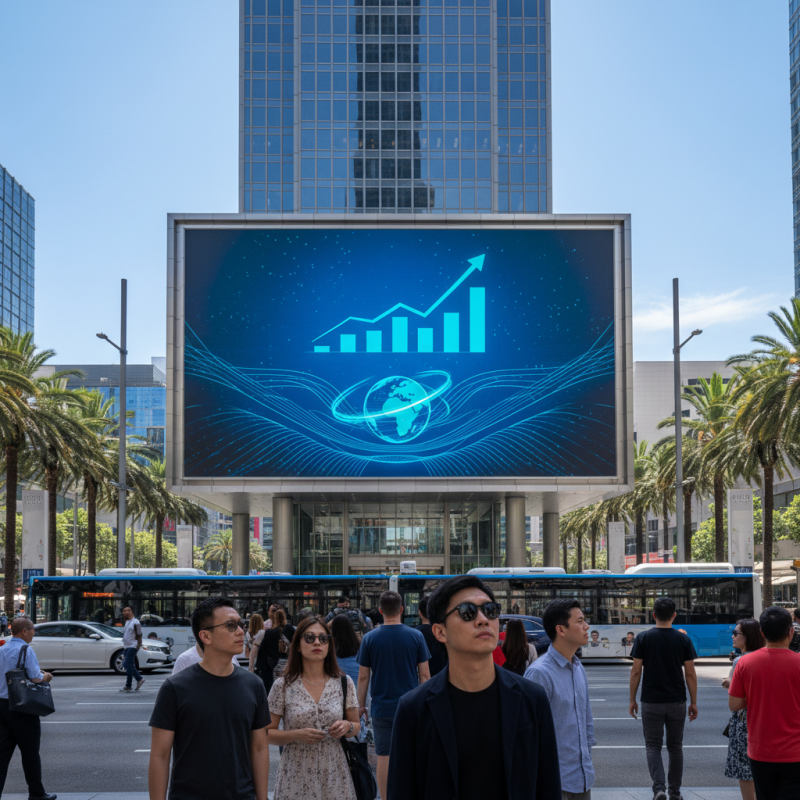
Definition and Key Features of High Brightness Displays
High brightness displays (HBDs) are pivotal in various sectors like outdoor advertising, transportation, and industrial environments. Defined by their capability to emit bright images even under direct sunlight, HBDs typically range from 1,000 to 5,000 nits or more. This feature makes them efficient and effective for visibility in challenging lighting conditions.
Key features of high brightness displays include advanced LED backlighting. This technology enhances color accuracy and contrast, helping to deliver clear visuals in bright settings. Many HBDs also come equipped with adaptive brightness control, which adjusts screen luminance based on ambient light. It is reported that displays with over 2,000 nits increase viewer engagement by up to 40% compared to standard screens.
Tips: When selecting a high brightness display, consider the location. Ideal placements include direct sunlight areas where standard displays would falter. Also, look for options that offer anti-glare screens. These can significantly reduce reflected light. Remember, choosing the right HBD is crucial for maximizing impact.
Another consideration is durability. HBDs should withstand weather conditions for outdoor applications. Look for models with robust enclosures. It's vital for long-term use; otherwise, frequent replacements can become costly. While HBDs offer numerous advantages, evaluating your specific needs is essential before investing.
Technologies Behind High Brightness Displays
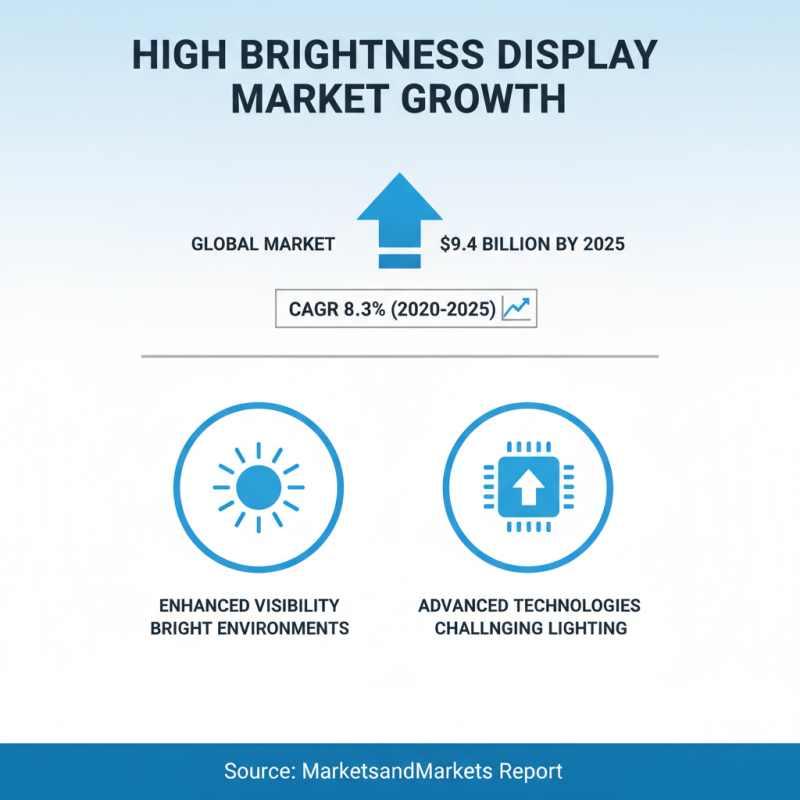
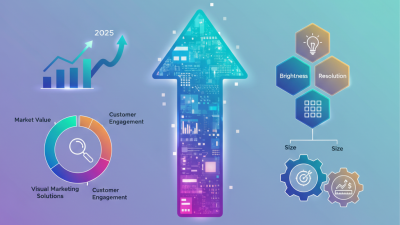
High brightness displays (HBDs) are designed to perform under challenging lighting conditions. They utilize advanced technologies that enhance visibility in bright environments. According to a recent report by MarketsandMarkets, the global high brightness display market is projected to reach $9.4 billion by 2025, growing at a CAGR of 8.3%.
One key technology behind HBDs is LED backlighting. It improves brightness through higher luminance levels, exceeding 1000 nits in some displays. This makes them ideal for outdoor signage and control rooms. Another important method is the use of specialized coatings. These anti-reflective layers minimize glare from direct sunlight, ensuring clear images.
Yet, high brightness displays are not without challenges. They can consume more power, leading to higher operational costs. In some cases, the increased brightness may also cause color distortion. Designers must balance brightness and color accuracy. This is crucial to meet the demands of diverse applications. As the market evolves, addressing these issues will be essential for manufacturers.
Applications of High Brightness Displays in Various Industries
High brightness displays (HBD) offer significant advantages across various industries. Their exceptional luminance makes them ideal for outdoor applications. In transportation, HBDs enhance visibility for digital signage and information boards. According to recent market analysis, the global HBD market is expected to reach $10 billion by 2025. This growth reflects the increased demand for clear, readable displays in bright environments.
Retail settings benefit greatly from HBD technology. Merchants utilize these displays to capture consumer attention. Bright visuals can increase customer dwell time by 20%. In hospitality, HBDs help improve guest experiences with vibrant information displays. These applications demonstrate the versatility and impact of HBDs in connecting consumers with brands effectively.
However, not all implementations are flawless. Some industries struggle with high energy consumption from these displays. This requires careful consideration and potential innovations in energy efficiency. Additionally, over-saturation can sometimes distract rather than inform. Balancing brightness and clarity remains an ongoing challenge within various applications. Adjustments may be necessary to achieve optimal results.
Applications of High Brightness Displays in Various Industries
| Industry |
Application |
Typical Brightness (nits) |
Benefits |
| Advertising |
Digital Billboards |
5000 - 10000 |
High visibility in daylight |
| Transportation |
Airport Displays |
3000 - 5000 |
Easy readability from a distance |
| Retail |
Point of Sale Displays |
2000 - 5000 |
Attracts customers' attention |
| Healthcare |
Surgical Displays |
2000 - 4000 |
Clear visibility in bright environments |
| Military |
Tactical Displays |
3000 - 10000 |
Durability and visibility in all conditions |
| Industrial |
Control Room Displays |
1500 - 3000 |
Clarity in bright surroundings |
Advantages and Limitations of High Brightness Displays
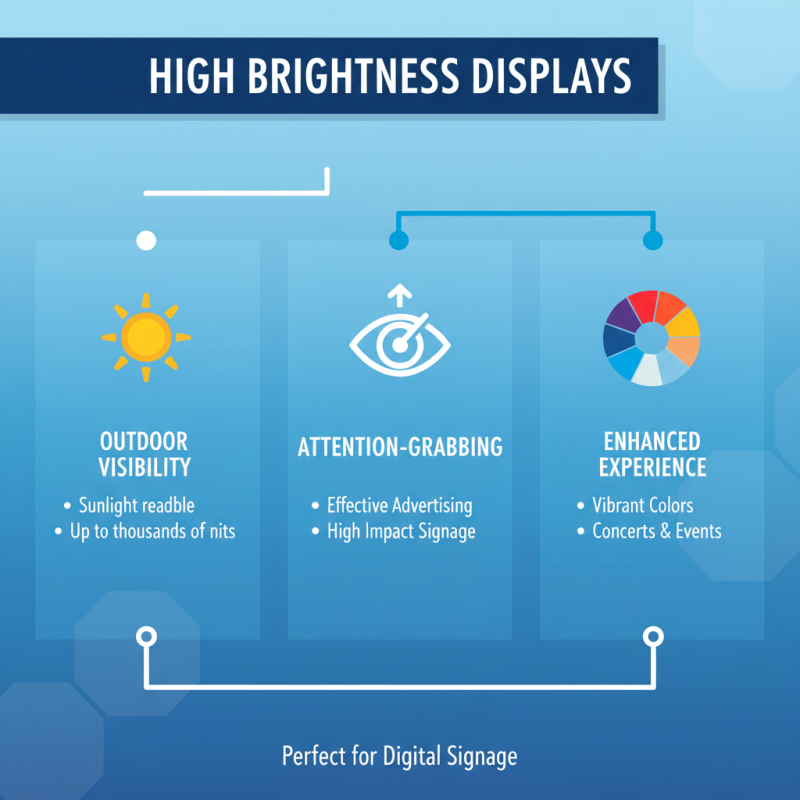
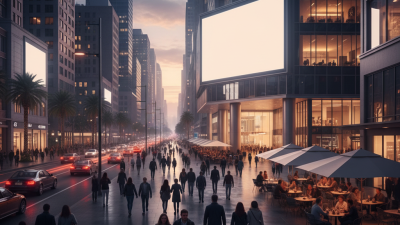
High brightness displays (HBDs) offer several advantages. They excel in outdoor environments where sunlight can wash out standard screens. The brightness can reach thousands of nits. This high visibility attracts attention, making them great for advertising. Additionally, HBDs tend to have vibrant colors, enhancing user experience. They are perfect for digital signage, concerts, and outdoor events.
However, these displays come with limitations. The cost of HBDs is significantly higher than typical displays. This can deter small businesses from investing in them. Power consumption is another concern. They usually consume more energy, leading to higher operational costs. Over time, this can add up, making them less economical for some users.
**Tips:** When considering an HBD, evaluate the location and lighting conditions. Not every environment needs extreme brightness. Balance your budget with your needs. Remember, not all applications require such high specs. Also, think about the longevity of the display. Regular usage can lead to burn-in issues, affecting display quality.
Future Trends in High Brightness Display Technologies
High brightness displays are becoming increasingly important in various real-world settings. Their ability to produce vivid images in bright environments makes them ideal for outdoor signage, surveillance, and automotive applications. As technology progresses, we are witnessing significant shifts towards more efficient and powerful displays.
Future trends indicate a focus on improving energy efficiency. With stricter environmental regulations, manufacturers are looking for ways to minimize power consumption. Organic light-emitting diodes (OLEDs) and microLEDs hold promise for this. These technologies can deliver high brightness while using less energy. Greater color accuracy and contrast ratios are also expected. This adds more depth to images, enhancing the viewer experience.
Tips: Consider your lighting environment. A high brightness display performs best in direct sunlight. Regular maintenance is crucial to ensure optimal performance. Look for displays that are easy to calibrate for color settings. Strive for options that provide a balance between brightness and energy use. Disappointments can arise if the chosen display cannot handle various lighting conditions effectively.
High Brightness Display Technologies: Market Share Analysis (2023)