Top 10 High Brightness Display Technologies to Enhance Your Viewing Experience?
In today’s digital landscape, the importance of high brightness display technologies cannot be overstated. Brightness plays a critical role in enhancing the viewing experience. From smartphones to large outdoor screens, high brightness display technologies ensure that images are vivid and clear, even in bright sunlight. These advancements push the boundaries of visual engagement.
Many consumers are still unaware of how these technologies function. High brightness displays utilize various techniques to amplify luminosity. This can lead to an incredible viewing experience, yet the complexity of these technologies can be daunting. Users may find themselves overwhelmed by options that are too technical.
As manufacturers introduce new features, it's crucial to reflect on the impact of high brightness displays. While they enhance visuals, they may also consume more power. Balancing brightness with energy efficiency remains a challenge. As we explore the top ten high brightness display technologies, we will uncover how they shape our viewing experiences.
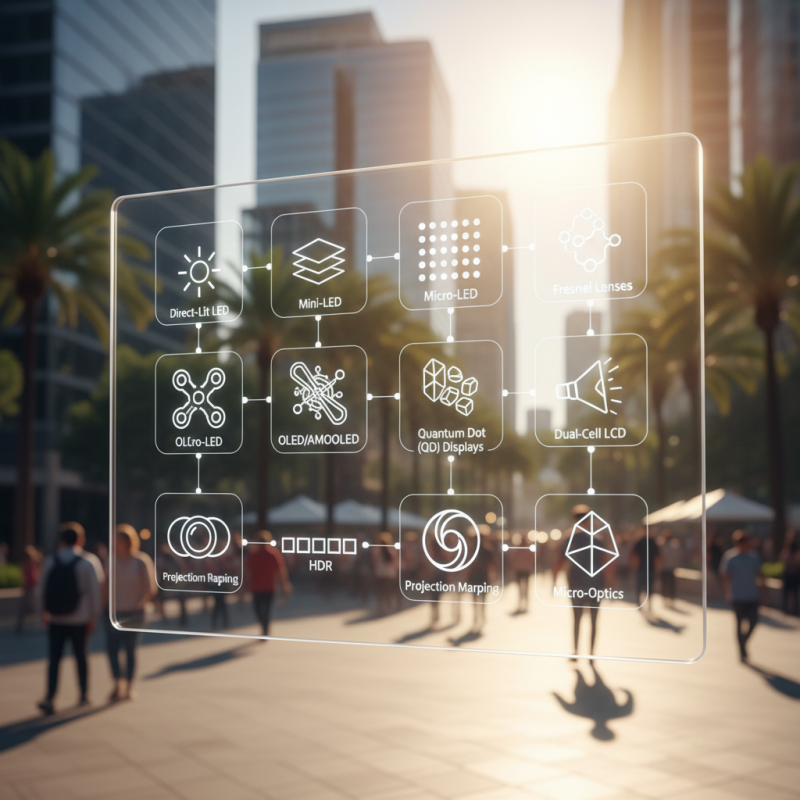
Top 10 High Brightness Display Technologies Overview
High brightness display technologies have revolutionized our viewing experience. These systems are designed to enhance visibility even in bright environments. They cater to various applications, from outdoor digital signage to high-performance televisions. The need for clarity and vibrancy drives innovation in this field.
One popular technology is LED backlighting. It provides better brightness control and color accuracy. LCD displays with this technology can achieve higher brightness levels. Another advancement is OLED screens, known for their deep blacks and vibrant colors. While they are impressive, their longevity can be questioned in very bright settings.
Other methods like Laser technology are gaining traction too. Lasers can project incredibly bright images, making them ideal for large displays. However, cost and complexity remain challenges. We must consider that not all high brightness solutions last long. Some may fade quicker than expected, leading to disappointment. The balance between brightness, longevity, and cost continues to pose an intriguing challenge in this evolving landscape.
Comparative Analysis of OLED vs. Mini-LED Brightness Performance
In the realm of high brightness display technologies, OLED and Mini-LED emerge as the frontrunners. OLED displays provide rich colors and deep blacks. Each pixel emits its own light. This results in stunning contrast ratios. However, their brightness can sometimes be limited compared to Mini-LED.
Mini-LED technology uses a larger number of smaller LEDs. This enhances brightness levels significantly. It also allows for better local dimming. Picture quality is impressive, especially in bright environments. Yet, some users have noted blooming effects, where light spills into dark areas. This can detract from the viewing experience.
When evaluating brightness performance, one must consider real-world usage. OLED shines in dark rooms but struggles in bright light. Mini-LED can maintain vibrancy even in well-lit conditions. Each technology has its strengths and weaknesses. It’s essential to test both types to find what suits your needs best.
Impact of Quantum Dots on Display Brightness and Color Accuracy
Quantum dots are tiny semiconductor particles. They have the potential to significantly alter display technology. Their ability to emit precise colors is impressive. When used in displays, they enhance brightness and color accuracy. This can lead to a more vivid viewing experience.
The most notable impact comes from their color spectrum. Quantum dots can produce a wider range of colors compared to traditional methods. This leads to images that appear more lifelike. In addition, they enhance brightness levels without sacrificing energy efficiency. However, some challenges remain. For instance, manufacturing quality varies between suppliers. This inconsistency can impact performance. Also, cost considerations still pose a barrier to widespread adoption.
Moreover, not all quantum dot displays are created equal. Some may show signs of fading over time. This raises questions about durability and long-term performance. It's essential to weigh these factors. The promise of quantum dots is significant, yet we must proceed with caution. They could reshape our viewing experiences in the future. But careful consideration remains crucial.
Top 10 High Brightness Display Technologies to Enhance Your Viewing Experience
| Technology |
Brightness (nits) |
Color Accuracy (%) |
Lifespan (hours) |
Key Benefits |
| Quantum Dot LED |
1500 |
99% |
50,000 |
Vivid colors, high brightness |
| MicroLED |
2000 |
100% |
100,000 |
High durability, excellent brightness |
| OLED |
1000 |
95% |
30,000 |
Deep blacks, great contrast |
| Mini LED |
1200 |
98% |
50,000 |
Enhanced local dimming, high brightness |
| Traditional LED |
800 |
85% |
40,000 |
Affordable, decent quality |
| Laser Display |
2500 |
97% |
20,000 |
Ultra-bright, wide color range |
| Dual-Cell LCD |
1500 |
90% |
60,000 |
Improved contrast, high brightness |
| HDR Displays |
1600 |
99% |
30,000 |
High dynamic range, better detail |
| ePaper Displays |
350 |
70% |
50,000 |
Very low power consumption |
Emerging Laser Display Technology: Enhancements in Brightness and Clarity
Emerging laser display technology is revolutionizing the viewing experience. Recent studies show that laser displays can achieve brightness levels exceeding 5,000 nits. This is a significant improvement compared to traditional LCD screens, which typically max out at around 1,000 nits. With such enhancements, viewers enjoy sharper images and rich colors in bright environments.
Laser displays also offer better clarity. Their ability to produce pure colors enhances the overall visual experience. According to industry experts, laser projectors can cover up to 90% of the color spectrum compared to about 70% for conventional displays. This broader color range means more vibrant and lifelike images.
Tips: Consider your viewing environment. If you plan to watch in bright rooms, high brightness is crucial. Look for displays that support HDR for a dynamic range. However, remember that not every laser display is made equal. Ensure that the contrast levels meet your expectations before purchasing. Deploying this technology can significantly elevate your home theater experience, but it requires some research.
Future Trends in High Brightness Displays: Data and Predictions to 2025
As high brightness display technologies continue to evolve, their impact on user experiences is significant. Reports indicate that the global market for these displays will grow at a compound annual growth rate (CAGR) of 9.5% from 2023 to 2025. This growth reflects the increasing demand for brighter, clearer screens across various applications, including gaming and outdoor advertising.
Consider this: displays emitting over 1,000 nits are becoming more common. They are crucial for visibility in bright environments, like direct sunlight. However, the transition to high brightness comes with challenges. Issues such as power consumption and heat management need to be resolved.
Tips: Choose the right display type based on your usage. For outdoor use, opt for OLED or MicroLED technologies, known for their brightness. Balancing brightness with energy efficiency is key. Watch out for advancements in quantum dot technology, as it promises even brighter screens without excessive energy use.
Data shows that by 2025, over 70% of new displays will feature enhanced brightness capabilities. This shift might lead to higher costs, so understanding your needs is essential. With advancements, users may need to assess features beyond brightness alone. Reflect on what you truly value in a display to maximize your viewing experience.