
Top Outdoor LCD Display Manufacturers for Global Buyers
Choosing the right outdoor LCD display manufacturer requires more than comparing screen size and quoted prices. Buyers must examine sunlight readability, thermal control, ingress protection, optical bonding, warranty support, and long-term parts availability. Grand View Research valued the global digital signage market at approximately USD 27.3 billion in 2023 and projects continued growth through 2030. MarketsandMarkets also identifies outdoor visibility, remote monitoring, and high-brightness performance as important drivers for commercial display adoption. These figures describe the wider signage sector, not every outdoor LCD display application. That distinction matters.
As display industry analyst Bob Raikes, founder of Meko, has observed, “Outdoor displays are not simply indoor screens with a brighter backlight.” The statement is practical. A reliable unit may need 2,500 to 5,000 nits, sealed enclosures, anti-glare glass, and active temperature management. Performance also changes between a shaded transport terminal and a humid coastal street. Buyers should request independent test results, IP ratings, operating-temperature data, and evidence of compliance with recognized safety and electromagnetic standards. Manufacturer experience matters too. Field references often reveal weaknesses that brochures hide.
This guide reviews leading outdoor LCD display manufacturers for global buyers. It considers engineering depth, customization, production consistency, service networks, and documented quality systems. No ranking is perfect. Supplier capacity can change quickly. Regional support may be uneven. That is why careful verification remains essential before signing a large procurement contract.
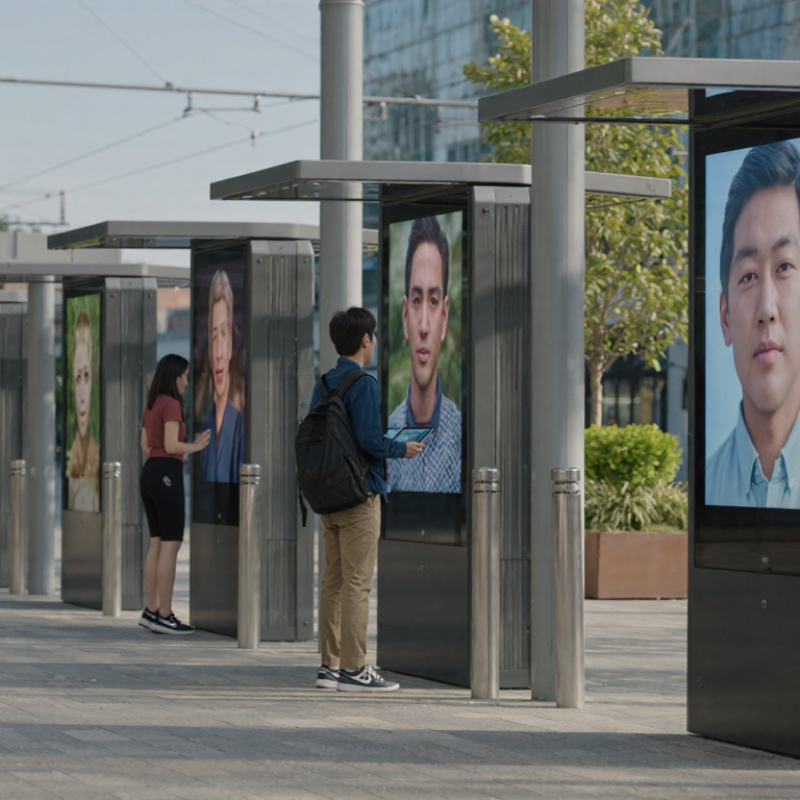
What Defines an Outdoor LCD Display Manufacturer
What Defines an Outdoor LCD Display Manufacturer
A capable outdoor LCD display manufacturer designs for sunlight, rain, dust, heat, and constant public use. Brightness matters. A 2024 MarketsandMarkets report values the global digital signage market at about USD 27.3 billion, with continued growth expected through 2029. This expansion increases demand for displays that perform beyond controlled indoor environments.
Reliable manufacturers use high-brightness panels, automatic dimming, sealed enclosures, and thermal management systems. An IP65 or higher rating helps protect against dust and water. IK-rated protection can reduce damage from accidental impact. Heat is unforgiving. Engineers should test displays across realistic temperature cycles, not only laboratory conditions. Optical bonding may improve readability by reducing internal reflections, especially under direct midday sunlight.
A strong supplier also provides remote diagnostics, spare-part planning, installation guidance, and transparent warranty terms. The U.S. Department of Energy has reported that cooling can represent a substantial share of commercial building electricity use, so efficient thermal design matters. Still, specifications are not proof. Buyers should request brightness measurements, salt-spray results, operating-temperature records, and samples from long-running installations. A display may claim extreme visibility yet perform poorly behind protective glass. That weakness is often overlooked. Manufacturers with documented testing, stable production controls, and responsive technical support are better prepared for global deployment. No supplier is perfect; performance data should remain more persuasive than polished sales language.
Top Outdoor LCD Display Manufacturers for Global Buyers - What Defines an Outdoor LCD Display Manufacturer
| Evaluation Dimension | Common Outdoor Display Benchmark | Why It Matters for Global Buyers | Manufacturer Capability to Verify |
|---|---|---|---|
| Outdoor Brightness | Typically 1,000–3,000 cd/m² for direct-sunlight applications | Higher luminance improves readability under strong daylight and reduces the need for external shading. | Provide measured brightness data, uniformity results, dimming control, and a sunlight-readability test method. |
| Ingress Protection | IP65 or higher for dust protection and water-jet resistance; IP66 may be selected for harsher exposure. | The enclosure rating helps protect the LCD, electronics, and connectors from dust and rain. | Supply an IP test report for the complete assembled enclosure rather than for individual components only. |
| Impact Resistance | IK08–IK10 is commonly considered for public-facing installations. | A higher IK rating can reduce damage from accidental impact, vandalism, or handling during installation. | Confirm the tested front-glass structure, impact energy level, mounting configuration, and replacement process. |
| Operating Temperature | Typical commercial designs support approximately -20°C to +60°C; extended ranges depend on the electronics and thermal system. | Outdoor equipment may face freezing conditions, high ambient heat, and temperature cycling. | Request cold-start, heat-soak, humidity, and temperature-cycle test results for the complete product. |
| Thermal Management | Fanless heat dissipation is preferred where possible; filtered fans or air conditioning may be used for high-brightness systems. | Effective thermal control helps prevent brightness loss, premature aging, condensation, and electronic failure. | Review thermal simulations, internal temperature limits, fan maintenance requirements, and condensation protection. |
| LCD Resolution | Full HD is common for medium and large-format displays; higher resolutions may be specified for detailed content. | Resolution affects text sharpness, viewing distance, content flexibility, and perceived image quality. | Provide native resolution, pixel pitch, aspect ratio, panel availability, and image-scaling performance. |
| Viewing Angle | Approximately 178° horizontal and vertical viewing angles are common for wide-viewing LCD panels. | Wide viewing angles support visibility from different positions in transport, retail, and public environments. | Publish viewing-angle measurement conditions and brightness or contrast behavior at off-axis positions. |
| Anti-Glare and Optical Bonding | Low-reflection glass, anti-glare coatings, and optional optical bonding are used according to the application. | Optical treatments reduce reflections and can improve contrast, touch accuracy, and environmental durability. | Specify haze value, surface hardness, reflection percentage, bonding material, and repair limitations. |
| Touchscreen Function | Projected-capacitive touch is common; infrared or resistive touch may be selected for specific glove, object, or vandal-resistant requirements. | Touch technology affects operation with gloves, moisture tolerance, protective glass thickness, and maintenance. | Verify touch response, wet-finger performance, glove compatibility, calibration, and communication interface. |
| Connectivity | HDMI, DisplayPort, USB, Ethernet, RS-232, and wireless options may be available depending on the controller. | Compatible interfaces simplify integration with media players, industrial computers, sensors, and control systems. | Request a current interface list, protocol documentation, cable specifications, and remote-management options. |
| Power Requirements | Universal AC input such as 100–240 V, 50/60 Hz is common for international deployments. | Broad input compatibility supports deployment across regions with different electrical standards. | Provide rated power, peak power, standby consumption, surge protection, grounding, and regional plug options. |
| Service Life | LED backlight service-life claims commonly range from 30,000 to 100,000 hours, depending on operating conditions and brightness settings. | Longer backlight life can lower replacement frequency and total cost of ownership. | Clarify whether the figure means typical or minimum life, the brightness-retention criterion, and test conditions. |
| Compliance Documentation | Relevant documents may include CE, FCC, RoHS, UKCA, EMC, electrical-safety, and environmental test reports, depending on the destination market. | Correct documentation helps reduce customs, installation, regulatory, and procurement risks. | Check certificate scope, model number, issuing laboratory, validity, and whether the report covers the final configuration. |
| Customization Capability | Common options include screen size, enclosure color, mounting method, logo-free front design, touch layer, operating system, and connectivity. | Customization allows the display to fit local infrastructure, user workflows, and installation constraints. | Evaluate engineering resources, minimum order quantity, prototype process, tooling charges, and change-control procedures. |
| After-Sales Support | A dependable supply program should include spare parts, troubleshooting, firmware support, warranty terms, and documented repair procedures. | Service availability is particularly important for distributed installations where downtime and on-site visits are costly. | Confirm warranty duration, response time, spare-parts availability, remote diagnostics, and regional technical support. |
Note: The benchmarks above are typical industry reference ranges. Final specifications should be confirmed through product datasheets, test reports, and application-specific validation.
Related Posts
-

10 Essential Tips for Choosing the Best Outdoor LCD Display
-
How to Choose the Best Outdoor Display for Your Business?
-
Why Choose Outdoor LCD Display for Your Business Needs?
-

Top 10 Outdoor LED Display Manufacturers Worldwide
-
Best LCD Display Outdoor Options for Global Buyers?
-
Top Advantages of High Brightness LCD Displays for Outdoor Use?