Top 10 LED Display Modules: Features, Prices, and Buyer’s Guide
The demand for LED display modules has surged in recent years, driven by advancements in technology and an ever-expanding array of applications across various sectors. According to a report by Grand View Research, the global LED display market is expected to reach USD 107.62 billion by 2025, growing at a compound annual growth rate (CAGR) of 14.6%. This growth is largely fueled by the increasing use of LED displays in advertising, broadcasting, and public information systems, showcasing their versatility and effectiveness in engaging audiences.
As consumers and businesses become more aware of the benefits that LED display modules offer, such as energy efficiency, superior brightness, and diverse size options, the market is becoming increasingly competitive. Research from Statista indicates that the market share of LED display modules is poised to expand, particularly with the rise of smart cities and digital signage. In this context, understanding the features, prices, and specifications of various LED display modules is crucial for potential buyers aiming to invest in high-quality products that meet their unique needs.
In this guide, we will delve into the top 10 LED display modules currently available on the market, highlighting their key features, pricing structures, and practical considerations for buyers. With detailed insights and expert recommendations, we aim to assist readers in making informed decisions in this rapidly evolving landscape of LED technology.
Top 10 LED Display Modules: An Overview of Key Features and Technologies
When considering the best LED display modules, it's essential to focus on key features and technologies that set them apart. High resolution is paramount; many modern modules boast pixel pitches that range from 1.5mm to 16mm, enabling stunning visuals and sharp image quality at various viewing distances. Brightness levels also play a crucial role, with typical options ranging from 600 to 5000 nits, making them suitable for both indoor and outdoor applications. Additionally, the refresh rate is a significant factor, with higher rates ensuring that the display maintains clarity in dynamic content, reducing flicker and motion blur.
Another vital technology in LED display modules is the use of smart control systems. Many models incorporate advanced control solutions that allow for seamless integration with content management software, enabling users to easily schedule and update displays remotely. Furthermore, energy efficiency is becoming increasingly important; LED modules with energy-saving technologies can drastically reduce power consumption while maintaining high-quality performance. By understanding these features and technologies, buyers can make informed decisions that best suit their specific needs in various settings, from advertising to event displays.
Comparison of Pricing Trends for LED Display Modules in 2023
In 2023, the pricing trends for LED display modules are influenced by several dynamic factors within the technology and construction sectors. The increased demand for innovative LED solutions, particularly in markets like Japan, is projected to push the market value to reach US$1 billion by 2033. This demand is closely linked to the investment in smart cities and advanced infrastructure, highlighting the necessity for high-quality, efficient displays that can integrate into modern urban environments.
Conversely, certain segments within the broader tech industry are experiencing declines, such as the 28% drop in DRAM module revenue, which reflects a shift in consumer spending and a general decrease in market demand. In the context of LED displays, this creates an environment of competitive pricing, as manufacturers must balance innovation with cost-effectiveness in order to attract buyers. The fluctuations in pricing and demand are critical for potential buyers to consider when navigating the rapidly evolving landscape of LED display technology in 2023.
Understanding Pixel Pitch and Its Impact on Display Quality
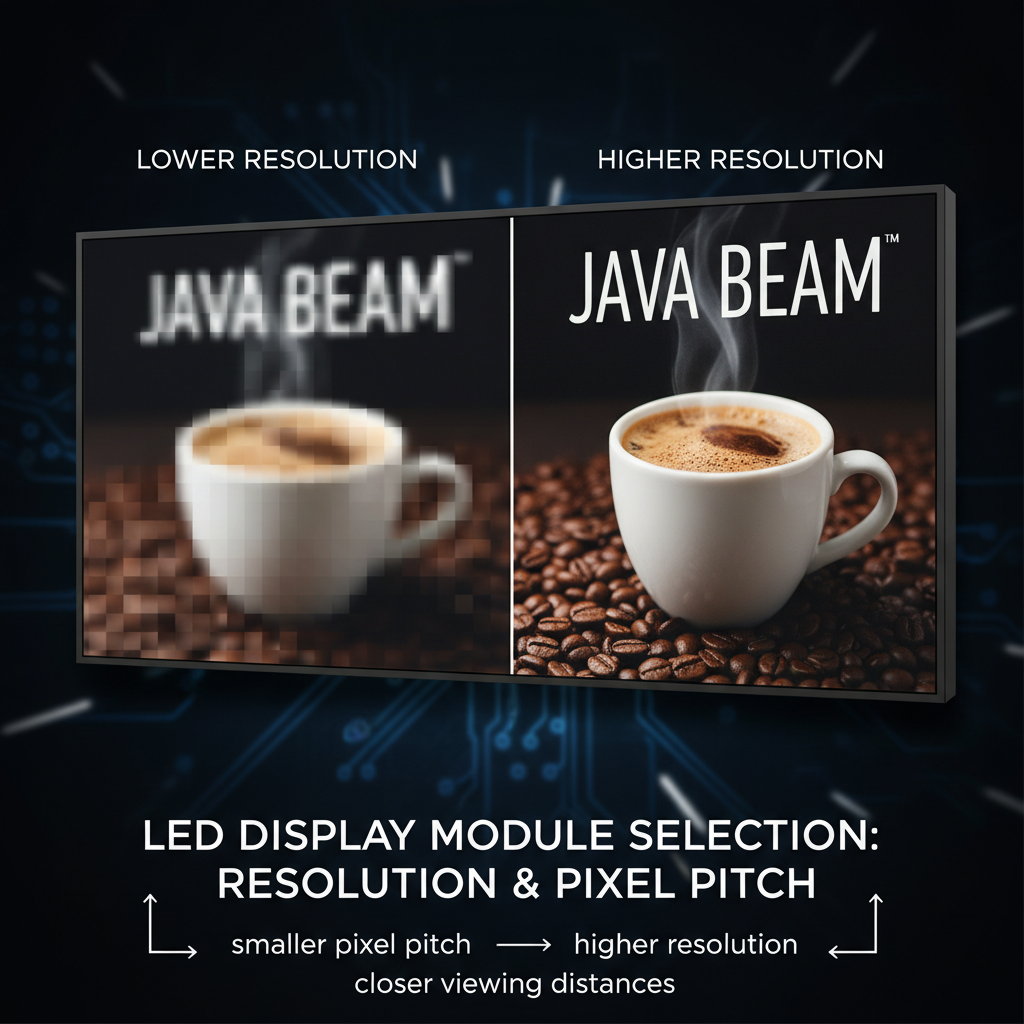
Pixel pitch is a crucial factor in determining the quality of LED display modules. Defined as the distance from the center of one pixel to the center of an adjacent pixel, pixel pitch directly affects both resolution and clarity. A smaller pixel pitch yields a higher resolution, resulting in sharper images and text. This makes it particularly beneficial for applications requiring close viewing distances, such as indoor events and digital signage in retail environments.
On the other hand, larger pixel pitches can lead to lower resolution, potentially resulting in pixelated images when viewed up close. However, they are often more cost-effective and suitable for outdoor applications where viewers observe displays from a distance. Balancing pixel pitch with the intended viewing distance and application is essential for achieving optimal display quality while considering budget constraints. Understanding these nuances helps buyers make informed decisions when selecting LED display modules that best suit their needs.
Top 10 LED Display Modules: Features, Prices, and Buyer’s Guide - Understanding Pixel Pitch and Its Impact on Display Quality
| LED Module |
Pixel Pitch (mm) |
Resolution (pixels) |
Brightness (nits) |
Price (USD) |
| Module A |
2.5 |
1920 x 1080 |
1200 |
800 |
| Module B |
3.0 |
1280 x 720 |
1000 |
600 |
| Module C |
4.0 |
960 x 540 |
800 |
450 |
| Module D |
1.8 |
2560 x 1440 |
1500 |
1100 |
| Module E |
2.0 |
1920 x 1080 |
950 |
700 |
| Module F |
5.0 |
640 x 480 |
600 |
350 |
| Module G |
3.5 |
1280 x 720 |
850 |
500 |
| Module H |
2.2 |
1600 x 900 |
1100 |
820 |
| Module I |
4.5 |
800 x 600 |
710 |
400 |
| Module J |
1.6 |
2560 x 1440 |
1600 |
1300 |
Evaluating the Durability and Lifespan of LED Display Modules
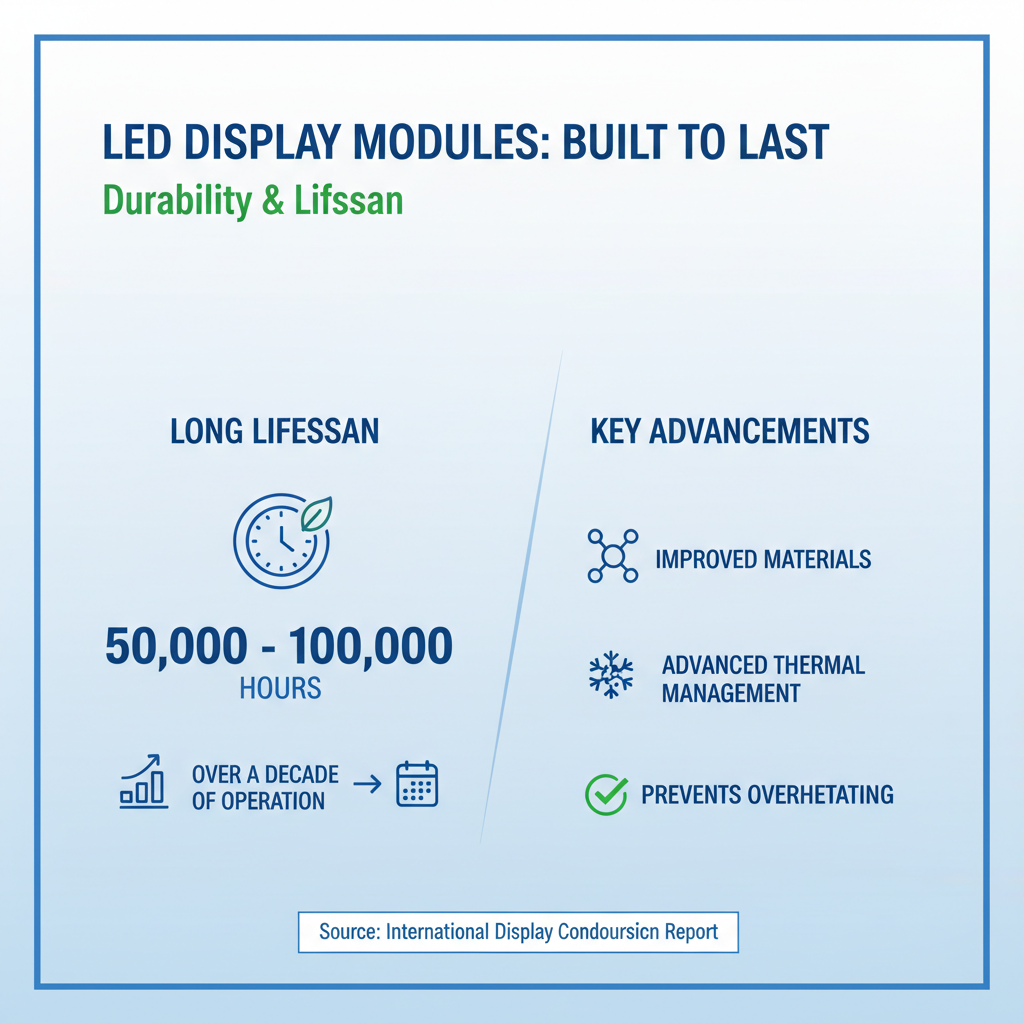
When considering LED display modules, durability and lifespan are crucial factors that can significantly influence both performance and investment return. According to a recent report by the International Display Consortium, the average lifespan of high-quality LED modules ranges from 50,000 to 100,000 hours, which means they can operate for over a decade under normal conditions. This longevity is primarily due to advancements in LED technology, including improved materials and thermal management systems that help prevent overheating—a common issue that shortens the life of displays.
Moreover, the durability of LED display modules is often quantified by their ingress protection (IP) ratings, which indicate how well the devices can withstand dust and moisture. Many top-tier LED displays feature an IP65 or higher rating, making them suitable for outdoor use where environmental factors can be harsh. A study from the Display Manufacturers Association reported that modules rated IP65 exhibit 50% less maintenance downtime compared to lower-rated models. Consequently, investing in modules that combine both high durability and extended lifespan not only enhances reliability but also reduces overall operational costs over time.
Essential Buying Considerations for Selecting LED Display Modules
When selecting LED display modules, there are several essential considerations to keep in mind to ensure you make the best choice for your needs. First, evaluate the resolution of the display. Higher resolution modules provide more detailed images, which is crucial for applications that require clarity, such as advertising displays or video walls. It's also important to consider the pixel pitch, which is the distance between the centers of adjacent pixels. A smaller pixel pitch typically results in a higher resolution and is ideal for closer viewing distances.
Another key aspect to consider is the brightness level of the LED display. Different environments may require varying brightness levels; for instance, outdoor displays must be brighter to compete with sunlight, while indoor settings can suffice with lower brightness. Additionally, assess the module's durability and environmental ratings, especially if it will be exposed to harsh weather conditions. Lastly, consider the connectivity options and compatibility with existing systems, ensuring that the module can easily integrate into your current setup.