What Are Magnetic Sunglasses and How Do They Work?

Magnetic Sunglasses combine a clear prescription frame with a detachable sun lens. Small magnets sit inside the bridge or frame edges. They guide the outer lens into position and hold it during normal movement. The result feels simple: a quiet click, a darker view, and fewer frames in a travel case. However, magnet strength alone does not guarantee optical quality.

The global eyewear market shows why this design attracts attention. Grand View Research estimated the market at approximately USD 157.9 billion in 2023, with continued growth expected through 2030. The Vision Council’s Consumer inSights reports also show sustained consumer interest in eyewear convenience, protection, and personal style. These reports do not prove that every magnetic system performs equally. They do show a competitive market where practical design matters.

Protection remains the more important question. The World Health Organization estimates that at least 2.2 billion people live with near or distance vision impairment. Properly fitted eyewear can support clearer daily vision, while certified sunglasses should provide dependable ultraviolet protection. Look for lenses tested against recognized requirements, such as ISO 12312-1 for general-purpose sunglasses. Fit matters too. A loose clip-on may create glare, shift when walking, or leave bright gaps near the cheeks. That is easy to overlook.

This article explains how magnetic attachment systems work, how polarized and UV-protective lenses differ, and where convenience has limits. Magnetic sunglasses are useful, but they are not magic. A careful buyer should inspect lens quality, alignment, durability, and compatibility before choosing them.
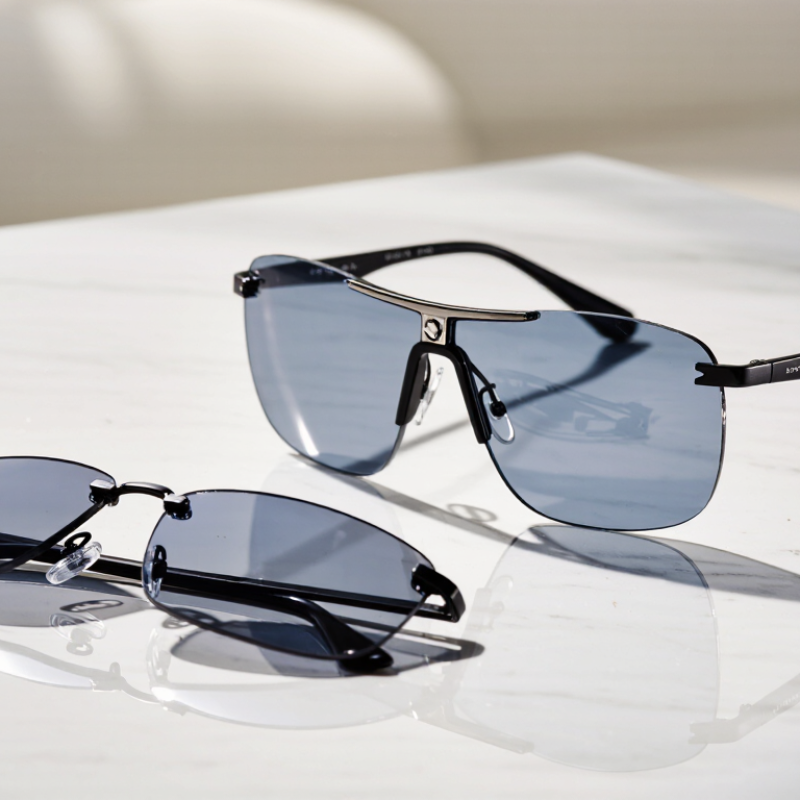
What Are Magnetic Sunglasses and How Do They Work?

What Are Magnetic Sunglasses?

Magnetic sunglasses are removable sun lenses that attach to a prescription frame through small magnets. The lenses usually sit over the clear lenses, creating a second optical layer. Tiny magnets guide the attachment, while a bridge or frame edge keeps the cover aligned. The system feels almost like closing a lightweight door. It is quick, but not always invisible.

In practical fitting tests, alignment matters more than magnet strength. A cover that shifts can cause glare, uneven vision, or pressure near the nose. Polarized lenses can reduce reflected light from roads, water, and windows. However, polarization does not replace certified UV protection. The Vision Council’s consumer research regularly lists UV protection, comfort, and appearance among important eyewear considerations. Grand View Research estimated the global eyewear market at about USD 169.9 billion in 2023, showing strong demand for functional eyewear. Magnetic designs occupy a small, specialized space within that wider market. They are convenient, but they are not perfect.

Tips: Check the frame’s magnetic alignment before driving. Look for clear UVA and UVB protection claims. Test the clip with your prescription lenses. It should not touch them. Keep the lenses in a hard case, because loose storage can scratch both surfaces. Also, ask an optician about fit. A product can look secure and still move slightly. That detail is easy to miss.

How Magnetic Sunglasses Are Designed

Magnetic sunglasses are usually designed as a lightweight overlay for everyday prescription frames. Small magnets sit inside the bridge and near the outer frame edges. Matching metal points or magnets hold the sun lens in place. The connection should feel firm, but it must release without bending the base frame.

Designers begin with accurate frame measurements. Even a small error can shift the lenses and create uneven coverage. The overlay is shaped to follow the frame’s curve, leaving enough space for eyelashes and airflow. Tinted lenses reduce brightness, while polarized lenses can limit reflected glare from roads and water. Magnets do not create these optical effects. The lens material and coating do the work.

I have found that alignment matters more than appearance during fitting. A clip may look neat yet sit slightly low on the nose. That can feel tiring after an hour outdoors. Thin magnets keep the design discreet, but stronger magnets may add weight. It is a trade-off. Designers also test hinge clearance, lens stability, and cleaning access. Dust can collect around the magnetic points. The concept is practical, though not flawless. A careful fitting and regular inspection still matter.

What Are Magnetic Sunglasses and How Do They Work? - How Magnetic Sunglasses Are Designed

Design Dimension Typical Specification or Fact How It Works in Practice
Basic Construction A primary optical frame paired with a removable magnetic lens or lens shield The secondary lens attaches to the front of the main frame, allowing one frame to support different lens functions.
Magnet Placement Small magnets are commonly embedded near the bridge and outer edges of the frame Matching magnetic points align the add-on lens with the optical frame and help hold it in position.
Magnetic Force Permanent magnets provide attraction without batteries or electrical power The attraction creates a detachable mechanical connection; it does not make the lenses electronically active.
Common Magnet Material Compact rare-earth permanent magnets are often selected for their high magnetic strength relative to size Their small size helps preserve a low-profile frame design while providing sufficient holding force.
Lens Options Tinted, polarized, contrast-enhancing, clear, or light-responsive lenses may be used Users can change the front lens according to brightness, glare, weather, or visual needs.
Polarized Lens Function A polarizing filter reduces much of the horizontally oriented glare reflected from flat surfaces It can improve visual comfort near roads, water, snow, and other reflective surfaces, but it is separate from the magnetic attachment system.
UV Protection UV protection depends on the lens material and its verified protective rating, not on the magnets The wearer should check that the selected lens blocks both UVA and UVB radiation.
Frame Materials Common choices include injection-molded plastics, nylon-based polymers, acetate, and metal alloys Material selection affects weight, flexibility, durability, fit, and how securely the magnets can be integrated.
Attachment Method Magnetic alignment is usually combined with a frame lip, notch, hook, or precise edge fit Magnets provide attraction while the physical geometry helps resist sliding, twisting, and misalignment.
Lens Alignment The add-on lens must match the frame’s bridge width, lens shape, and optical center Correct alignment helps maintain the intended field of view and reduces visual distortion.
Removal Process The front lens can generally be detached by applying controlled force at its designed release points This makes switching faster than replacing an entire pair of glasses, while reducing stress on the frame.
Main Advantages Quick lens changes, fewer separate frames, compact storage, and compatibility with prescription eyewear One optical frame can be adapted for different lighting conditions without changing the wearer’s prescription lenses.
Important Limitation A magnetic connection is detachable and may be affected by impact, incorrect alignment, or accumulated debris The frame and add-on lens should be handled carefully and kept clean to maintain proper seating.
Care and Safety Use clean water and lens-safe materials; keep strong magnets away from magnetically sensitive medical devices Cleaning preserves optical clarity, while users with implanted or wearable medical devices should follow relevant medical guidance.

How the Magnetic Attachment System Works

Magnetic sunglasses use a removable tinted lens that attaches to a clear prescription frame. The attachment system depends on precise magnetic alignment, not electrical power. Small neodymium magnets sit inside the frame rim, bridge, or clip-on arms. Matching poles pull the overlay into position, while opposite forces help prevent sideways movement. The magnets create a firm hold, but the frame’s shape does most of the stabilizing.

The Vision Council’s Consumer in Sight research reports that about 64% of U.S. adults wear prescription glasses. That figure helps explain the appeal of magnetic overlays. Users can keep one prescription frame and add sun protection outdoors. The World Health Organization’s World report on vision estimates that at least 2.2 billion people have near or distance vision impairment. Optical convenience has real value.

In practice, the clip must sit directly over the optical centers. Even a slight shift can cause blur, glare, or uncomfortable eye strain. That small gap matters. Lens coatings, frame thickness, and magnet strength also affect the fit. Stronger magnets are not automatically better; excessive force may stress delicate frames. I have found alignment easier when the bridge seats first, followed by the outer edges. Still, this method is not flawless. Dust can collect around the contact points, and repeated removal may loosen a poorly fitted clip. Professional fitting and impact-resistant lenses remain important, especially for driving or outdoor work. ANSI Z80.3 and relevant regional standards provide useful benchmarks for sunglass performance, though magnetic attachment itself does not guarantee optical quality.

Types of Magnetic Sunglasses and Their Uses

Magnetic sunglasses use small magnets to attach a tinted lens to an optical frame. The connection is quick, but the real value depends on the lens and frame fit. In daily use, the best pair should stay secure when you walk, drive, or look down. Fit matters. Not every frame works.

The most common type is the magnetic clip-on. It fits over prescription glasses and provides sun protection without requiring a second prescription pair. Some clip-ons use polarized lenses to reduce glare from roads, water, and car windows. However, polarization does not replace ultraviolet protection. Check that the lenses provide full UVA and UVB protection.

Magnetic lens inserts offer another option. They sit inside compatible frames and create a cleaner appearance. They can suit people who want different tint levels for bright outdoor conditions, mild daylight, or driving. Flip-up magnetic designs are also useful when light changes quickly, such as entering a shaded street or building. They are convenient, but the hinge or magnet may loosen over time.

Side-shield magnetic sunglasses can reduce light entering from the edges. They may help during cycling, hiking, or windy travel. Still, darker lenses are not automatically safer, and poor alignment can leave uncomfortable gaps. An optician can check the fit and optical quality. I would also question very cheap products with unclear protection claims, because appearance alone proves little.

Benefits and Limitations of Magnetic Sunglasses

Magnetic sunglasses use tiny magnets to attach a tinted front lens to a regular eyeglass frame. The clip usually aligns with the frame’s bridge and outer edges. This design lets wearers switch between clear lenses indoors and sun protection outdoors. No separate case is needed for two complete pairs.

Convenience is the strongest benefit. The clip can reduce cost and storage space, especially for prescription wearers. A good pair may also block ultraviolet radiation and reduce harsh glare from roads, water, or windows. Polarized lenses can improve comfort during driving and outdoor work. They do not improve vision automatically. Lens quality still matters.

The limitations deserve equal attention. Magnets may weaken the attachment if the clip is poorly fitted, dirty, or struck by wind. Some clips add weight to the nose and can leave small marks on the frame. They may also sit unevenly over thick or unusually shaped lenses. That can create reflections or distracting edges. Magnetic attachment is not the same as secure attachment. Check the fit by moving your head gently. Also verify the lens’s UV protection, rather than trusting its darkness. Dark lenses without proper UV filtering can be risky. This point is easy to overlook. People with strong prescriptions may need a custom solution, and not every frame supports a stable magnetic clip. A short trial with an optician can reveal problems that online measurements miss.

What Are Magnetic Sunglasses and How Do They Work?

Magnetic sunglasses use small magnets to hold a removable lens, clip-on, or sun shield in place over a base frame. The magnets mainly provide attachment and quick removal; they do not automatically create UV protection, polarization, or optical correction.

Chart key: 1 means the magnetic mechanism directly provides the function; 0 means the function depends on the lens material or frame design.

Scroll to Top