
What Are the Top 10 Display Module Manufacturers?
The display module market supports smartphones, vehicles, medical equipment, industrial panels, and smart devices. Yet choosing the right manufacturer is rarely simple. A glossy specification sheet cannot reveal everything. Production stability, panel uniformity, touch accuracy, operating temperature, and long-term supply matter just as much.
Ross Young, founder and CEO of Display Supply Chain Consultants, once described the sector clearly: “The display industry is a very cyclical industry.” His observation remains important. Demand can change quickly, while new technologies can reshape supplier rankings within months. This introduction examines ten leading display module manufacturers through practical and measurable criteria. These include production capacity, OLED and LCD expertise, resolution, brightness, response time, quality control, customization, and global support. It also considers whether a company can maintain consistent output after the first order. That detail is often overlooked.
No ranking is perfect.
Some manufacturers lead in volume. Others perform better in automotive displays, rugged industrial modules, or small-batch customization. A large brand may not suit every project. A smaller specialist might offer faster engineering support, but weaker global logistics. This comparison therefore avoids relying only on revenue or market visibility. It looks at real purchasing concerns, including sample quality, documentation, warranty policies, certification readiness, and product lifecycle management. Readers should still verify current data directly with each supplier. Manufacturing conditions change. Even experienced buyers can misjudge a supplier after one successful prototype. The goal is not to declare one universal winner, but to identify manufacturers worth serious technical evaluation.
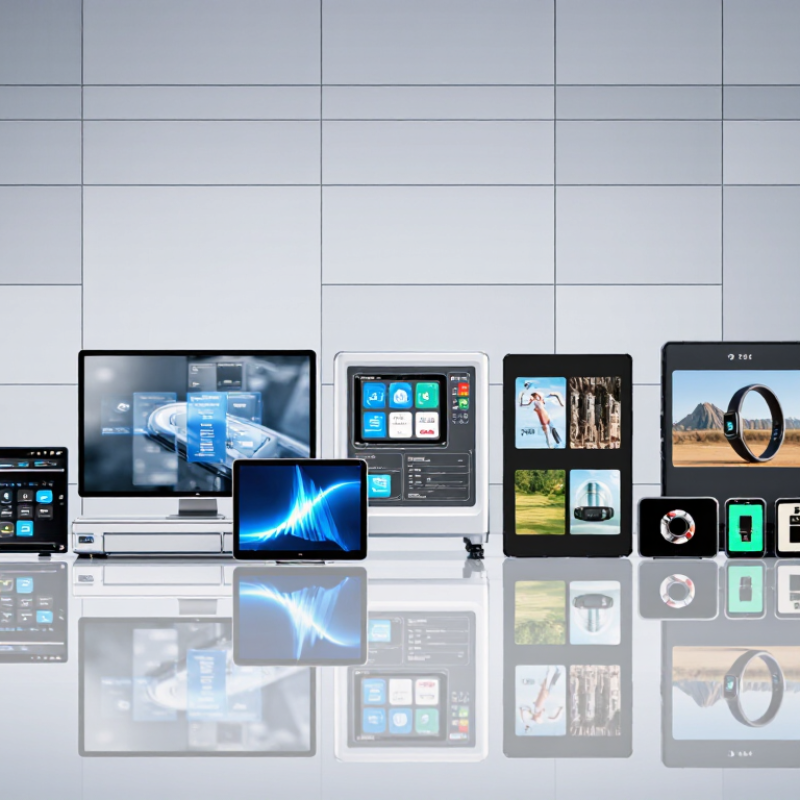
Defining Display Modules and Their Core Technologies
A display module is more than a glass panel. It combines a display cell, driver circuitry, touch sensing, protection layers, and mechanical connections. In practical testing, these parts decide brightness, color stability, viewing angle, and service life. A module can look impressive on a specification sheet and still fail under heat, vibration, or repeated touch.
LCD remains widely used because its production process is mature and cost-efficient. Omdia’s Display Long-Term Demand Forecast indicates that LCD still represents more than 80% of global display area demand. Its core system uses liquid crystals, thin-film transistors, color filters, and a backlight. OLED removes the backlight and controls self-emitting pixels. DSCC’s 2024 OLED Shipment Report identified continued growth in OLED smartphone panel shipments, driven by flexible designs and higher contrast. The technology is thinner, but burn-in and moisture protection require careful engineering.
Emerging microLED modules use microscopic inorganic emitters. They offer high brightness, fast response, and strong outdoor potential. Yet transfer accuracy and manufacturing yield remain difficult. Display module manufacturers should therefore be evaluated beyond output volume. Look for verified yield data, optical uniformity tests, thermal cycling results, and touch-controller compatibility. The SID International Symposium frequently presents advances in these areas. One limitation remains easy to overlook: reported market figures often measure panels, not complete modules. That distinction can distort comparisons.
What Are the Top 10 Display Module Manufacturers? - Defining Display Modules and Their Core Technologies
A technology-focused comparison of leading manufacturing profiles, with company and brand identities intentionally omitted.
| Capability Rank | Manufacturer Profile | Primary Production Region | Main Display Module Types | Core Technologies | Typical Application Segments | Common Size Range | Manufacturing Strength | Typical Resolution Capability | Production Availability |
|---|---|---|---|---|---|---|---|---|---|
| 1 | Profile M01 | East Asia | Large LCD panels, monitor modules, television modules | a-Si TFT-LCD Oxide TFT Mini-LED backlight | Televisions, desktop monitors, commercial signage | 23.8–100+ inches | High-volume large-area panel production and advanced backlight integration | Full HD to 8K UHD | High |
| 2 | Profile M02 | East Asia | Smartphone panels, tablet modules, premium display modules | LTPS TFT AMOLED Flexible OLED | Smartphones, tablets, wearable devices | 1.3–13 inches | High pixel density, narrow bezels, flexible substrate processing | FHD+ to QHD+ | High |
| 3 | Profile M03 | East Asia | Automotive display modules, industrial LCD modules | TFT-LCD Oxide TFT Optical bonding | Instrument clusters, center information displays, industrial control panels | 5–17 inches | Wide-temperature operation, long product life cycles, high reliability | HD to 4K UHD | High |
| 4 | Profile M04 | East Asia | OLED television modules, professional OLED panels | WOLED AMOLED Thin-film encapsulation | Premium televisions, studio reference monitors, digital signage | 27–97 inches | High contrast, self-emissive pixels, low response time | 4K UHD to 8K UHD | Medium to High |
| 5 | Profile M05 | East Asia | Small and medium LCD modules, embedded display modules | a-Si TFT-LCD IPS COG assembly | Medical equipment, measurement instruments, office devices | 2.4–15.6 inches | Customization, stable supply, broad interface support | QVGA to Full HD | High |
| 6 | Profile M06 | East Asia | Flexible display modules, foldable device panels | Flexible AMOLED LTPO TFT Ultra-thin glass | Foldable phones, premium mobile devices, wearable products | 1.5–12.9 inches | Low-power driving, bending durability, high refresh-rate support | FHD+ to QHD+ | Medium to High |
| 7 | Profile M07 | East Asia | Reflective display modules, electronic paper modules | Electrophoretic display Electronic paper Front-light integration | Electronic shelf labels, e-readers, logistics labels | 2.1–13.3 inches | Ultra-low power consumption and sunlight-readable performance | Monochrome to color HD | High |
| 8 | Profile M08 | East Asia | Microdisplay modules, near-eye display modules | LCOS OLED microdisplay Micro-LED research | Viewfinders, head-mounted displays, optical instruments | 0.5–2.5 inches | High pixel density and compact optical integration | SVGA to 4K-class | Medium |
| 9 | Profile M09 | South Asia and Southeast Asia | Commercial LCD modules, digital signage modules | a-Si TFT-LCD LED backlight Direct bonding | Retail signage, kiosks, transportation displays | 10.1–86 inches | System-level integration, regional customization, competitive assembly | HD to 4K UHD | High |
| 10 | Profile M10 | Europe and North America | Specialty display modules, ruggedized display assemblies | TFT-LCD OLED Optical bonding | Aerospace, defense, medical, marine and industrial equipment | 3.5–32 inches | Ruggedization, electromagnetic compatibility and application-specific engineering | WVGA to 4K UHD | Medium |
Display modules generally combine a display panel with essential components such as a backlight or emissive layer, driver circuitry, touch sensor, cover glass, flexible cable and mechanical housing. Actual specifications vary by product generation, customer requirements and production site.
Related Posts
-
China Top 10 Display Module Manufacturers?
-

2025 Top Display Module Trends That Will Transform Your Visual Experience
-
China Top Professional Displays for Modern Business Solutions?
-
10 Best Professional Displays for Stunning Visual Experiences?
-
2026 How to Choose the Best LED Display Module for Your Project?
-
Top 10 Mini LCD Displays for Your Projects in 2025?