What Are the Top 10 Professional Display Suppliers in China?
China’s professional displays market spans LED video walls, commercial LCD screens, interactive panels, and digital signage. The range is wide. A polished showroom demo can look impressive, yet reveal little about long-term performance. Buyers also need to assess brightness, color consistency, heat management, service access, and support after installation.
A useful paraphrase of longtime display-industry analyst Bob Raikes’s perspective is this: a display’s value depends on how well its performance fits its intended use. That is a practical lens for comparing suppliers. A bright screen for a sunlit retail window faces different demands from a control-room display running for long shifts. Details matter. Ask for measured specifications, product documentation, warranty terms, and references for comparable projects. If a supplier provides only broad claims, pause and verify them.
This guide introduces ten professional displays suppliers in China and explains what distinguishes their offerings. It considers product focus, manufacturing capability, customization, export experience, and technical support. A company’s size alone does not guarantee a good fit. Nor does an attractive sample prove consistent quality across a large order. Some supplier information may change, and public details can be incomplete. Treat the list as a starting point, then confirm current specifications and service arrangements directly. The right partner is the one whose products, communication, and delivery record match the actual project—not simply the one with the boldest catalog.
What Defines a Professional Display Supplier in China?
A professional display supplier in China does more than assemble panels. It can explain how brightness, viewing distance, cabinet size, and installation conditions affect the final result. Ask for drawings, sample specifications, and a clear production schedule. A capable team should also describe how it checks pixel consistency, color uniformity, power use, and heat during testing. Details matter. If answers stay vague, treat that as a reason to investigate further.
Tips: Request a sample and inspect it under the lighting conditions of your venue. Confirm what the warranty covers, how spare parts are handled, and who provides technical support after delivery. Get these points in writing.
Reliability also depends on communication. A supplier should flag design limits early, rather than promise that every request is easy. Review its quality records and ask how it handles defects found before shipment. A factory visit or live video walkthrough can help you assess equipment and workflow, though neither guarantees perfect performance. I would not judge a supplier by price alone; that shortcut can miss weak documentation or slow service. The right partner makes specifications, risks, and responsibilities easy to verify.
Key Criteria for Evaluating China’s Display Suppliers
A supplier’s catalogue is only a starting point. Compare display brightness, color uniformity, viewing angle, response time, and performance after extended operation. Ask for test results tied to your intended screen size and operating conditions. A bright demo unit proves little if corner-to-corner color shifts appear in a dim control room. Check sample-to-production consistency, too. It can be easy to overlook.
Quality systems matter, but certificates are not guarantees. The ISO Survey 2023 recorded 426,716 ISO 9001 certificates in China; use certification as a screening step, then audit inspection records, defect handling, and component traceability. Request a pilot batch and examine pixel defects, cabinet alignment, and touch response. The World Bank’s 2023 Logistics Performance Index ranked China 19th, a useful national context, not a promise of supplier-level delivery. Confirm actual lead times, packaging protection, spare-part availability, and warranty response in writing. Small details matter. A supplier that answers technical questions clearly is often easier to work with, though I would still verify every claim against samples and records.
Profiles of 10 Leading Professional Display Suppliers
China’s professional-display market includes manufacturers with very different strengths. These ten capability-based profiles are useful starting points, not a verified ranking of individual companies.
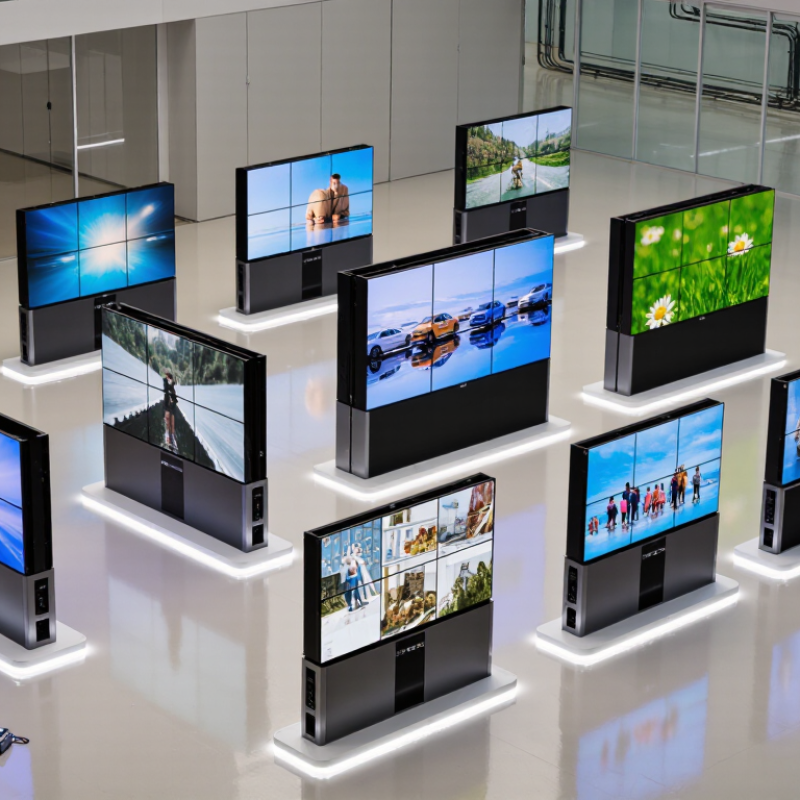
A fine-pitch LED specialist focuses on close-view clarity, cabinet alignment, and pixel consistency. A rental-display supplier prioritizes lightweight panels, quick locks, and spare parts for touring setups. A video-wall maker builds narrow-bezel LCD systems and should explain replacement-panel matching. A digital-signage producer offers portrait screens, media players, and mounting options for retail spaces. Small details matter.
A broadcast-monitor supplier emphasizes accurate color, stable brightness, and practical calibration controls. A control-room specialist designs for continuous operation, clear layouts, and accessible service points. An interactive-display supplier combines touch response with writing tools and classroom-friendly connections. Yet software support can be less polished than the hardware.
An outdoor-display maker addresses glare, heat, and weather exposure, but ask for test conditions rather than broad promises. An industrial-display supplier may offer sealed fronts, wide-temperature operation, and custom enclosures. An OEM/ODM integrator coordinates sourcing, assembly, and project-specific changes. A sample can look flawless; production consistency still needs checking. Compare inspection records, warranty terms, lead times, and a real unit under your intended viewing conditions.
Professional Display Supplier Profiles: Common Resolution Standards
A reference comparison of pixel counts for widely used display resolutions. These are format specifications, not rankings or supplier-specific figures.
Pixel count is calculated as horizontal pixels × vertical pixels. Actual product availability and supported resolutions vary by model.
Comparing Supplier Products, Expertise, and Services
Choosing among China’s professional display suppliers means comparing more than catalog prices. Check product ranges, including indoor and outdoor LED displays, LCD video walls, and interactive panels. Ask for pixel pitch, brightness, refresh rate, operating temperature, and expected service life in writing. Request a sample or live demonstration; a bright showroom image can hide uneven color or difficult maintenance. Strong suppliers explain where each specification matters instead of simply offering the highest numbers.
Expertise shows in the questions a supplier asks. They should confirm viewing distance, ambient light, installation structure, content source, and daily operating hours before recommending a system. Review project photos, test reports, warranty terms, spare-part availability, and response times. Technical support matters after delivery, too. Clarify who assists with calibration, software setup, and troubleshooting. A supplier may offer polished documentation yet have limited field experience, so verify claims with references where possible. Comparisons are imperfect; project conditions rarely match exactly.
Tips: Put three suppliers’ specifications and service terms in one comparison sheet. Ask each to explain one trade-off, such as lower pixel pitch versus higher cost. Note response speed. It tells you something, though not everything.
How to Select the Right Display Supplier for Your Needs
Choosing among China’s professional display suppliers starts with the room, not the brochure. Measure viewing distance, ambient light, daily operating hours, and available installation space. A display facing a bright shop window needs different brightness and glare control from one used in a meeting room. Grand View Research valued the global digital signage market at US$28.83 billion in 2024 and forecast 8.1% annual growth from 2025 to 2030. That growth makes supplier claims easy to find; independently verifiable test results matter more. Ask for brightness, color uniformity, thermal, and continuous-operation test records. A polished showroom demo is useful, but it cannot prove performance in your space.
Tips: Send shortlisted suppliers the same written specification. Request a sample unit, warranty terms, spare-parts availability, and a named service response time. Check whether the quote includes mounting hardware, control software, and freight. Small omissions add up.
Compare total ownership cost, not just unit price. Clarify how the supplier handles dead pixels, repairs, and replacement parts after delivery. Confirm that product certificates match the exact model being quoted. If possible, test a unit at your intended brightness and viewing angle. I would still leave room for uncertainty: one sample cannot predict every installation. A clear acceptance checklist can.