Choosing a reliable LED screen manufacturer can shape an entire project’s success. It affects image quality, installation time, maintenance costs, and audience experience. Global buyers need more than attractive product photos or impressive promises. They need evidence.
This guide examines China’s top LED screen manufacturers through practical purchasing criteria. These include manufacturing experience, pixel technology, brightness control, cabinet design, quality certification, export capability, and after-sales support. We also consider indoor, outdoor, rental, transparent, and fine-pitch applications. A stadium display faces different demands from a retail window or conference room. Weather, viewing distance, content type, and local service access all matter.
The companies discussed are selected for their market presence, product range, engineering capabilities, and documented experience with international projects. Product specifications should still be verified directly. Public information can change. Rankings are not permanent. That is worth remembering.
Real performance depends on details that brochures often overlook. Check LED chip quality, refresh rate, power efficiency, spare-part availability, and module replacement procedures. Ask for test videos and recent project references. A bright screen is not automatically a good screen. Poor heat management can shorten its useful life. Weak communication can create larger problems than a technical defect.
This overview aims to support careful comparison, not rushed purchasing. Some manufacturers may excel in price, while others provide stronger customization or service coverage. No single supplier fits every buyer. That honest limitation is important. A well-matched partner can deliver stable visuals, predictable maintenance, and better long-term value.
What Defines a Leading LED Screen Manufacturer in China
A leading LED screen manufacturer proves its ability through consistent engineering, not attractive catalogs. Experienced buyers inspect production records, module design, cabinet tolerances, and quality control procedures. They also check brightness, refresh rate, grayscale performance, and color consistency under real viewing conditions. A screen may look excellent indoors, yet fail under direct sunlight or heavy rain.
Reliable manufacturers explain their materials clearly. They identify LED specifications, power supplies, cooling methods, and protection ratings without vague promises. Factory audits should include aging tests, pixel inspections, calibration reports, and random product sampling. Compliance with applicable safety and electromagnetic standards also matters. These documents do not replace inspection, but they make claims easier to verify.
Service reveals technical maturity. Strong suppliers provide installation guidance, spare modules, remote diagnostics, and clear warranty terms. They calculate viewing distance, screen weight, wind load, and power demand before production. Small errors can become expensive on site. No factory gets every detail right. The more trustworthy teams admit limitations and record corrective actions. Buyers should ask how the manufacturer handled a failed module, delayed shipment, or uneven cabinet gap. Honest answers often reveal more than polished factory tours. In practice, dependable cooperation comes from traceable processes, responsive engineers, and realistic performance expectations.
A leading LED screen manufacturer should offer a broad range of pixel pitches for different environments, from fine-pitch indoor displays to large-format outdoor screens. The viewing-distance values follow the commonly used engineering rule of thumb: pixel pitch in millimeters is approximately equal to the minimum comfortable viewing distance in meters.
Technical reference: common LED display pixel-pitch categories and the pixel-pitch viewing-distance rule of thumb. Values are not company rankings.
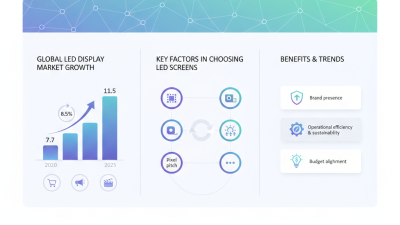
The global LED display market continues to expand. Grand View Research estimates an 8.5% CAGR from 2024 to 2030. This growth increases supplier choices, but quality varies sharply. Check pixel consistency, brightness stability, cabinet flatness, and thermal design. Request test reports for brightness, color uniformity, refresh rate, and electromagnetic compatibility. A reliable manufacturer should explain measurement methods, not only show attractive videos.
Production experience matters in difficult environments. Ask for factory audit records, aging-test duration, spare-parts planning, and repair procedures. ISO 9001 certification supports process control, but it does not guarantee excellent displays. Confirm compliance with relevant RoHS, EMC, safety, and local import requirements. Energy performance also deserves attention. The International Energy Agency reports that lighting represents about 15% of global electricity consumption, although LED screens are not identical to lighting systems. Their power demand still affects operating budgets. Sometimes, the cheapest quotation becomes expensive after installation.
Tips: Compare three complete quotations. Include modules, receiving cards, power supplies, software, shipping, training, and warranty terms. Ask for a live demonstration lasting several hours. Inspect dark-level performance closely. It reveals weak calibration. A thoughtful buyer should also challenge the manufacturer’s promised lifespan. Laboratory ratings and real outdoor conditions can differ. That difference is easy to overlook.
China’s top 10 LED screen manufacturers for global buyers should be judged beyond factory size. A credible comparison examines engineering depth, production consistency, and after-sales capability. Experienced buyers usually request factory videos, test reports, sample cabinets, and recent project references. These details reveal more than polished product brochures.
During supplier visits, inspect module assembly, soldering quality, cabinet flatness, and final calibration. Ask technicians to demonstrate brightness adjustment and color uniformity on a real display. Fine-pitch indoor screens need stable grayscale performance under close viewing. Outdoor models require suitable protection against rain, dust, heat, and temperature changes. Pixel pitch must match viewing distance, not simply the available budget.
Quality control should include aging tests, power checks, receiving inspections, and replacement-part planning. Request clear information about LED package origin, control systems, cabinet materials, and warranty response times. Independent certification can support compliance, but paperwork cannot replace physical testing. A small sample may look excellent while large-scale production varies. That risk deserves attention.
No list is perfect. Some manufacturers communicate well but struggle with complex installations. Others produce reliable cabinets yet provide weak documentation. Global buyers should compare measurable evidence, not promises. A factory that admits limitations may be more dependable than one claiming flawless performance. On-site training, spare modules, and remote technical support can reduce delays after delivery.
China’s top LED screen manufacturers serve different global buying needs, rather than competing on one simple ranking. A practical evaluation should examine pixel technology, cabinet design, brightness control, service support, and tested reliability. Product strength begins with stable image performance. It also includes efficient heat management, accurate color calibration, and easy maintenance at site.
Some manufacturers specialize in fine-pitch indoor displays for control rooms, retail spaces, and corporate halls. Others focus on outdoor billboards, stadium screens, and transport advertising, where weather resistance and high brightness matter more.
Rental-focused suppliers often provide lightweight cabinets, fast locks, reinforced corners, and front or rear access. Certain factories also develop transparent screens, flexible modules, or large-format displays for creative architecture. Each specialization affects the buyer’s installation plan.
Global buyers should request aging-test records, spare-part policies, warranty terms, and regional service arrangements. Compliance documents should match the destination market, not merely the factory’s usual export region. During supplier assessments, I would inspect module consistency, cabinet flatness, receiving-card stability, and cable protection. Small defects become expensive after installation. That matters.
No manufacturer excels at everything. A low price may hide limited calibration support or slow replacement shipping. I would also question impressive brightness claims without power data and viewing-distance guidance. The strongest supplier is not always the largest one. It is the one whose product design, documentation, and technical response fit the project’s real operating conditions. Mistakes still happen. Good processes reduce their impact.
International buyers choosing among China’s top LED screen manufacturers should assess evidence, not impressive factory photos. Grand View Research estimated the global LED display market at about USD 7.1 billion in 2023, with continued growth expected through 2030. Forecasts differ, however. That difference deserves attention.
Request a documented sample before signing a large order. Check pixel pitch, brightness, refresh rate, grayscale, viewing angle, and power consumption. A screen for a bright outdoor wall needs different engineering from one used in a controlled indoor hall. Ask for IEC-related test records, ingress protection ratings, electromagnetic compatibility documents, and material safety declarations. Certificates alone are not enough.
Visit the production line, or arrange an independent inspection. Observe soldering, cabinet flatness, module alignment, calibration, and aging tests. Request measured data at the promised brightness, not only laboratory claims. Clarify spare-module quantities, packing methods, delivery terms, warranty exclusions, and remote support response times. Energy performance matters too; the International Energy Agency reports that lighting efficiency improvements can significantly reduce electricity demand, but LED displays still consume substantial power at high brightness. This is where many buyers underestimate lifetime cost. A lower quotation may hide weaker power supplies or limited after-sales support. I would also test a full cabinet for several weeks, when possible. It feels slower, but short demonstrations can conceal heat, color drift, and connection faults.
| Rank | Anonymous Manufacturer Profile | Primary Product Strength | Typical Pixel Pitch | Typical Brightness | Outdoor Protection | Common Compliance Documents | Typical Warranty | Typical Lead Time | Best Buyer Fit |
|---|---|---|---|---|---|---|---|---|---|
| 1 | Profile A — Large Export-Oriented Integrator | Fine-pitch indoor, outdoor fixed installation, and turnkey display systems | 0.9–10 mm | 800–7,000 nits | IP65 front / IP54 rear | CE, RoHS, EMC, test reports available by project | 3–5 years | 15–35 days | Large tenders, stadiums, commercial buildings, and international distributors |
| 2 | Profile B — Rental and Touring Specialist | Lightweight rental cabinets, quick-lock systems, and curved stage screens | 2.6–5.9 mm | 4,500–5,500 nits | IP65 front / IP54 rear | CE, RoHS, EMC, vibration and load-test documentation | 2–3 years | 20–40 days | Event companies, concert production, exhibitions, and rental fleets |
| 3 | Profile C — Outdoor Advertising Specialist | High-brightness billboards, roadside displays, and media façade systems | 6.67–16 mm | 5,000–10,000 nits | IP65 front / IP65 rear | CE, RoHS, EMC, structural and weather-resistance reports | 3–5 years | 25–45 days | Outdoor advertising operators, municipalities, and property developers |
| 4 | Profile D — Fine-Pitch Indoor Specialist | Corporate control rooms, broadcast studios, retail, and command centers | 0.7–2.5 mm | 600–1,200 nits | IP30–IP54 | CE, RoHS, EMC, low-blue-light and calibration reports | 3–5 years | 20–45 days | Buyers prioritizing image quality, close viewing distance, and low maintenance |
| 5 | Profile E — Transparent and Creative Display Specialist | Transparent LED, window displays, irregular shapes, and architectural installations | 3.9–10 mm | 3,500–6,000 nits | IP30–IP65, project dependent | CE, RoHS, EMC, installation and load documentation | 2–3 years | 25–50 days | Retail chains, luxury buildings, museums, and experiential marketing projects |
| 6 | Profile F — Cost-Efficient OEM Supplier | Standard indoor and outdoor panels with private-label and OEM support | 2.5–10 mm | 800–6,500 nits | IP54–IP65 | CE, RoHS, EMC; additional documents on request | 2–3 years | 15–30 days | Importers, regional distributors, and buyers with strict budget targets |
| 7 | Profile G — All-Weather Rental Manufacturer | Outdoor rental cabinets, mobile stages, sports events, and temporary installations | 3.9–10 mm | 4,500–8,000 nits | IP65 front / IP65 rear | CE, RoHS, EMC, weather and mechanical safety reports | 2–3 years | 20–40 days | Rental companies needing robust cabinets, fast setup, and repeated transport |
| 8 | Profile H — Integrated Digital Signage Supplier | Retail signage, menu boards, all-in-one displays, and content-management solutions | 1.5–4.8 mm | 800–3,500 nits | IP30–IP54 | CE, RoHS, EMC, software and electrical safety documentation | 2–3 years | 20–40 days | Retailers, franchise networks, restaurants, and multi-location deployments |
| 9 | Profile I — Project Customization Specialist | Special dimensions, curved screens, column displays, and engineering-led projects | 1.8–10 mm | 1,000–7,000 nits | IP30–IP65 | CE, RoHS, EMC, engineering drawings and project test reports | 2–5 years | 30–60 days | Architects, system integrators, museums, airports, and complex construction projects |
| 10 | Profile J — Regional Export and Service Supplier | General-purpose LED walls, local training, spare parts, and distributor support | 2.5–10 mm | 800–6,000 nits | IP54–IP65 | CE, RoHS, EMC; destination-market documents should be confirmed | 2–3 years | 15–35 days | Small and medium buyers seeking responsive communication and flexible order quantities |
| Buyer verification note: The specifications above represent common market ranges for anonymized manufacturer profiles and are intended for preliminary supplier screening. International buyers should verify factory ownership, production capacity, LED and driver component sources, calibration records, compliance certificates, warranty terms, spare-parts availability, installation capability, payment conditions, and destination-country requirements before placing an order. | |||||||||