2026 Best Professional Displays for Global Buyers?
In the competitive world of technology, professional displays stand out as essential tools for various industries. As global buyers seek optimal solutions, the need for quality and reliability is paramount. The 2026 Best Professional Displays showcase innovations that meet these expectations.
Today’s professional displays offer improved color accuracy, enhanced resolution, and advanced connectivity. Many brands compete to capture attention. However, not every product lives up to the hype. It's crucial for buyers to recognize the limitations and strengths of these displays. Some may fall short in durability or user support, raising questions about long-term value.
The selection process can be overwhelming. Each display has its unique features, catering to different needs. Buyers must consider specific requirements, such as brightness and viewing angles, to make informed decisions. Striving for progress is vital, and understanding the landscape of professional displays will lead to better choices in 2026.

2026 Global Market Trends in Professional Display Technology
The professional display market is evolving rapidly. By 2026, expect significant changes driven by technology. One notable trend is the shift towards higher resolution and enhanced color accuracy. This shift responds to the increasing demand for immersive experiences in various sectors, from education to entertainment.
Tips: Look for displays that support the latest color standards. Calibration capabilities can greatly improve image quality. Consider investing in models that facilitate easy updates and integration with existing systems.
Another emerging trend is the rise of
smart displays. These use
AI to improve user interactions. Smart features can analyze viewer behavior for better content customization. However, integrating these systems can come with challenges. Brands must ensure seamless compatibility with current infrastructure.
Tips: When choosing smart displays, assess your current tech stack. Evaluate how new displays will work with your existing software. Regularly review analytics from smart features for insights into audience engagement.
Key Features and Specifications of Top Professional Displays for 2026
As we approach 2026, the landscape for professional displays continues to evolve. Industry reports indicate a growing demand for displays that not only meet but exceed user expectations. High-resolution screens, particularly those offering 4K and 8K capabilities, are becoming standard. According to a report by market research firm IHS Markit, the global share of professional displays with 4K resolution is projected to surpass 70% by 2026.
Color accuracy is another critical feature gaining traction. Professionals in fields such as graphic design and video production require displays capable of reproducing a wide color gamut. Reports suggest that displays adhering to the DCI-P3 color space will become essential, as this specification delivers the vibrancy needed for professional applications. However, achieving consistent color accuracy remains a challenge, as calibration can often fall short over time.
Connectivity options are expanding, too. USB-C is becoming a preferred standard for many professionals due to its versatility. A survey revealed that 60% of design professionals value seamless connectivity features to streamline their workflows. However, many displays still lack sufficient ports, creating frustration. Addressing these evolving user needs will be crucial for manufacturers as we move into a new era for professional displays.
2026 Best Professional Displays for Global Buyers
| Display Model |
Screen Size |
Resolution |
Panel Type |
Brightness (nits) |
Color Accuracy |
Connectivity Options |
| Model A |
27 inches |
3840 x 2160 |
IPS |
400 |
98% sRGB |
HDMI, DisplayPort, USB-C |
| Model B |
32 inches |
5120 x 2880 |
OLED |
600 |
100% AdobeRGB |
HDMI, USB, Thunderbolt |
| Model C |
24 inches |
1920 x 1080 |
VA |
300 |
95% DCI-P3 |
HDMI, VGA |
| Model D |
43 inches |
3840 x 2160 |
IPS |
500 |
95% sRGB |
HDMI, DisplayPort, USB |
Leading Brands and Their Market Shares in the Professional Display Industry
In the professional display industry, various brands compete for dominance. Understanding their market shares helps buyers make informed decisions. Some brands lead with innovative features and reliability. Others focus on pricing and customer service, striving to gain market traction.
Market dynamics fluctuate regularly. A brand that excels today might struggle tomorrow. Emerging companies often introduce disruptive technologies or unique designs. However, established brands enjoy consumer trust and brand loyalty. It’s crucial for global buyers to weigh these factors carefully.
While many buyers prioritize specifications, some overlook service quality. A stunning display without support can lead to frustration. Additionally, the sustainability of a brand is another consideration. Companies must adapt to changing environmental norms. Balancing performance and ethics remains a challenge in this evolving marketplace.
Emerging Technologies Shaping the Future of Professional Displays in 2026
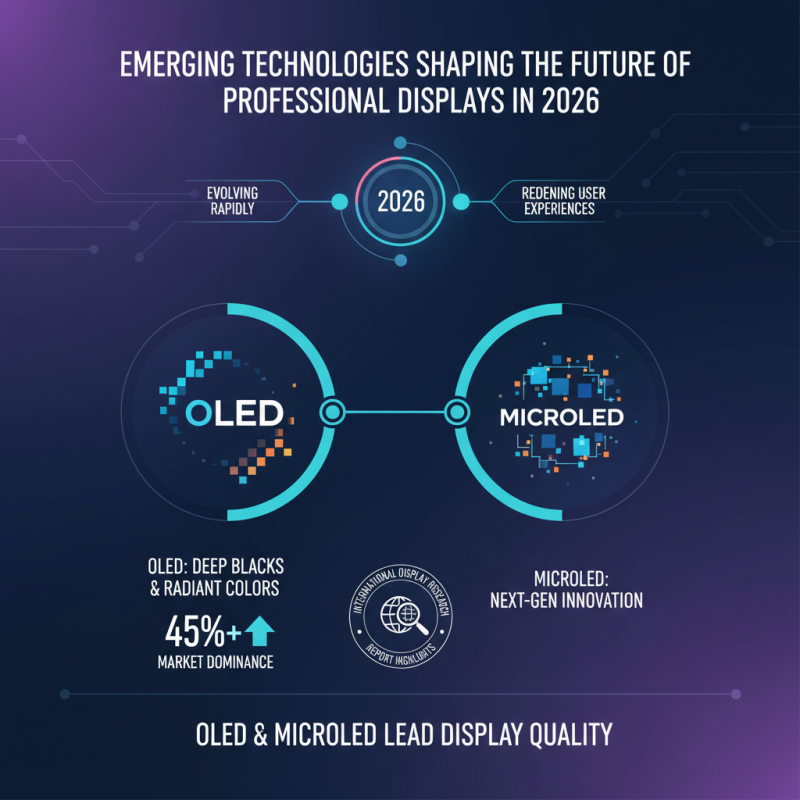
The landscape of professional displays is evolving rapidly. In 2026, emerging technologies will redefine user experiences. A report from the International Display Research highlights that OLED and MicroLED technologies are leading innovation in display quality. OLED, with its deep blacks and vibrant colors, is anticipated to dominate the market, with over 45% of professional displays utilizing this tech.
According to a study by the Display Industry Association, integration of AI and machine learning will enhance display interaction. Such technologies could improve content delivery and user engagement. However, not all businesses have embraced these advancements. A significant portion of buyers remains hesitant, citing cost concerns and uncertainty about long-term reliability.
AR and VR technologies are also making strides. They promise to transform how professionals interact with displays. A survey indicates that around 35% of firms are exploring AR solutions for training and collaboration. Yet, there is still a learning curve and resistance to change in the workplace. Organizations must reflect on these challenges to effectively leverage new technologies for enhanced productivity.
Buyer’s Guide: Evaluating Professional Displays Based on Industry Standards
When evaluating professional displays, understanding key industry standards is essential. According to a recent report from the Display Industry Association, nearly 70% of professionals believe that display quality directly affects viewer engagement. This statistic highlights the need for thorough assessments. Buyers should focus on clarity, color accuracy, and brightness levels based on specific use cases.
Screen resolution plays a pivotal role, too. The global shift towards 4K and 8K displays offers sharper images and more detail. A study from TechInsights shows that 4K displays boost productivity by up to 30% in creative industries. However, higher resolutions can lead to increased costs, complicating budget decisions.
Connectivity and compatibility also warrant attention. Many professionals overlook this aspect, risking additional costs for adaptors and converters. The diversity of input options can significantly impact workflow efficiency. As technology changes, keeping up with the latest standards and compatibility is crucial, though challenging for buyers to navigate effectively.