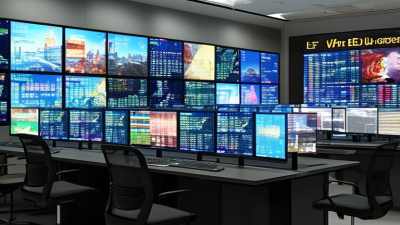
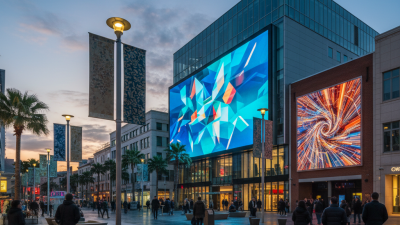
Choosing an outdoor LED display in 2026 is not just a brightness decision. Buyers must match display type to viewing distance, weather exposure, content, and installation site. A roadside billboard, a stadium perimeter screen, and a building-mounted display face different demands. Small details matter: afternoon glare, wind exposure, service access, and the distance from the nearest viewer.
The market context is encouraging, but it needs careful reading. The Out of Home Advertising Association of America reported record U.S. out-of-home advertising revenue of $9.1 billion in 2024. That figure covers the wider OOH sector; it does not measure outdoor LED displays alone. Still, it shows why digital outdoor placements matter to advertisers and venue owners. Useful context. Buyers should compare product specifications with the actual site, not assume a market trend guarantees a good return.
Advertising pioneer David Ogilvy wrote, “The more informative your advertising, the more persuasive it will be” in Confessions of an Advertising Man. For outdoor screens, that principle starts with legibility: clear messaging, suitable pixel pitch, and content that works at a glance. This guide compares major outdoor LED display types, from fixed billboards to rental and sports displays, and explains where each can fit. There is no perfect type. A high-brightness screen may be excessive in a shaded plaza, while a low-cost option may disappoint beside a sunlit highway. The right choice begins with the site—and a little skepticism about sales claims.
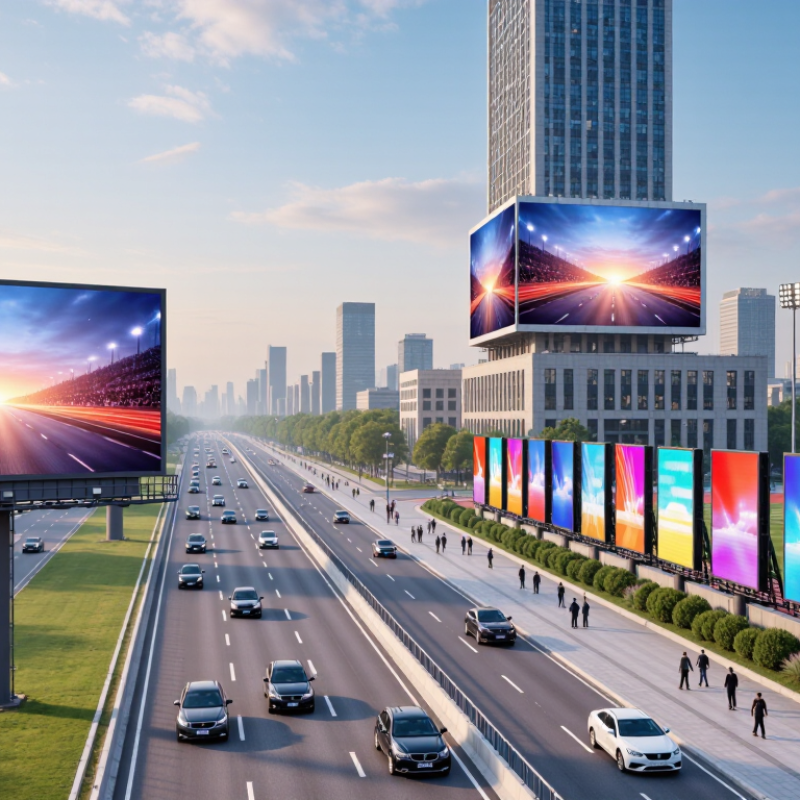
For a fixed outdoor LED billboard, IP65 and IP66 indicate how well its enclosure resists dust and water under IEC 60529 test conditions. The first digit, 6, means dust-tight. The second describes water protection: IP65 withstands water jets, while IP66 is tested against more powerful jets. Neither rating means the display can be submerged.
The rating matters only when it applies to the actual enclosure or assembled cabinet being supplied. A cable gland, access door, or poorly reseated gasket can become a weak point. Small details count. Ask for test documentation that matches the cabinet configuration, including its connectors and service panels. A rating printed on a specification sheet is not proof that every installed seam stays sealed.
IP66 may suit sites exposed to forceful spray, but it is not automatically the right choice for every billboard. Neither IP rating measures resistance to sun exposure, salt corrosion, condensation, temperature swings, or wind loads. After maintenance, seals deserve another look; it is easy to overlook them. Consider the site’s cleaning methods and weather exposure, then compare those conditions with the documented test scope.
For buyers comparing rental and stadium LED screens, 3,840 Hz sounds decisive, but it describes refresh cycles, not the whole image. EBU Tech 3335 documents common television production rates, including 50 and 59.94 frames per second. At 3,840 Hz, that is roughly 77 refresh cycles per 50-frame second, or 64 per 59.94-frame second. These figures help explain why fast refresh can reduce visible flicker and camera banding. They do not guarantee clean footage; shutter settings and panel scan behavior matter too. Small detail, big difference.
Rental screens face frequent setup, close camera shots, and changing lighting. Buyers should check refresh performance alongside grayscale handling, scan ratio, and brightness consistency. For stadium displays, long sightlines and large areas make uniformity and legibility especially important. ITU-R BT.2020 includes high-frame-rate formats up to 120 frames per second, a useful reminder that display systems may encounter varied content rates. A 3,840 Hz panel offers headroom, but it cannot fix poor signal processing or uneven calibration. Ask for camera tests using the actual panel and operating settings. I would not rely on a brochure number alone; even a strong specification can look less impressive under stadium floodlights.
Transparent and mesh LED displays allow parts of a facade to remain visible through the screen. Buyers commonly compare transparency figures between 30% and 70%, but the number needs context. Confirm whether it describes the panel’s open area, and ask how it was measured. A percentage alone does not show how clearly people inside can see out.
At around 30% transparency, the display may provide more LED coverage, but it can also obscure more of a window or facade. Near 70%, more daylight and airflow can pass through, while image detail may appear less dense. Neither figure is automatically better. Pixel pitch, viewing distance, daylight, and the building’s structure all affect the result.
A practical check is to view a sample from both sides at midday and after dusk. Look for visible support bars, glare, and uneven brightness. Test it outdoors. I would be cautious about choosing from a specification sheet alone; I have seen small differences in installation angle change how open a mesh screen appears. Also confirm the final dimensions and mounting method, since cutouts or framing can reduce the usable transparent area.
For outdoor fine-pitch LED walls, P2.5–P6 is a real trade-off, not a simple quality ladder. P2.5 packs about 160,000 pixels per square metre; P6 provides about 27,800. These figures come from the standard pixel-density calculation: (1,000 ÷ pitch)². A closer audience can see finer detail, but tighter pitch usually raises cost and demands careful processing. From site planning, a screen beside a busy walkway often benefits more from readable text than maximum pixel density. Distance matters.
P3–P4 can suit plazas where people pause several metres away. P5–P6 may work for roadside or large-venue viewing, where viewers stay farther back. Check actual content, too: small labels and thin lines expose pixel gaps quickly. AVIXA’s 2024 Industry Outlook and Trends Analysis estimated global professional audiovisual revenue at about US$325 billion in 2024, reflecting a broad, active display market—not a guarantee that any pitch fits every site. One caveat: ambient light, camera use, and cabinet construction can change perceived sharpness.
Tips: Measure the nearest regular viewing distance, then test real content at full scale. Ask for daytime and evening samples. A spec sheet cannot show glare, moiré, or awkward text wrapping. Measure twice.
A 5,000–10,000 nit rating can help an outdoor LED display stay visible, but brightness alone does not guarantee readability. The Illuminating Engineering Society’s Lighting Handbook describes daylight illuminance reaching roughly 100,000 lux in strong sun. That bright sky can wash out images, especially on glossy surfaces. A 5,000-nit screen may suit a shaded storefront, while an exposed roadside display may need output closer to 10,000 nits. Viewing distance, screen size, and contrast matter too. There is no magic number.
Higher brightness uses more power and can increase heat. It may also make evening content uncomfortable if output is not adjustable. Ask for measured brightness across the full screen, not just a peak figure. Check whether the specification reflects normal operation, and request a viewing test under direct sun. A small sample panel can reveal glare or color loss. It is not a perfect test, but it helps.
Tips: Match brightness to the site, then confirm performance at midday. Look for automatic dimming, a matte surface, and a service plan for cleaning. Dust is easy to underestimate. Recheck visibility after installation, because nearby glass, pale pavement, and changing sun angles can alter the result.