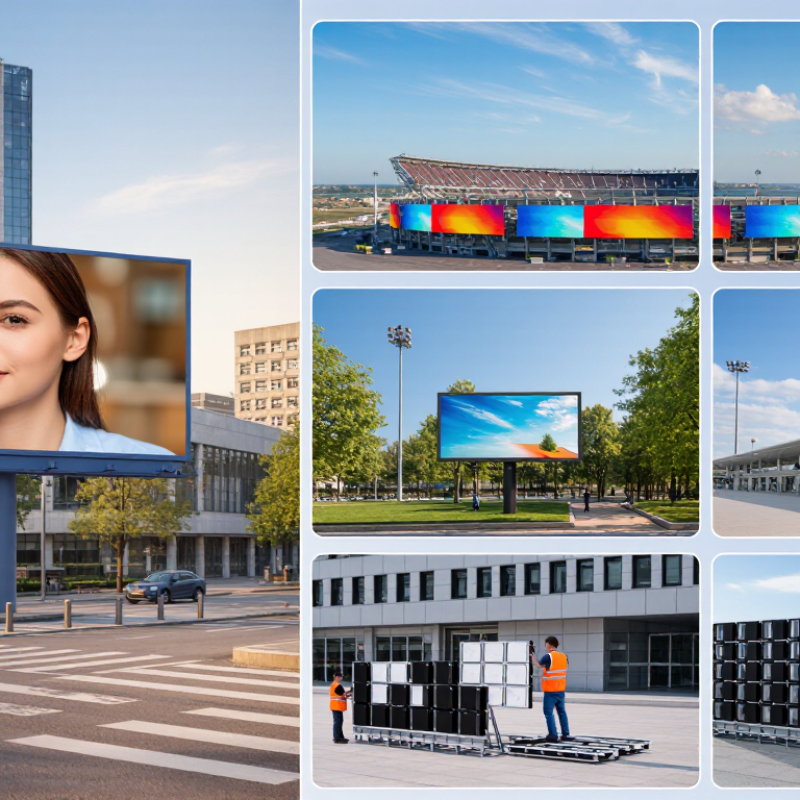
2026 Best Outdoor LED Display for Global Buyers?

Choosing the 2026 best outdoor LED display is not simply a brightness contest. Global buyers must examine climate, viewing distance, maintenance access, energy use, and local installation requirements. A coastal stadium needs stronger corrosion protection. A roadside billboard needs clear images under direct sunlight. A city-center screen may require quieter cooling and stricter brightness control.

Industry expert Chris Riegel, CEO of STRATACACHE, has said, “Digital signage is not about the screen; it is about the experience.” That principle remains useful for outdoor LED display selection. The cabinet should support stable brightness, accurate color, and reliable playback. Look for weather protection rated around IP65 or higher, depending on the cabinet design and installation position. Check thermal performance during hot afternoons. Also inspect how quickly technicians can replace a module without removing the entire panel.

Real projects reveal the uncomfortable truth. The cheapest quotation may become expensive after repeated module failures, difficult shipping, or unclear warranty terms. Buyers should request test reports, product samples, service records, and references from similar climates. They should also confirm power consumption at normal brightness, not only peak consumption. Small details matter.

This guide compares leading 2026 solutions for advertising, sports, retail, transport, and public venues. It considers performance and ownership cost together. No display wins everywhere. A specification can look excellent on paper and still disappoint beside a bright highway. Reliable decisions require field evidence, not attractive promises. For international buyers, regional support may matter as much as pixel pitch. That point is easy to overlook.

2026 Best Outdoor LED Display for Global Buyers?

What Is an Outdoor LED Display and How Does It Work?

An outdoor LED display is a modular screen built from light-emitting diodes, control cards, power supplies, and weather-resistant cabinets. Each pixel contains red, green, and blue LEDs. A sending system converts video signals into brightness instructions. Receiving cards distribute those instructions across cabinet modules. At viewing distance, the pixels blend into one moving image.

Outdoor operation is demanding. Sunlight can exceed 100,000 lux, so the display needs high brightness, often above 5,000 nits. Automatic brightness control reduces glare and power use at night. Proper ventilation prevents heat damage, while sealed cabinets protect electronics from rain and dust. An IP65-rated front surface is common for outdoor installations. The U.S. Department of Energy reports that LED lighting can use up to 75% less energy than incandescent lighting, but display efficiency depends heavily on content, brightness, and thermal design. Grand View Research also identifies digital signage as a growing global market, with expansion driven by retail, transport, and public communication.

Tips: Check pixel pitch from the real viewing distance, not from a showroom photograph. Demand measured brightness, refresh rate, color uniformity, and power consumption. Ask for test records and maintenance access. A display may look impressive, yet poor heat management can shorten its useful life. This is where buyers should stay skeptical. Specifications alone do not guarantee field performance. Each climate, mounting structure, and content schedule changes the result.

Key Specifications for Comparing Outdoor LED Displays in 2026

2026 Best Outdoor LED Display for Global Buyers?

Key Specifications for Comparing Outdoor LED Displays in 2026

Outdoor LED displays should be judged by site conditions, not impressive showroom images. Pixel pitch affects viewing distance, image detail, and cabinet cost. A 4 mm pitch may suit a roadside screen viewed from 20 meters. A 10 mm pitch can work better for distant building façades. Bigger is not always clearer.

Brightness deserves careful testing. Strong sunlight may require 5,000 to 8,000 nits, while excessive brightness can waste energy and reduce nighttime comfort. Ask for automatic brightness control and confirm its response at dusk. Refresh rates above 3,840 Hz support smoother camera footage. Stable grayscale also matters during low-light scenes. Small details count.

Weather protection is essential. Look for suitable IP ratings, sealed cable paths, corrosion-resistant cabinets, and drainage design. Thermal performance should be checked in both heat and freezing conditions. Power supplies need realistic consumption figures, not only peak figures. Maintenance access can save hours when one module fails. I would also request test reports, warranty terms, spare-part policies, and electrical documentation.

A practical site trial may reveal weaknesses hidden by specifications. Wind, dust, glare, and uneven installation can change performance quickly. One overlooked issue is color consistency between replacement modules. It is worth questioning the supplier’s calibration process. No display is perfect. Review measured data, installation experience, and local service capability before approving the final configuration.

2026 Best Outdoor LED Display for Global Buyers? - Key Specifications for Comparing Outdoor LED Displays in 2026

Typical specification ranges for fixed-installation outdoor LED displays in 2026. Actual values vary by cabinet design, climate rating, module configuration, installation height, content type, and local electrical standards.
Comparison Dimension P2.5 P3.9 P4.8 P6.67 P8 P10
Pixel Pitch 2.5 mm 3.9 mm 4.8 mm 6.67 mm 8 mm 10 mm
Approx. Pixel Density 160,000 pixels/m² 65,746 pixels/m² 43,403 pixels/m² 22,491 pixels/m² 15,625 pixels/m² 10,000 pixels/m²
Recommended Viewing Distance About 3–25 m About 4–40 m About 5–50 m About 7–70 m About 8–80 m About 10–100 m
Typical Outdoor Brightness 5,000–7,000 nits 5,000–7,000 nits 5,000–7,500 nits 5,500–8,000 nits 5,500–8,000 nits 5,500–8,500 nits
Refresh Rate ≥3,840 Hz ≥3,840 Hz ≥3,840 Hz ≥3,840 Hz ≥3,840 Hz ≥3,840 Hz
Outdoor Protection Rating IP65 front / IP54 rear or higher IP65 front / IP54 rear or higher IP65 front / IP54 rear or higher IP65 front / IP54 rear or higher IP65 front / IP54 rear or higher IP65 front / IP54 rear or higher
Typical Operating Temperature −20°C to +50°C −20°C to +50°C −20°C to +50°C −20°C to +50°C −20°C to +50°C −20°C to +50°C
Typical Average Power Consumption 220–350 W/m² 180–300 W/m² 170–280 W/m² 150–260 W/m² 140–240 W/m² 130–230 W/m²
Typical Maximum Power Consumption 650–900 W/m² 550–800 W/m² 500–750 W/m² 450–700 W/m² 400–650 W/m² 380–620 W/m²
Cabinet Weight Range 28–40 kg/m² 25–38 kg/m² 24–36 kg/m² 23–35 kg/m² 22–34 kg/m² 22–34 kg/m²
Typical LED Lifetime 100,000 hours to 50% brightness 100,000 hours to 50% brightness 100,000 hours to 50% brightness 100,000 hours to 50% brightness 100,000 hours to 50% brightness 100,000 hours to 50% brightness
Color Grayscale 14–16 bit processing 14–16 bit processing 14–16 bit processing 14–16 bit processing 14–16 bit processing 14–16 bit processing
Best-Fit Application Close-view architectural media, premium retail, transport interiors with outdoor exposure Street-facing retail, events, hospitality, urban advertising Roadside advertising, building façades, transport corridors Large billboards, stadium perimeters, long-distance viewing Highway billboards and very large-format displays
Relative Image Detail Very High High High Medium Standard Standard
Relative Energy Efficiency Low to Medium Medium Medium Medium to High High High
Relative Cost Efficiency Best for close viewing Balanced High for medium-distance viewing High for large areas High for long-distance viewing

How to Choose the Right Display for Different Outdoor Applications

2026 Best Outdoor LED Display for Global Buyers?

When selecting an outdoor LED display, match the screen to its real application. A roadside billboard needs strong brightness, wide viewing angles, and reliable content playback. An event stage may need finer pixels, fast refresh rates, and accurate color. Retail entrances often require attractive images, simple scheduling, and quiet operation.

Measure viewing distance carefully. Pixel pitch affects image sharpness and viewing comfort. Brightness should match sunlight conditions, not merely follow the highest specification. In field installations, excessive brightness can create glare and waste energy.

I once saw a screen installed near apartment windows. Its powerful output disturbed residents after sunset. The installer later needed stricter brightness controls.

Weather protection matters. Look for sealed cabinets, corrosion-resistant materials, and suitable protection ratings. Ask how the display handles rain, dust, heat, and sudden temperature changes.

Power planning is equally important. Check voltage requirements, peak consumption, grounding, and local electrical rules before delivery.

Maintenance access can reduce long-term costs. Front service helps in narrow streets, while rear service suits open structures.

Content quality also deserves attention. Fine text can remain unreadable when the screen is too far away. Test real videos, subtitles, and daytime images before ordering.

Request measured brightness and refresh data, rather than relying only on marketing claims. Review spare-part availability and technician training for the destination country.

The specification sheet rarely tells the whole story. That is where careful questioning becomes valuable.

Weatherproofing, Brightness, Energy Use, and Maintenance Requirements

Outdoor LED displays face rain, dust, sunlight, and unstable temperatures. Weatherproofing starts with a verified IP rating under IEC 60529. IP65 protects against dust and water jets, but it does not guarantee safe immersion. Coastal buyers should also request corrosion testing and sealed cable entries. Small gaps become expensive problems.

Brightness needs measured evidence. Outdoor engineering practice commonly targets 5,000–10,000 cd/m² for direct sunlight. However, excessive brightness increases power use and light spill. The International Committee for Display Metrology recommends controlled luminance measurements through IDMS procedures. Ask for calibrated readings, not maximum marketing figures. Automatic dimming is valuable after sunset.

Energy data must separate typical and peak consumption. The U.S. Department of Energy’s Solid-State Lighting reports identify LED efficacy above 200 lumens per watt in advanced laboratory products, while complete displays perform lower. Pixel density, content, refresh rate, and temperature change real consumption. Require a measured operating figure in watts per square metre. This is often missing.

Maintenance planning matters more than a long warranty. IEC 62341 and related reliability practices use lifetime projections, such as L70, rather than promising permanent brightness. L70 means projected retention of 70% light output. It is not a failure date. Schedule inspections for fans, filters, modules, connectors, and drainage. Monthly checks may be excessive for clean inland sites, yet insufficient near saltwater. A site survey should decide.

Global Buying Guide: Suppliers, Compliance, Installation, and Total Cost

2026 Best Outdoor LED Display for Global Buyers?

Global Buying Guide: Suppliers, Compliance, Installation, and Total Cost

Choosing an outdoor LED display requires more than comparing pixel pitch and price. A reliable supplier should provide brightness data, cabinet drawings, thermal test results, warranty terms, and spare-part availability. Ask for recent project references in a similar climate. Coastal sites need stronger corrosion protection, while cold regions require tested heating and moisture control. Small details matter.

Compliance varies by destination. Confirm electrical safety, electromagnetic compatibility, radio equipment, recycling, and energy requirements before ordering. Request valid test reports, declarations, labeling instructions, and user manuals in the required language. A qualified local engineer should review wind load, structural anchoring, grounding, and emergency access. Some buyers overlook permits until installation stops.

Installation costs include lifting equipment, steelwork, cabling, control systems, labor, taxes, freight, and commissioning. Electricity can become a major expense for large, bright screens. Compare expected consumption, maintenance access, module replacement time, and software support over five years. Obtain a landed-cost quotation, not only a factory price. The cheapest offer may hide weak sealing or limited technical support. I would still challenge every forecast, because real weather, dust, and repair delays rarely follow the spreadsheet. Test one cabinet before full production. That extra week may prevent an expensive mistake.
Scroll to Top